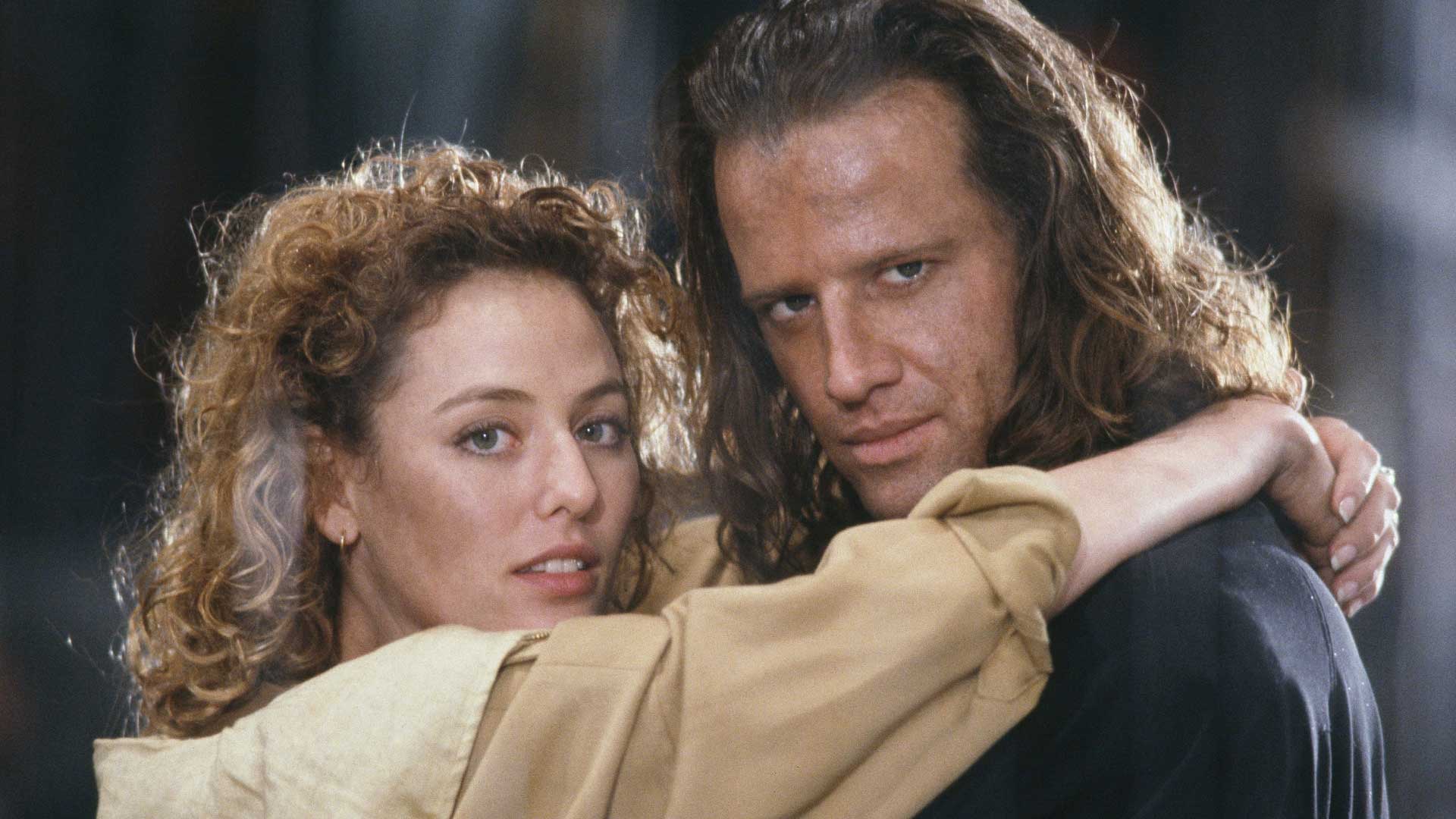


On paper, a box office flop would be a dead end for any sequel or follow-up. But in Highlander‘s case, the first movie may have been a financial fiasco when it was released in 1986, earning only about $13 million on a $19 million budget. And yet, the movie had a second life through the booming home video market and became a cult classic, with a dedicated fanbase that loved the concept, lore, and Connor MacLeod’s (Christopher Lambert) iconic tagline, “There can be only one”, and the Queen soundtrack. All this was more than enough to move forward with a sequel, bringing back the main star along with Sean Connery and director Russell Mulcahy.
The second movie – officially titled Highlander II: The Quickening (0% on Rotten Tomatoes) – was even given an upgraded budget of $22 million. But here lies the biggest problem: How to justify the existence of a sequel when the first movie ended with Connor successfully beheading the Kurgan (Clancy Brown) and drawing his power. And the fact that Connor was the last Immortal standing means he finally won “The Prize”, allowing him to age as a mortal man like any other normal human being, and live a happy life with his loved one, Brenda (Roxanne Hart).
Why Highlander II: The Quickening Got Made When the First Movie Tied Up Every Loose End
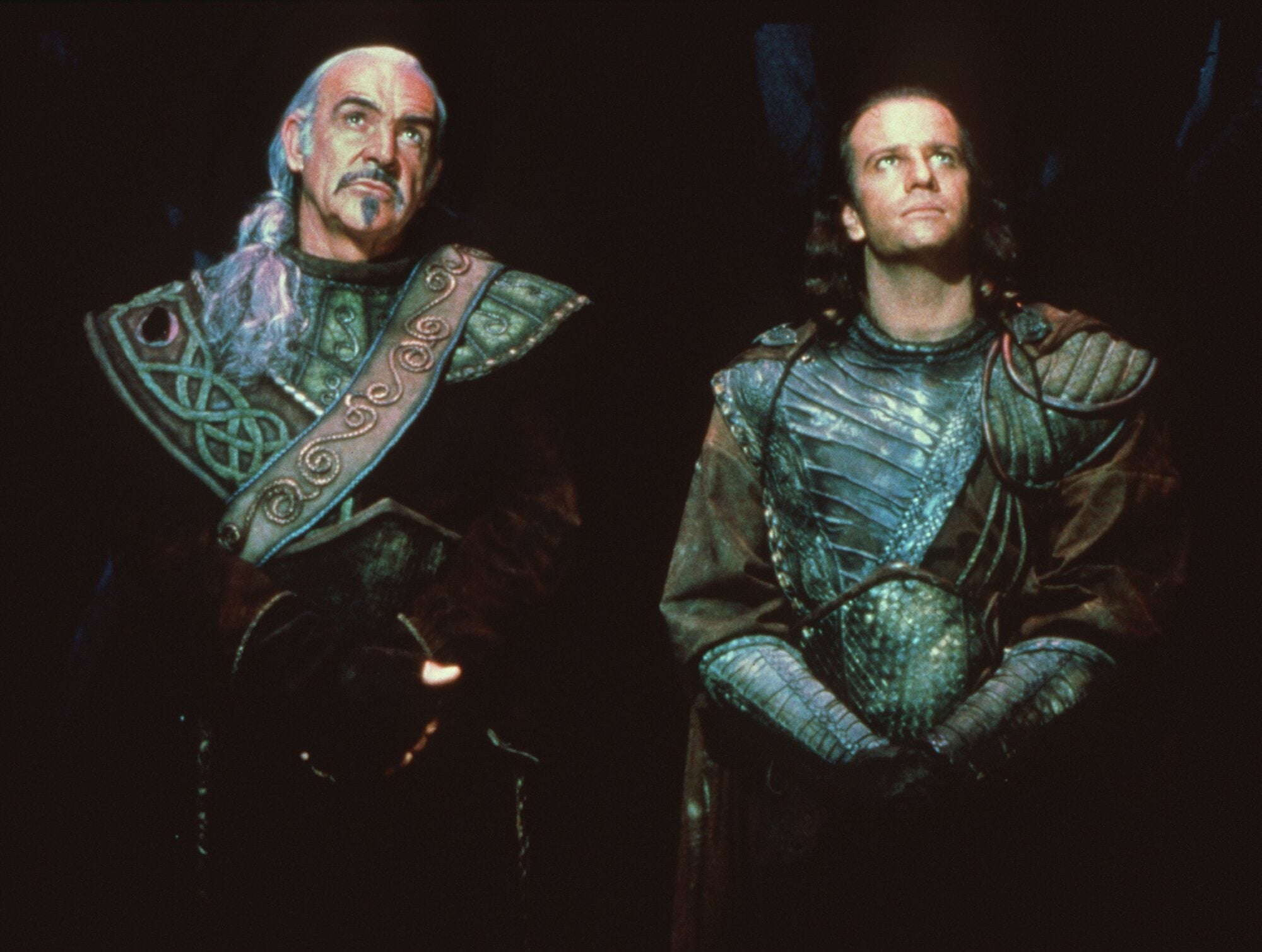
Highlander was pretty much a one-off that worked well as a self-contained story. A sequel would feel like a desperate attempt; even the co-writer Larry Ferguson, who scripted the first movie, declined to return. And yet, producer William Panzer insisted on making the sequel work, especially after foreign distributors and investors were eager for a follow-up since the first Highlander was such a hit in the international market.
So, he brought in Brian Clemens to come up with a story, going as far as introducing an alien backstory as an excuse to resurrect Sean Connery’s otherwise beheaded Ramirez, who was killed in the first movie, turning Highlander II: The Quickening into a sci-fi premise. Ramirez and Connor were even retconned as immortal aliens rather than extraordinary human beings in the first movie, who were exiled from the planet Zeist after they failed their political uprising against the tyrannical General Katana (Michael Ironside).
Despite Clemens drastically changing the original lore, Panzer still retained the first movie’s ending by embracing Connor as mortal, which explained his old age in the sequel’s first act. This gave them a reason to dramatize a comeback for the elderly Connor, who regained his power and youth after his battle against General Katana’s two immortal assassins.
RELATED: Henry Cavill’s Highlander Reveal Is Finally Here — First Look at the Reboot
What Went Wrong Behind the Scenes of Highlander II: The Quickening: Argentina, a Bond Company and a Director’s Walkout
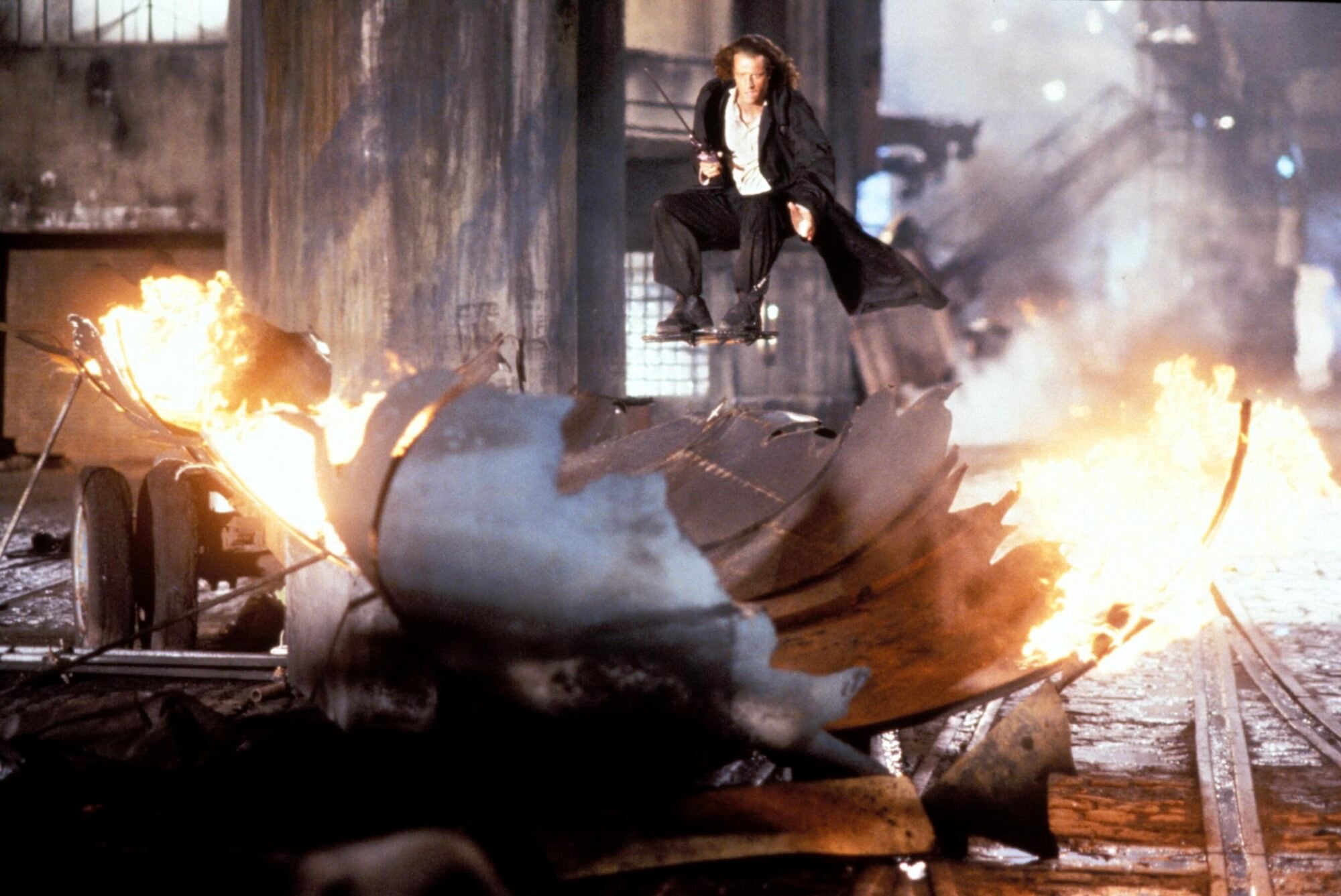
Highlander II: The Quickening was also a behind-the-scenes mess in other areas, beginning with the severe economic collapse in Argentina since the sequel was filmed largely on location in Buenos Aires. The initial budget wasn’t enough to cover the costs due to the hyperinflation crisis, causing the production to run out of money. This forced the completion bond company into panic mode to take over the project without the involvement of Mulcahy, resulting in a Frankenstein’s monster of whatever usable footage could be put together to complete the sequel, even if the result was disjointed.
The theatrical cut was so bad that Mulcahy disowned it and reportedly wanted to have his name removed from the credits. But the producers refused to take his name off the sequel. Mulcahy’s dissatisfaction reached a boiling point after he famously left the theater during the sequel’s world premiere after just 15 minutes.
But he’s far from giving up on the sequel, as he and his team managed to secure the funding to reconstruct the disastrous theatrical version with his superior director’s cut titled Highlander II: The Renegade Version (1995), including restoring the 18 minutes of missing footage and reassembling the scenes while removing every reference related to the planet Zeist.
Why Clancy Brown Never Returned as the Kurgan in Highlander II
Although General Katana was the primary antagonist in Highlander II: The Quickening, it’s hard to believe that the early drafts included another character. Not a new one, but rather a character from the first movie: The Kurgan. He may have died with his head decapitated, but that didn’t stop the producers from wanting Clancy Brown to reprise his role.
According to the actor, he received the first 20 pages of the script, but didn’t get to read the rest. He revealed that the part where his character is one of the bad guys fighting Connor MacLeod during a chase scene doesn’t make sense. They refused to give him the rest of the script, even after he demanded it, and later agreed to do it if they paid him a lot of money.
However, they balked at his request. The big paycheck denial wasn’t the only thing that bothered Brown, since he also had to go through heavy makeup to play the resurrected Kurgan. He already had a bad experience suffering ammonia burns from the latex glue used for the makeup and prosthetics in Franc Roddam’s 1985 gothic romance The Bride, where he played Frankenstein’s monster, Viktor.
Highlander II: The Renegade Version is available for streaming for free (with ads) on Tubi in the US.
Highlander II: The Quickening |
|---|
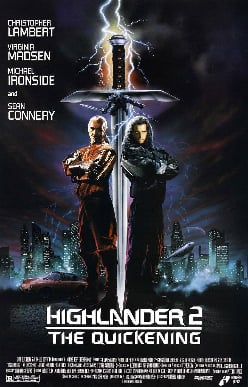
In the future, Highlander Connor MacLeod must prevent the destruction of Earth under an anti-ozone shield. |
 |
|---|
| Studio: Davis/Panzer Productions, Lamb Bear Entertainment, Distributed by InterStar |
| Running Time: 100 minutes |
| Release Date: 1 November 1991 (United States) |
| Cast: Christopher Lambert, Virginia Madsen, Michael Ironside, Sean Connery, John C. McGinley |
| Director: Russell Mulcahy |
| Writers: Peter Bellwood, Story by Brian Clemens, William N. Panzer |
| Genre: Action, Sci-Fi, Fantasy |
| Box Office: $15.6 million (US) |