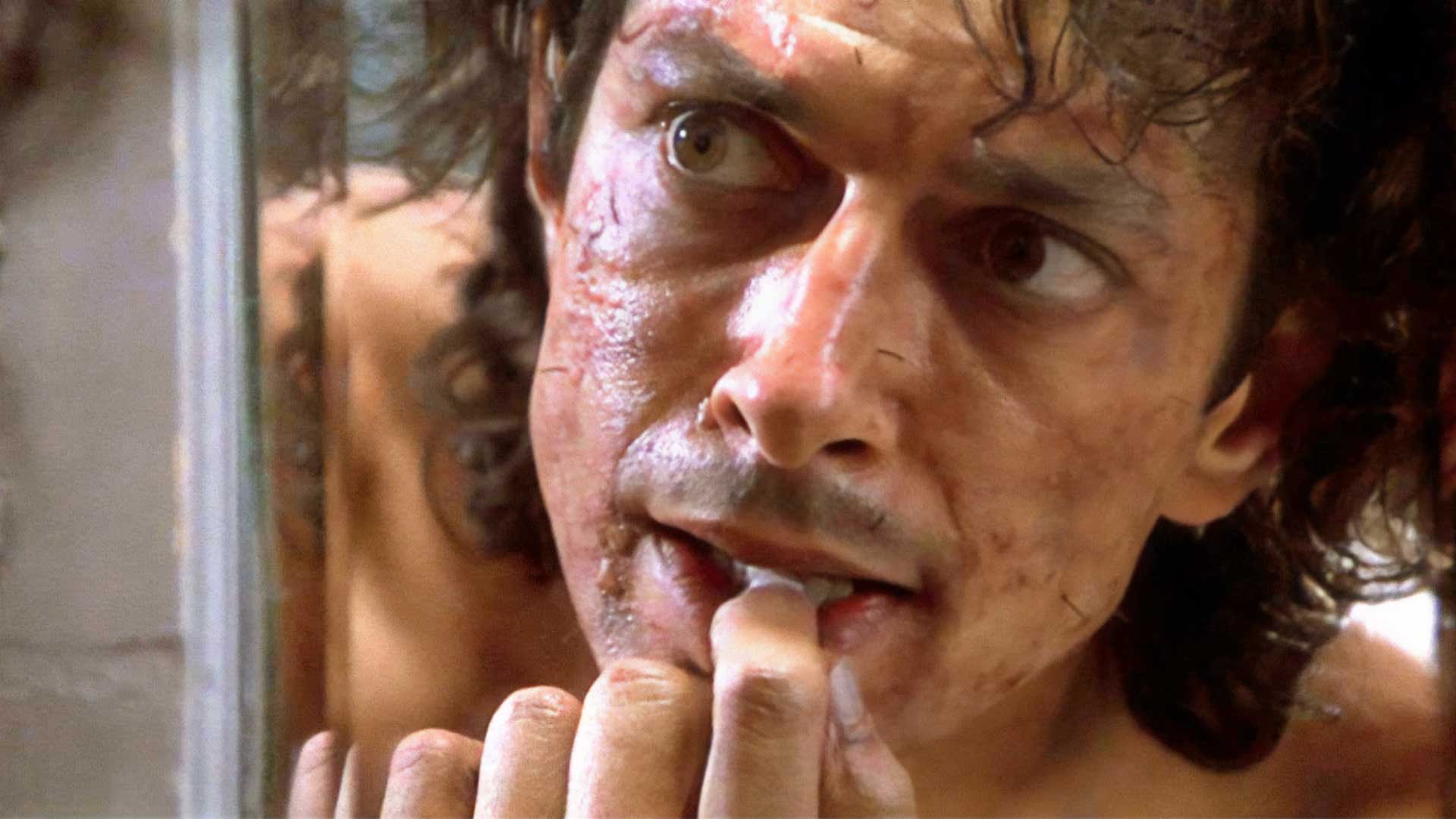


David Cronenberg’s career is best described as a cinematic tale of two halves, beginning with his early stage of exploring the body-horror subgenre in the mid-1970s. Movies like Shivers, The Brood, and Videodrome defined his filmography. Still, it wasn’t until Cronenberg directed The Fly in 1986 that he perfected body horror – a remake of the 1958 film of the same name about an obsessed scientist who unwittingly botches his own teleportation experiment in the lab and ends up turning into a human-insect.
Cronenberg’s version retains the same core premise of Kurt Neumann’s 1958 original, which itself was based on a short story by George Langelaan published in the 1957 issue of Playboy magazine. But he made a smart move that most filmmakers failed to justify a remake in the first place.
And that is not turning his movie into a shot-for-shot recreation (a prime example would be Gus Van Sant’s ill-advised decision to do so in Psycho in 1998), or deviating too far from the original, like how Tim Burton stripped off the sociopolitical context of 1968’s Planet of the Apes in favor of effects-heavy Hollywood spectacle in his 2001 version.
The Fly vs. The 1958 Original: What Cronenberg Changed, and Why It Worked
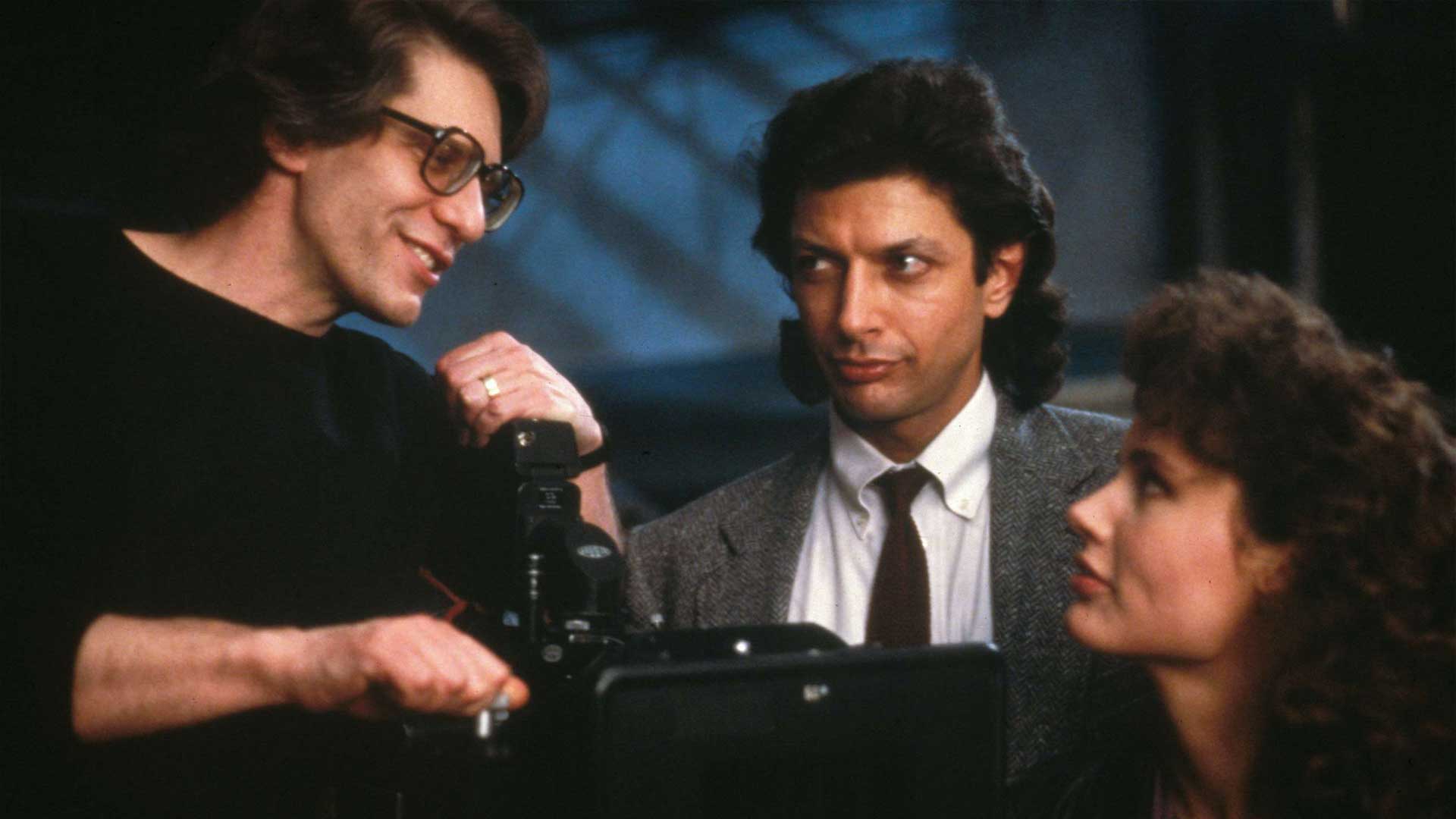
Instead, Cronenberg made The Fly uniquely his own but without losing the fundamental basis that underlines the terrifying consequences of a man trying to play God. First, looking back at Kurt Neumann’s 1958 original, his version is more of a murder mystery told largely in flashbacks. The added sci-fi angle serves as a cautionary tale reflecting the deep-seated anxieties of the atomic age in the ‘50s. Neumann also cleverly builds gradual suspense and dread to reveal the monstrous physical state of scientist André Delambre (David Hedison) after his experiment goes wrong.
But given the strict Hays Code censorship at the time, there was so much Neumann could do about the disturbing subject matter of André’s transformation into a human fly, where the movie proceeds with the aftermath rather than showing the audience how the unlikely fusion happens in the telepods.
The latter is where Cronenberg has the bigger advantage, and the fact that his version carries a hard R-rating means he could embrace the extreme nature of body-horror elements. Here, he chose to eschew the flashback-heavy 1958 original in favor of a chronological narrative. The first act sees Cronenberg, who also co-wrote the adapted screenplay with Psycho III’s Charles Edward Pogue, highlighting the romance between the geeky scientist Seth Brundle (Jeff Goldblum) and the eager science magazine journalist Ronnie (Geena Davis).
Such a storytelling move allows the audience to warm up to these two characters before the inevitable tragedy occurs, beginning with their initial flirtation and how they eventually fall for each other. But as their love grows, something terribly wrong has happened: a fly is somehow trapped in one of the telepods when Brundle decides to perform a human experiment himself.
From here, the story spreads like a cancer, revealing a slow descent into physical deformities and biological changes – weird-looking coarse hair protruding from Brundle’s scarred back, sudden heavy craving for sugar, and even exhibiting volatile behavior.
Inside the Brundlefly Transformation: The Practical Effects That Won an Oscar
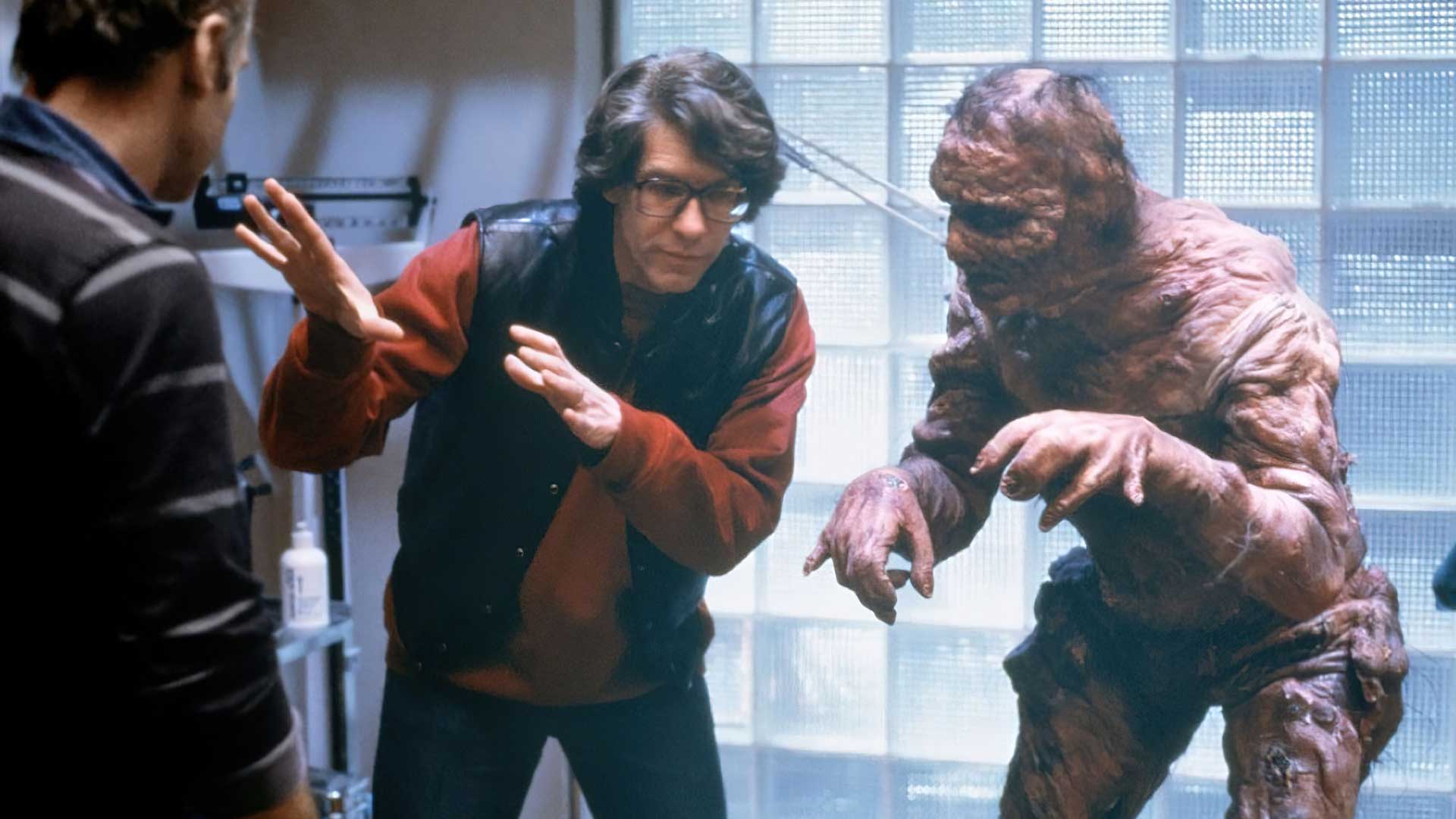
The “Brundlefly” in question refers to the fusion of human and insect that completely alters Brundle’s DNA, spliced with the fly genes. Cronenberg maintains a tragic sense of pessimism once the story reaches a turning point after Brundle’s experiment doesn’t turn out as successfully as teleporting inanimate objects and, at one point, a baboon. It was a cruel twist of fate that a tiny insect like a fly could drastically change everything for the worse.
Brundle’s transformation isn’t immediate, as Cronenberg uses a deliberate filmmaking approach to make us watch him suffer from a decaying state that offers no glimmer of hope in reversing the effect, unlike the 1958 original. It was as psychologically and emotionally stark as the movie gets, making us feel sorry for Brundle’s plight.
Cronenberg’s movies tend to be clinically detached, but not so for The Fly, where he strikes a perfect balance between his signature body horror and the emotional, character-driven resonance. The special effects remain a technical masterpiece even after rewatching The Fly forty years later. And credit goes to Chris Walas, the genius who deservedly won the Oscar for Best Makeup. The effects were all practically made using different processes, starting with the seven-stage prosthetics to show Brundle’s slow body transformation.
For instance, custom-made foam latex was applied to Goldblum’s face to signify skin lesions and discoloration. Walas also incorporated full-scale animatronics to depict the shocking Brundlefly moment during the climactic third act, while the food thickener called methylcellulose and liquid latex were attached to a pressurized pump and a tube hidden from plain sight to fulfill the graphically revolting fly-vomit scenes.
Budgeted at an estimated $9 million, David Cronenberg’s The Fly was a commercial success with $60.6 million worldwide. It was his highest-grossing movie at the time before A History of Violence eclipsed the benchmark nineteen years later. A Cronenberg-less sequel arrived in 1989, with the makeup effects guru himself, Chris Walas, in charge of the direction, to terribly mixed reviews.
RELATED: The Top 10 Most Disgusting Movie Scenes Of All Time
The Fly (1986) isn’t on a major subscription service in the US right now — it’s available to rent or buy on Apple TV, Prime Video, and Google Play/YouTube.