

With movies like The Day After Tomorrow, 2012, and Moonfall, Roland Emmerich has built a career out of scaling things up in the disaster film genre. But the one that matters the most is Independence Day, which celebrates its 30th anniversary this year. Coming off back-to-back successes of Universal Soldier and Stargate in the early ’90s, Emmerich proved to be a visionary director capable of blending high-concept sci-fi tropes with pulpy sensibilities and old-school filmmaking.
The idea of Independence Day, which would become Emmerich’s follow-up, stemmed from a reporter’s question (asking him about whether he believed aliens built the pyramids) during the Stargate press tour in Europe. This led to his hypothetical reply, telling the reporter to imagine waking up to find 15-mile-wide spaceships hovering in the sky.
How Independence Day Was Born and Won the Summer of 1996
Emmerich and his writing-producing partner, Dean Devlin, would spend nearly a month completing the storyboards and script while isolating themselves in a rented house in Puerto Vallarta, Mexico. Then came the huge bidding war as their agent auctioned the script to major Hollywood studios, with Twentieth Century Fox and Universal Pictures emerging as stiff competitors. Fox ultimately won the bid after the studio agreed to meet Emmerich and Devlin’s creative demands, including the final cut and a July 4th weekend release date – a condition that Universal was unable to fulfill.
Interestingly, the specific locked-in release date was due to Emmerich wanting to beat Tim Burton’s Mars Attacks! since the latter’s movie ironically shared the same alien-invasion theme as Independence Day, albeit with a more comedic approach. That July 4th theme of the film was part of Emmerich’s ingenious strategy to force the studio to secure the date, allowing Independence Day to get ahead before the August release of Tim Burton’s sci-fi comedy.
Emmerich got his wish but, surprisingly, Mars Attacks! didn’t make it to the summer-movie calendar. Warner Bros. got cold feet over Burton’s hefty budget proposal and ambitious stop-motion animation demands. The production was then delayed as Burton overhauled his plan to fit the scaled-down budget, resulting in his movie being pushed back to December instead.
The $75 million-budgeted Independence Day did well when it opened, taking in $50.2 million in the first three days and sitting at the top spot for three consecutive weekends stateside. By the end of its theatrical run, the movie finished with an impressive $306.1 million, while the international box office generated bigger success at over $511 million, totalling $817.4 million worldwide.
Why Independence Day’s First Act Still Hooks You 30 Years Later
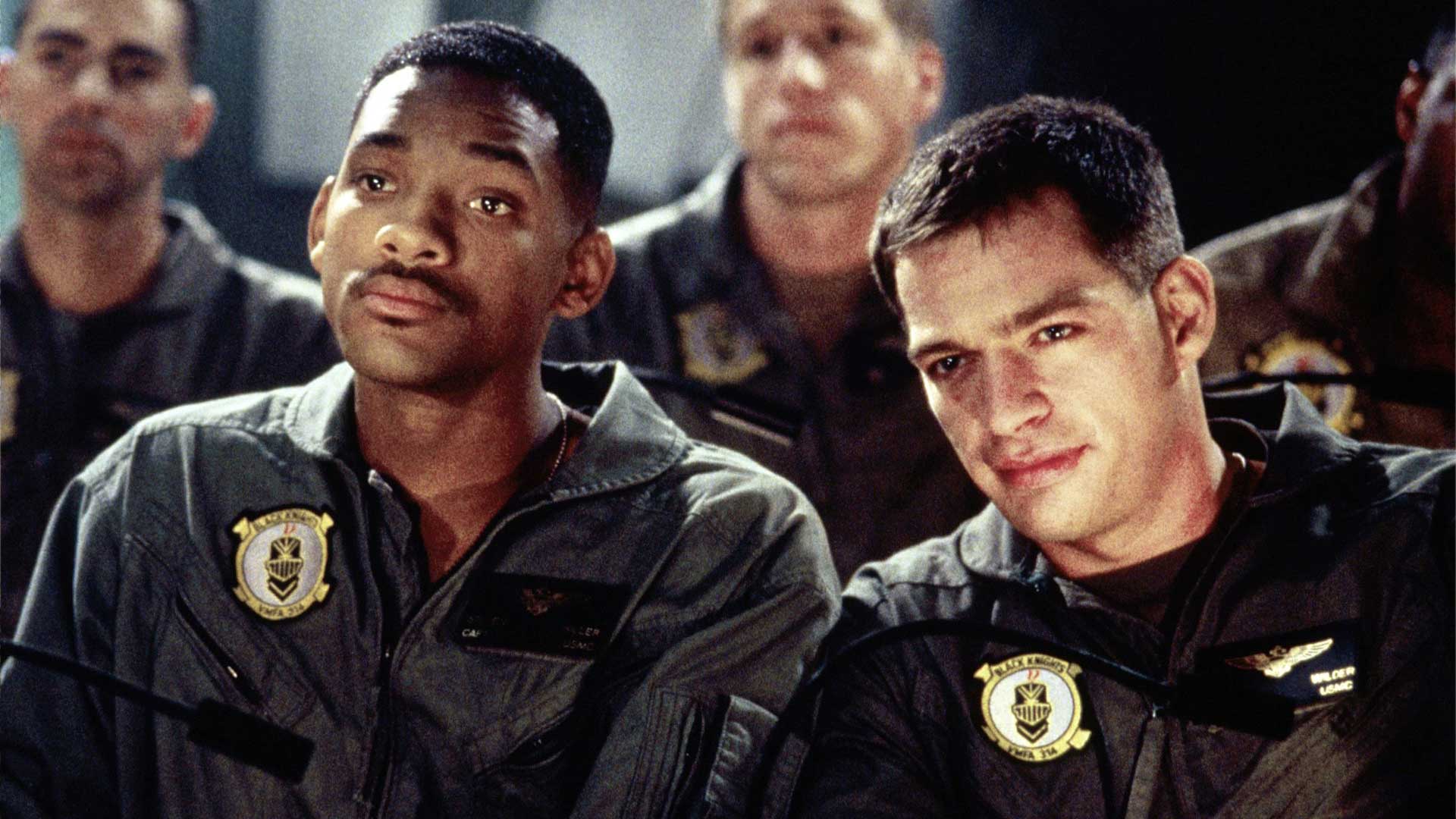
The massive success of Independence Day boiled down to a few factors, beginning with the ominous cold open of the massive shadow looming over the Apollo 11 moon-landing site and an unusual signal being picked up by the SETI (Search for Extraterrestrial Intelligence) technician.
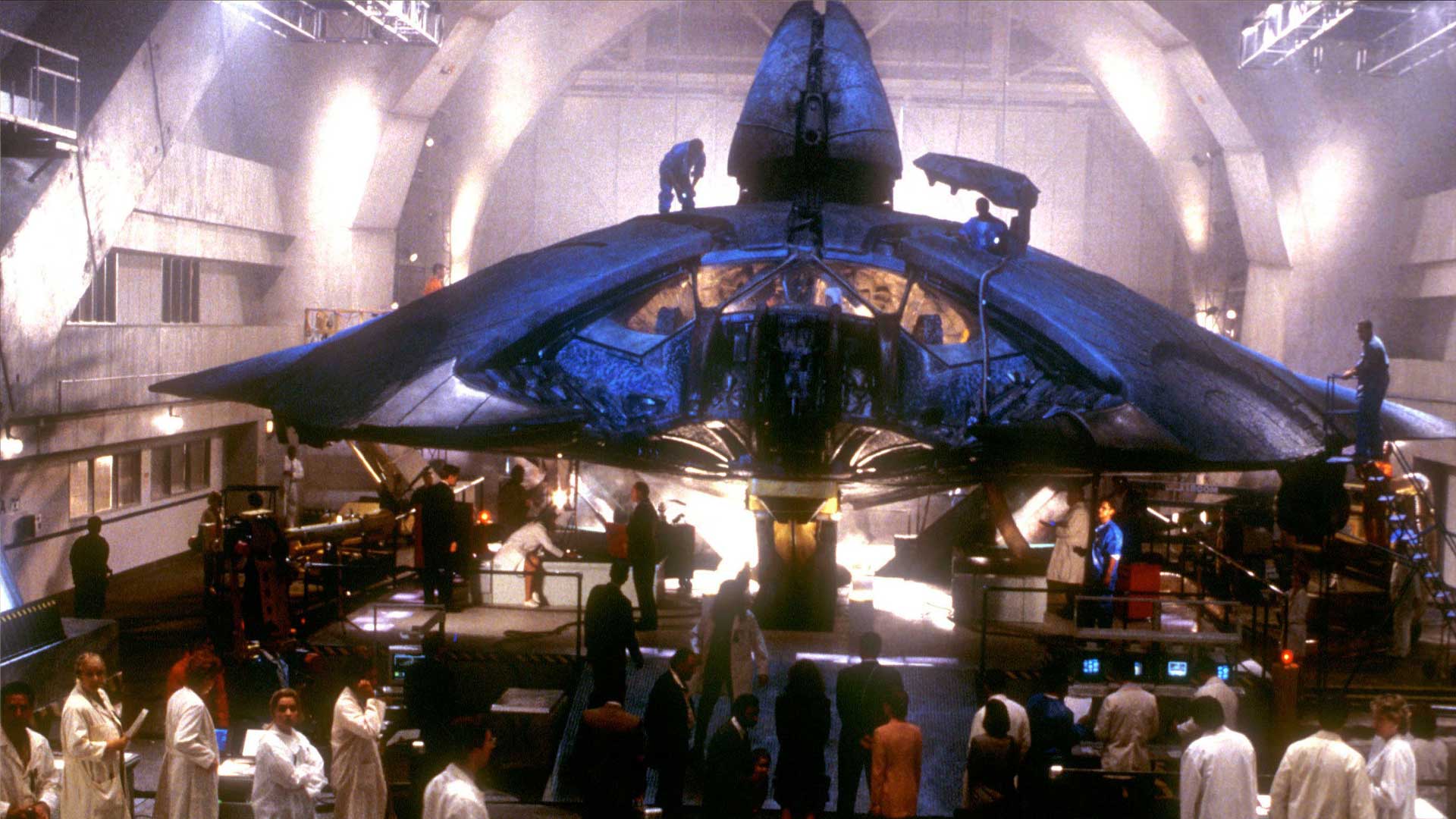
Emmerich doesn’t rush the action surrounding the alien invasion, opting instead for a careful build-up through the combination of pacing and tension, while effectively establishing multiple characters. This includes satellite technician David Levinson (Jeff Goldblum), who realizes the signal is meant as a countdown timer for the alien ships to launch a synchronized global attack on Earth. The movie also introduces hotshot Marine pilot Captain Steven Hiller (Will Smith), former fighter pilot-turned-US president Thomas Whitmore (Bill Pullman), and the drunken ex-Vietnam War vet Russell Casse (Randy Quaid).
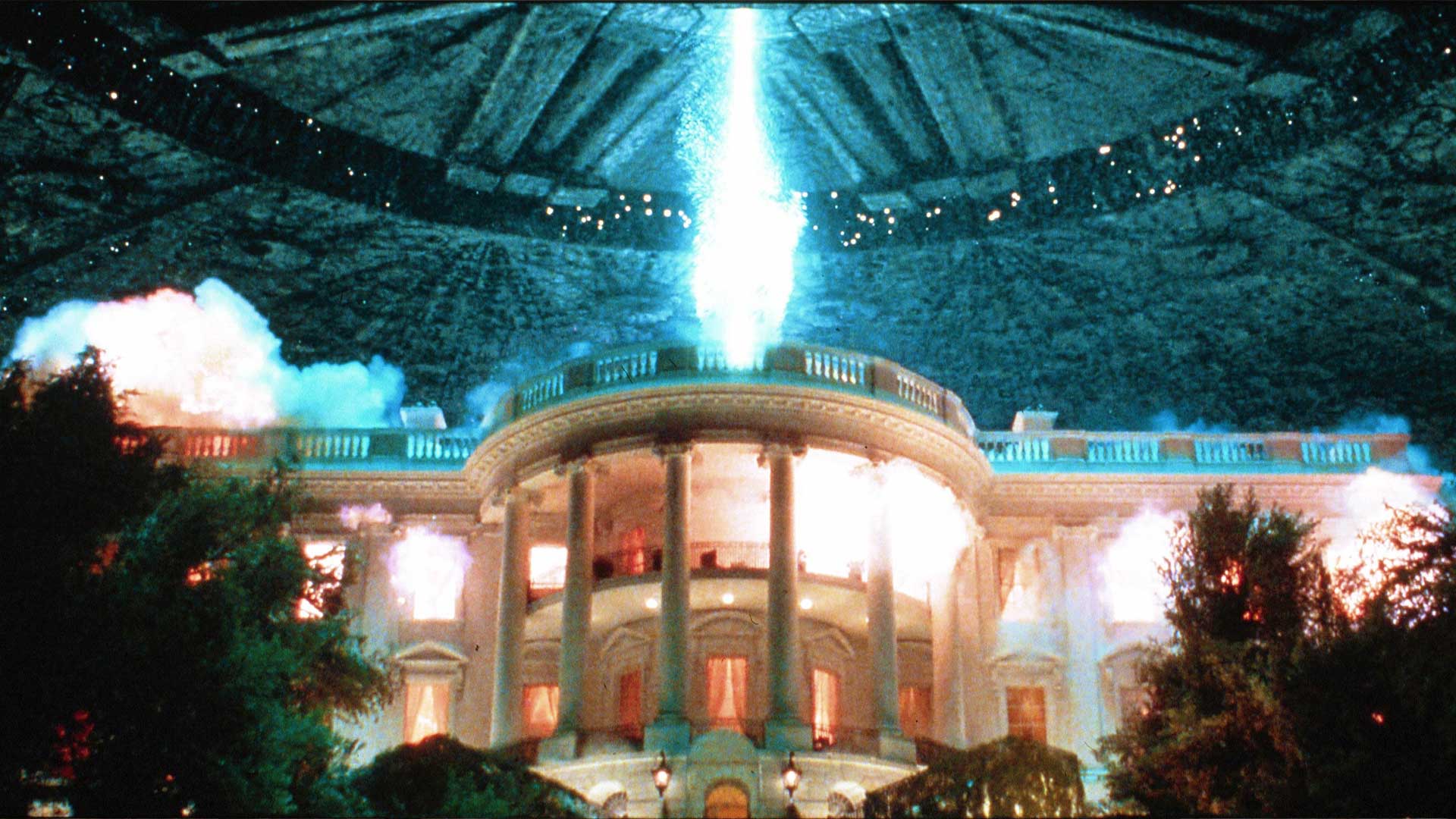
The story does a good job of giving these characters distinct personality traits, even incorporating backstories (such as Russell becoming the subject of ridicule after he repeatedly claims the aliens abducted him years ago, which left him in a drunken state and traumatized ever since). The race-against-time soon culminates in the alien ships destroying the cities with large laser beams, including landmarks, from the U.S. Bank Tower to The Empire State Building and the White House.
The destruction sequences remain among the prime examples of how CGI and practical effects are seamlessly integrated, capturing not only the scale and scope of the cataclysmic alien attack but also its visceral impact. I remember watching Independence Day on the big screen back in the day, and even revisiting the movie today (available on Tubi at the time of writing) it still gives that wow factor – even though, CGI in 1996 wasn’t as advanced as today, and there was only so much the technology could do at the time.
And yet, like Twister, which was also released in the summer of 1996, the added practical effects are what give Independence Day a tangible sense of verisimilitude. Emmerich and his team rely on detailed miniatures and real pyrotechnics, making everything look immersive.
Will Smith, Jeff Goldblum, and the Odd-Couple Dynamic That Made Act Two Work
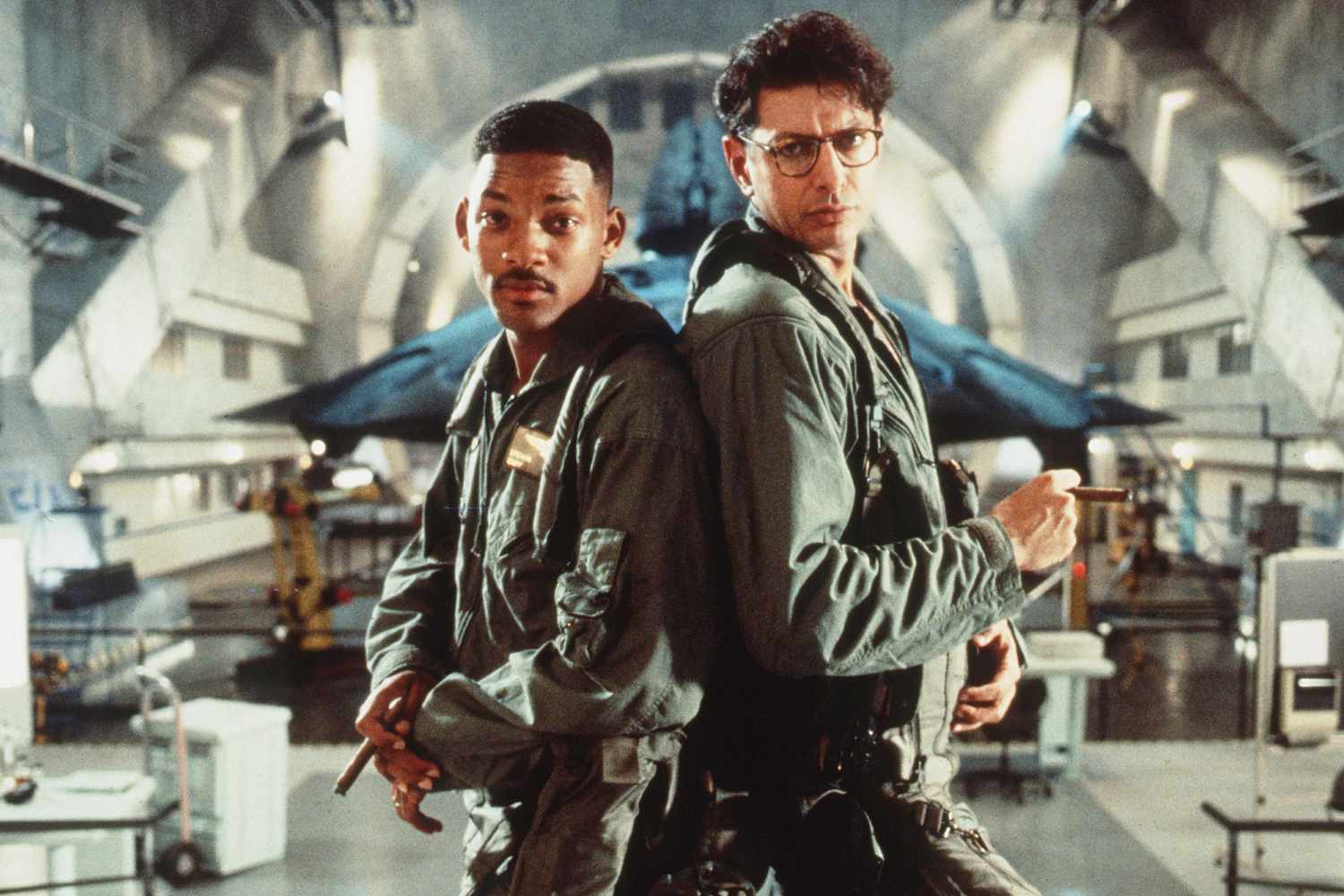
The second act sees Emmerich delve into the aftermath of the destruction, shifting from survival to counterattack as some of the characters eventually cross paths and join forces to map out their strategy. He equally highlights Captain Hiller’s memorable gung-ho dogfight against the alien spaceships, with Will Smith delivering his effortlessly cool, swaggering charm that made him one of the quintessential ’90s action icons after Bad Boys a year earlier. His subsequent pairing with Goldblum’s David Levinson brings an exceptional on-screen dynamic – the brawn and the brain.
Emmerich doesn’t forget to inject some emotional weight into his popcorn blockbuster too, addressing the low point of humanity’s loss and hope before everything comes together with these characters retaliating.
The Speech, the Virus, and Why Independence Day’s Finale Still Delivers
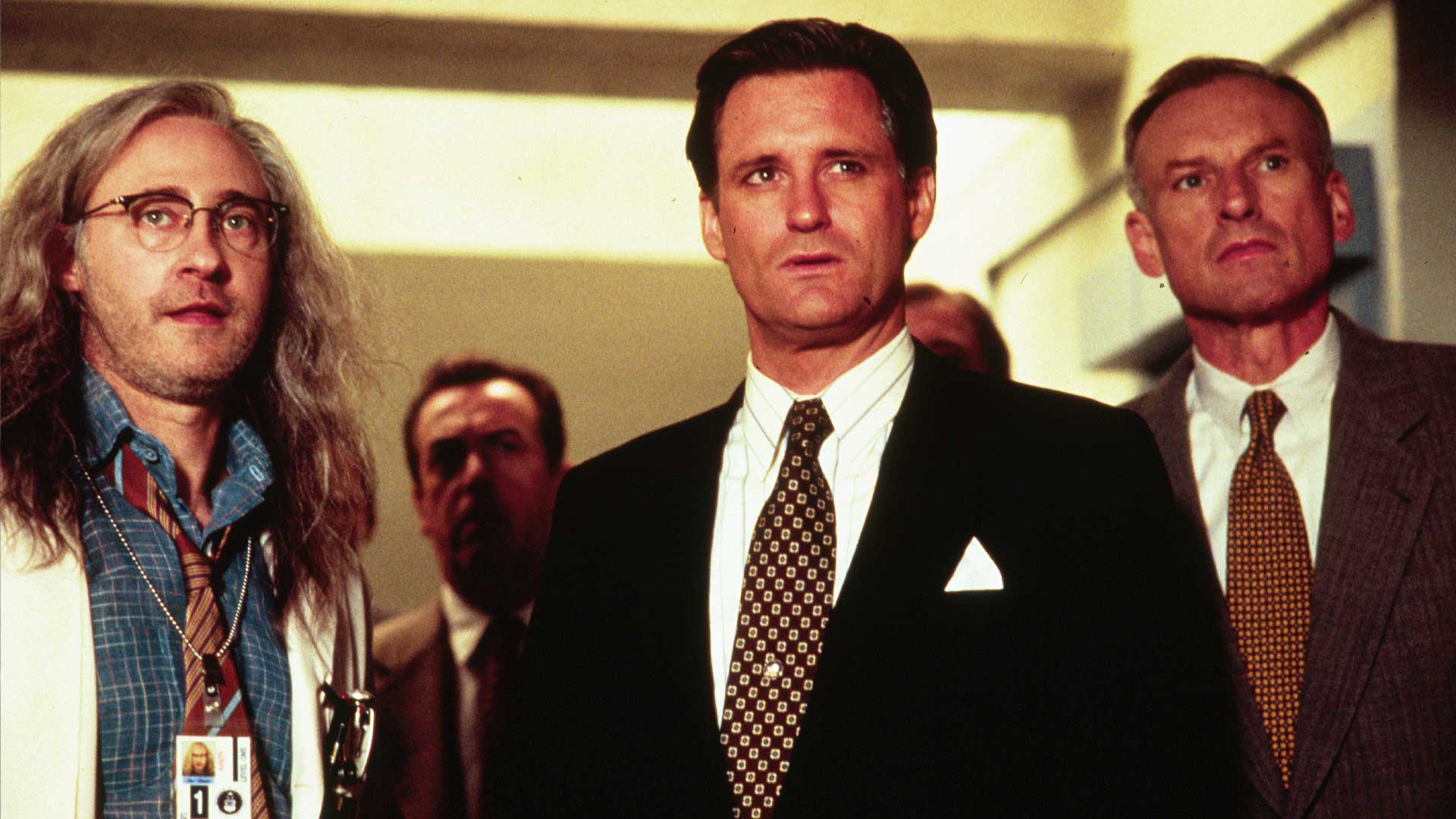
The turning point arrives with President Whitmore’s famous big speech as the stakes rise with a satisfying payoff, where the commander in chief himself leads the air strike with a volunteer fleet, while David and Hiller are flying off into space to cripple the alien mothership’s defensive force shield using a computer virus. The whole defeating-the-aliens-with-virus angle may sound terribly dated by today’s standards, but it’s worth noting that the 1990s were a different era in how computer technology was perceived as cyber utopianism.
Emmerich would go on to revisit the movie with Independence Day: Resurgence twenty years later, an ill-fated sequel that felt more like a desperate cash grab instead of a necessity. It didn’t help either when Will Smith, the charismatic star who anchored the first movie, dropped out in favor of Suicide Squad. Not surprisingly, the sequel ended with a lukewarm box office reception, and Emmerich’s initial idea to expand the franchise into a multi-film series was scrapped. Besides, Independence Day is the type of sci-fi disaster blockbuster that’s best seen as a one-off rather than a potential franchise starter.
Thirty years on, Independence Day remains what every alien invasion film since has been quietly measured against — and none have passed the test.
If you liked Independence Day, watch these next: War of the Worlds (2005), Arrival (2016), The Day After Tomorrow (2004), Battle: Los Angeles (2011) and Disclosure Day (2026).
Where to stream:
Independence Day |
|---|
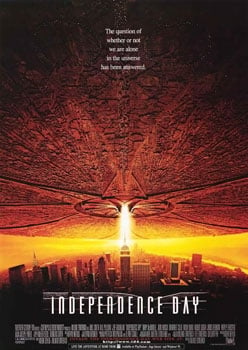
The aliens are coming and their goal is to invade and destroy Earth. Fighting superior technology, mankind's best weapon is the will to survive. |
 |
|---|
| Studio: 20th Century Fox |
| Running Time: 145 minutes |
| Release Date: July 3, 1996 (Wide) · June 25, 1996 (World Premiere) |
| Cast: Will Smith, Jeff Goldblum, Bill Pullman, Mary McDonnell, Judd Hirsch, Randy Quaid |
| Director: Roland Emmerich |
| Writers: Roland Emmerich & Dean Devlin |
| Genre: Sci-Fi, Action |
| Box Office: $817.4 million |