

Steven Spielberg and Stanley Kubrick. Two names who are renowned for their respective directorial styles and tones. The former leans more toward populist filmmaking, blending immersive visual storytelling with resonant human connection. The latter contrasts with Spielberg’s predominantly mainstream-friendly work, offering deliberately cold and cerebral films with a dash of subtle dark humor. Both hold their places as among the greatest filmmakers of all time. But the very thought of imagining these two directorial titans collaborating on a film together feels like a creative mismatch that’s more of a huge gamble rather than a guaranteed hit.
How A.I. Artificial Intelligence Spent Decades Trapped in Development Hell
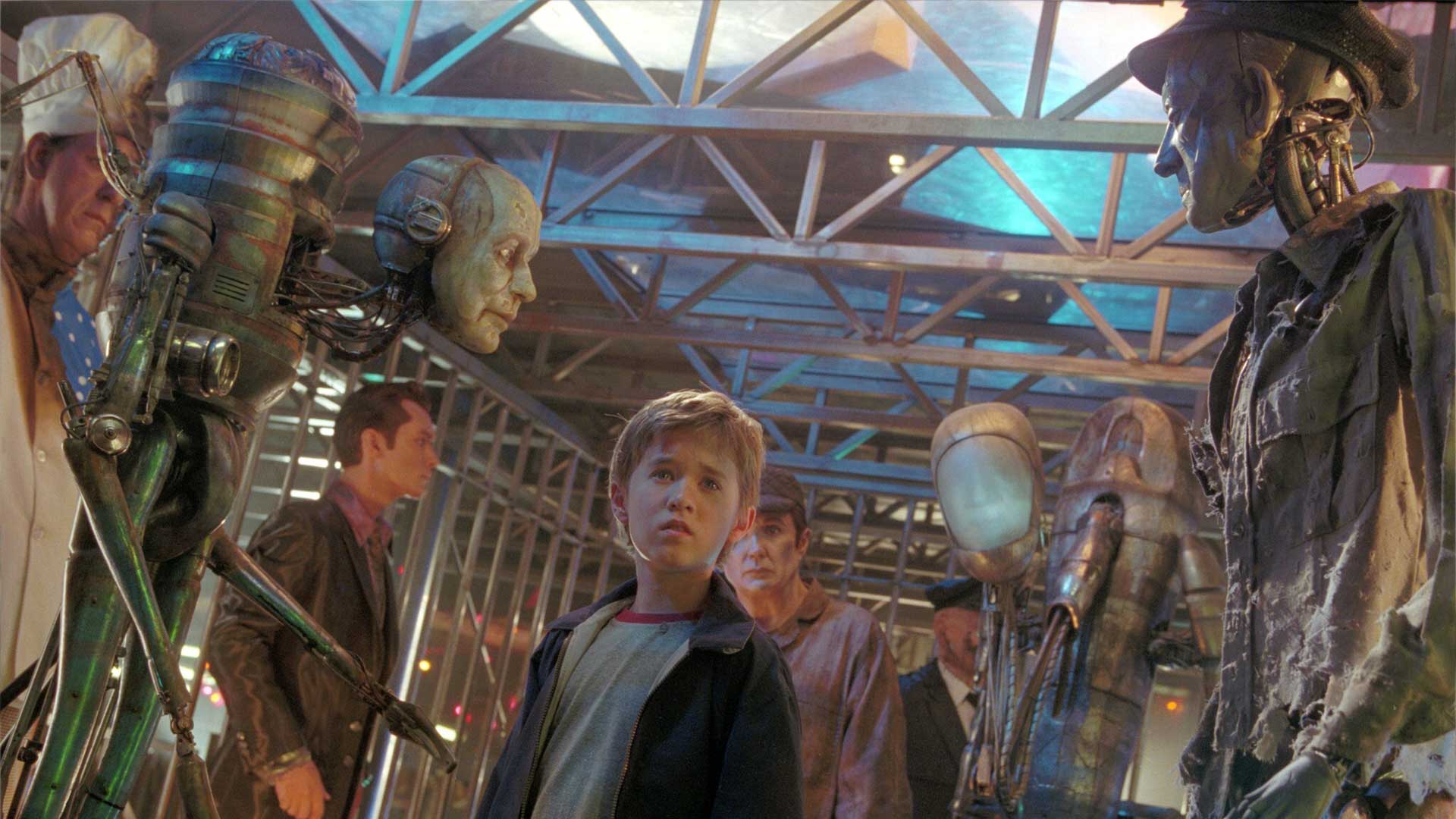
In March 2000, Spielberg shocked the industry and media by announcing he would direct A.I. Artificial Intelligence, a longtime passion project that his late close friend Stanley Kubrick, who unexpectedly died in 1999, had been trying to get off the ground for decades. A.I. Artificial Intelligence was one of the most fascinating film projects stuck in development hell, and among the greatest what-if scenarios if Kubrick actually managed to pull it off.
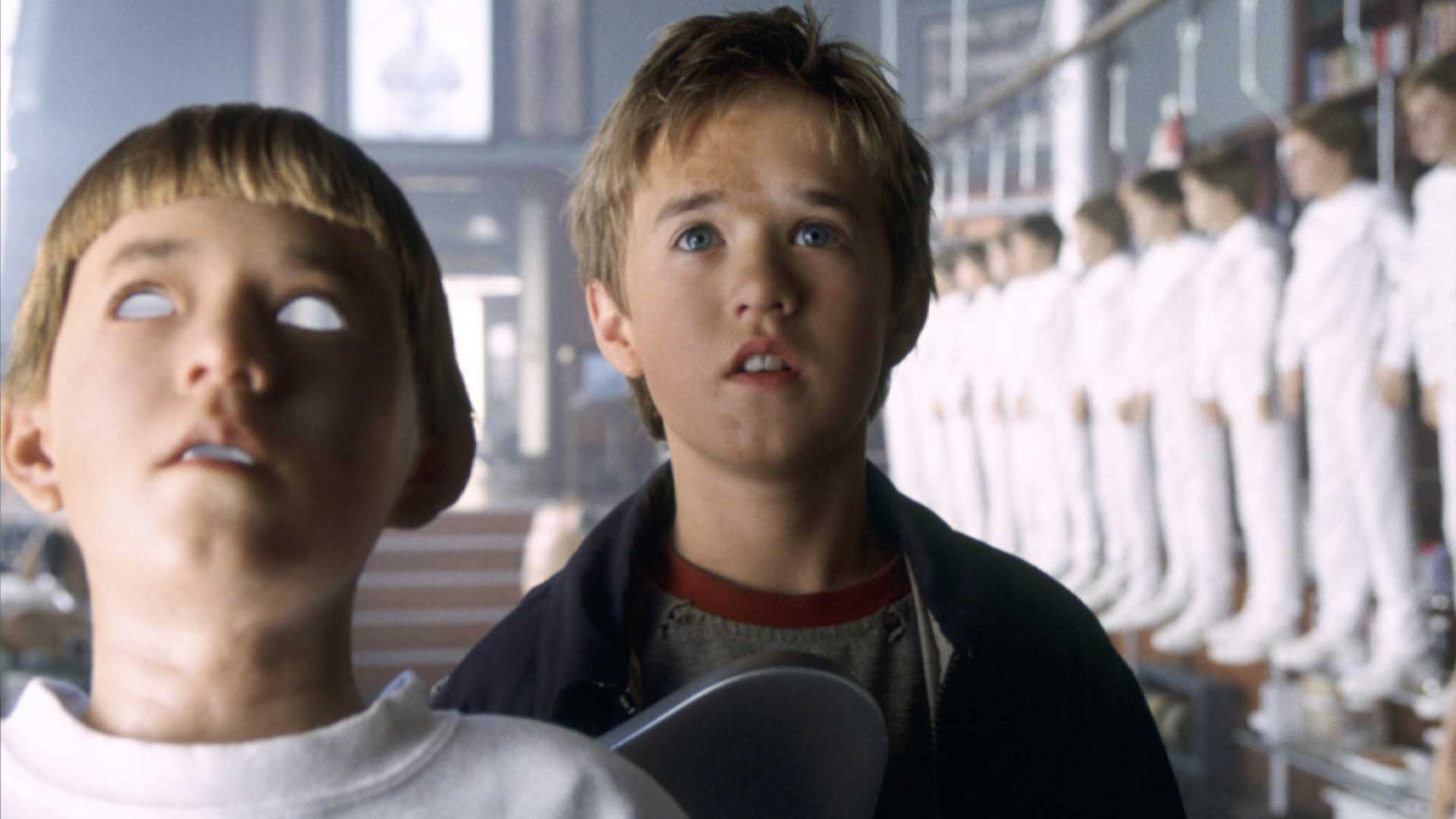
Unfortunately, the single major reason that kept holding him back was the reality of technological limitations at the time. This was particularly true with his insistence on building a realistic-looking animatronic robot to play David, the mecha-boy protagonist in the movie. Kubrick tried and failed, feeling dissatisfied with the lifeless and unconvincing result despite spending millions of dollars. He didn’t want a human child actor to play the character because of their inherent expressiveness.
He later changed his mind and briefly considered Joseph Mazzello, even screen-testing him after watching the early footage of the boy’s performance in Spielberg’s Jurassic Park. Then he realized that casting a human child means he must complete his movie within a certain period of time, since Mazzello would inevitably grow up. And given his perfectionist filmmaking style, this would make the situation more difficult than it already was.
Why Kubrick Handed A.I. to Spielberg — and Then Died Before Seeing It Made
After Jurassic Park hit theaters in June 1993, Kubrick changed his mind again. He was impressed by the CGI from Industrial Light & Magic (ILM), realizing that digital visual effects allowed him to render David without worrying about age or natural human expression. So, in 1994, Kubrick dropped Mazzello in favor of an all-digital approach after commissioning ILM to do the CGI tests, hoping to see if they could produce a photorealistic computer-generated boy. However, the tests resulted in the digitized David looking too plastic, with hollow eyes and stiff body movements.
By 1995, Kubrick entrusted Spielberg to direct A.I. Artificial Intelligence, with him taking the producer role. He would extensively communicate with Spielberg using a fax machine, going as far as demanding that the latter use only a secure line strictly dedicated to them. In other words, every printed paper, from notes to script treatments, storyboards, and conceptual drawings, went through the machine for Spielberg’s eyes only.
With the directorial reins now pivoted over to Spielberg, Kubrick moved on to developing his other passion project, Eyes Wide Shut. He planned to complete his film before jumping back to producing A.I., but six days after he delivered his final cut of Eyes Wide Shut to Warner Bros. on March 1, 1999, he passed away in his sleep from a heart attack. At the time of his death, Spielberg was in pre-production for Minority Report, and later attached to direct the first Harry Potter movie because Tom Cruise wasn’t available due to a scheduling conflict with Mission: Impossible 2.
Spielberg’s Harry Potter project failed to materialize after clashing with the Warner Bros. studio and author J.K. Rowling, causing him to walk away and finally commit to directing A.I. Artificial Intelligence as his next project.
Where Kubrick’s Cold Vision and Spielberg’s Sentimentality Collide On Screen
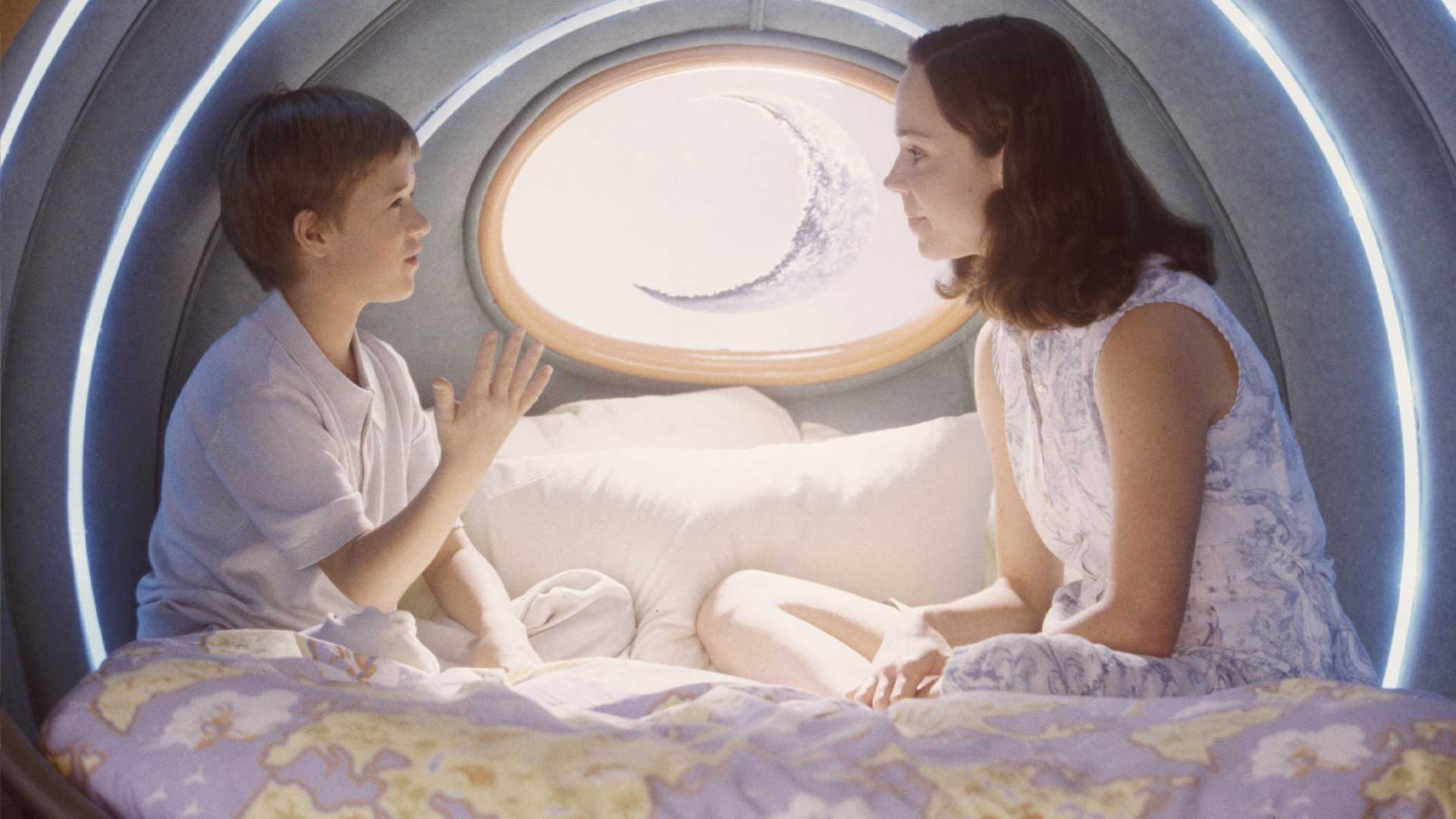
Looking beyond the box office, A.I. Artificial Intelligence remains an intriguing film that’s impossible to ignore — a cerebral yet emotionally penetrating sci-fi take on Pinocchio that highlights the 11-year-old mecha child David (Haley Joel Osment, whose subtly robotic-like performance marks among his best performances since The Sixth Sense), who wants to be a real boy. He figures that by fulfilling the path to becoming a “human”, his adopted parents (Sam Robards, Frances O’Connor) would love him more like their own child.
Spielberg does a good job of establishing the first act, focusing on the grieving parents, whose son Martin (Jake Thomas) is placed in an indefinite suspended animation due to a rare disease. The introduction of David into the family is meant to fill the void, particularly for O’Connor’s Monica, who has been trapped in a prolonged sense of despair. Here, Spielberg brilliantly combines the Kubrick-like clinical visuals that reflect the movie’s sterile 22nd-century environment with his own signature emotional longing.
The latter can be seen through David’s yearning for parental love, and later, experiencing a sibling rivalry with Martin, who miraculously recovers and returns home. Favoritism ultimately plays a part, underlining the heartbreaking truth that, despite the family warming up to David, everything changes once their biological son, Martin, is back home. David gets less attention, and Martin doesn’t treat him like a brother but rather as a disposable, expensive toy.
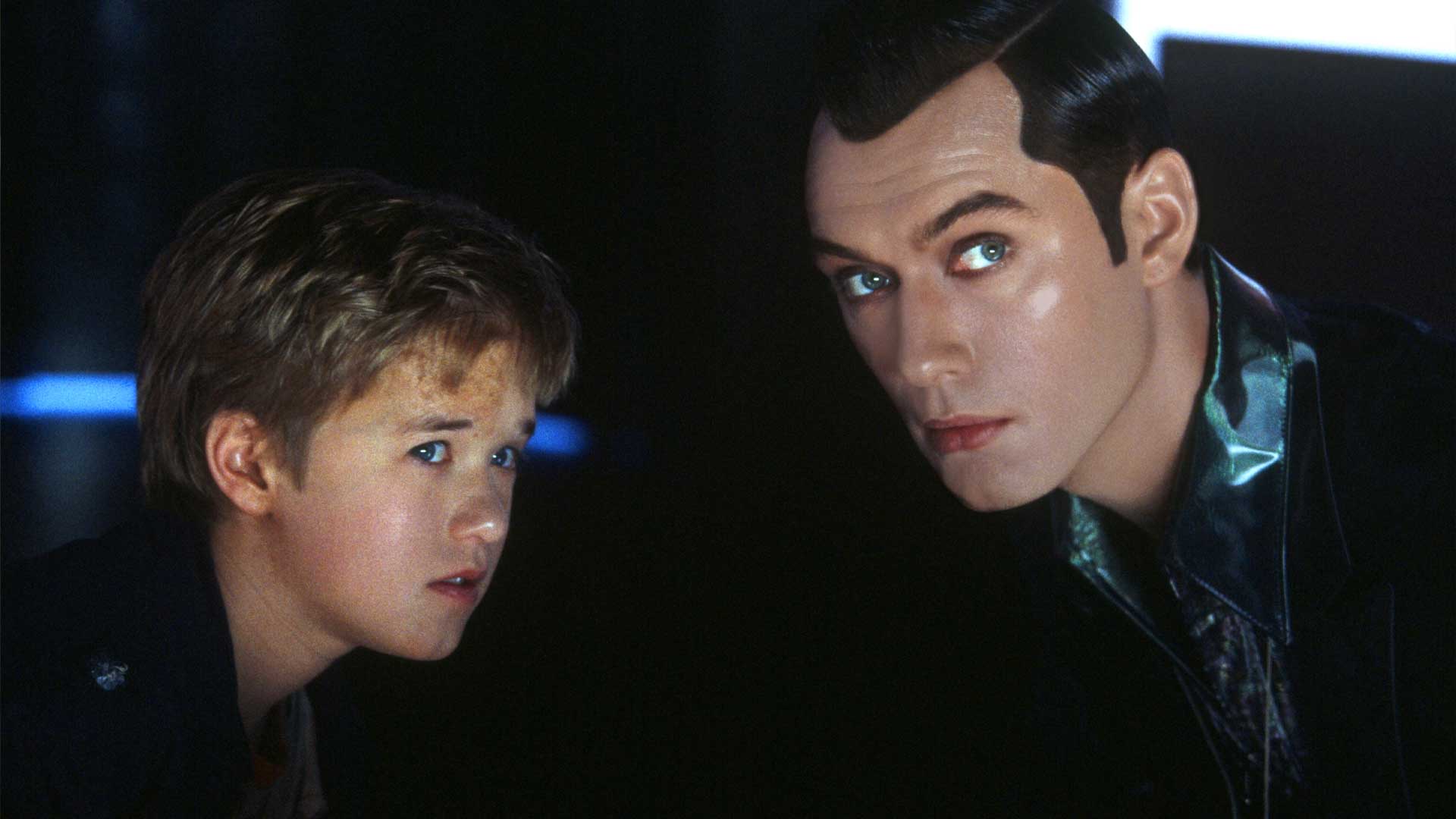
David’s illusion of family love is ultimately shattered when his mother decides to dump him in the forest with the robotic teddy bear, Teddy (voiced by Jack Angel), following an incident with Martin at the pool. This marks an epic journey for David and Teddy in the search for the magical Blue Fairy, combining the road-movie tropes with the darkly cynical spirit of Kubrickian style in the bleak second act, evidently during the neon-soaked Rouge City sequence. The second act also introduces Gigolo Joe (a well-cast Jude Law), a robotic male prostitute who becomes entangled with David and Teddy at one point.
Despite Spielberg honoring Kubrick’s vision, he doesn’t forget to incorporate his high-octane filmmaking sensibilities in the thrilling Flesh Fair escape sequence, allowing him to stage a familiar high-stakes moment that sees David, Teddy, and Gigolo Joe fleeing the scene to avoid getting slaughtered in front of the human crowd.
The Controversial Ending of A.I. Artificial Intelligence — and Why It Was Kubrick’s Idea, Not Spielberg’s
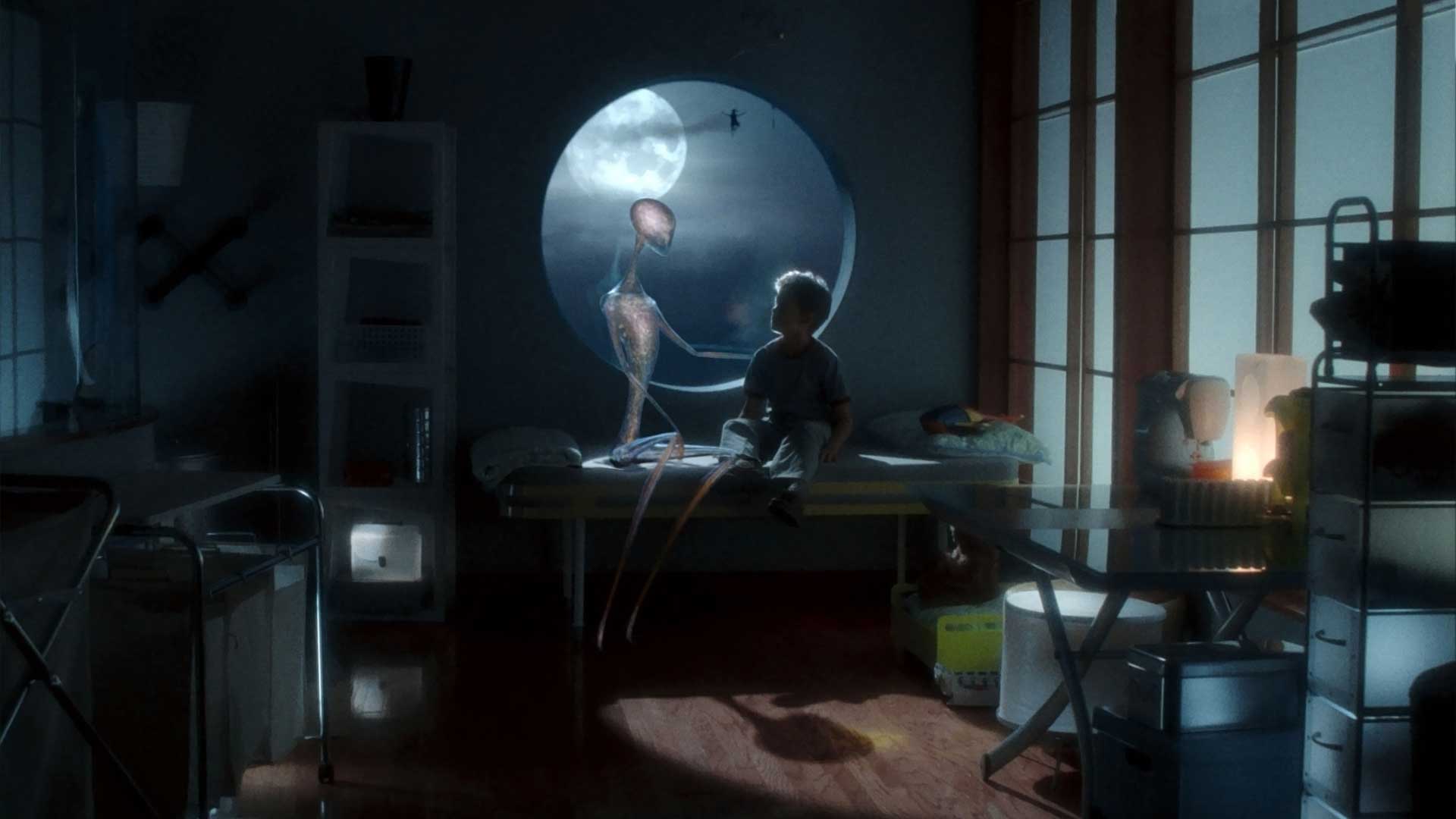
The ending of A.I. Artificial Intelligence has always been heavily debated – and depending on your tastes, you either love it or hate it. We see that David chooses to commit suicide by jumping into the ocean from the Rockefeller Center skyscraper in the flooded ruins of Manhattan after learning the truth about his origin. What follows is the discovery of the Blue Fairy figure while he’s underwater, figuring this would be his chance to make a wish.
That moment where he keeps wishing the Blue Fairy, despite turning out to be a plaster statue from a theme park attraction sunken at the bottom of the ocean, to grant his wish of becoming a real boy, would have been ideal way for Spielberg to end the movie. This would highlight David’s lack of fundamental human intellect in differentiating between a fairy-tale myth and reality.
The fact that Professor Hobby (William Hurt) and the Cybertronics engineers never programmed David with the cognitive framework to reason beyond his emotions — leaving him unable to distinguish a fairy-tale myth from reality — makes for a brutal Kubrickian irony. It would have been the perfect, pessimistic note on which to end the film.
But the story doesn’t end there. It jumps 2,000 years ahead to total human extinction, where alien beings resurrect a frozen, dormant David and Teddy. The emotional resolution that follows feels sentimental to the point of feeling like a studio-mandated happy ending — and it’s tempting to blame Spielberg for blinking. Ironically, though, the 2,000-year time jump was entirely Kubrick’s own idea, developed with Ian Watson in their original script treatment adapted from Brian Aldiss’s 1969 short story Supertoys Last All Summer Long.
A.I. Artificial Intelligence Underperformed at the Box Office — But Its Legacy Outlasted the Numbers
A.I. cost between $90–100 million to produce, and Warner Bros. released it on June 29, 2001, into one of the most anticipated summer movie slots of the year. The domestic run told a different story — a strong $29.3 million opening gave way to a disappointing $78.6 million total. International audiences were far more receptive, bringing in $157.3 million for a worldwide gross of $235.9 million. For a film of this scale, directed by Spielberg at the height of his powers, moderate was a verdict nobody had predicted.
That tension — between Kubrick’s uncompromising vision and Spielberg’s populist instincts — is precisely what makes A.I. Artificial Intelligence impossible to dismiss, and equally impossible to resolve, even 25 years on.
RELATED: Steven Spielberg Almost Made One of Christopher Nolan’s Best Movies