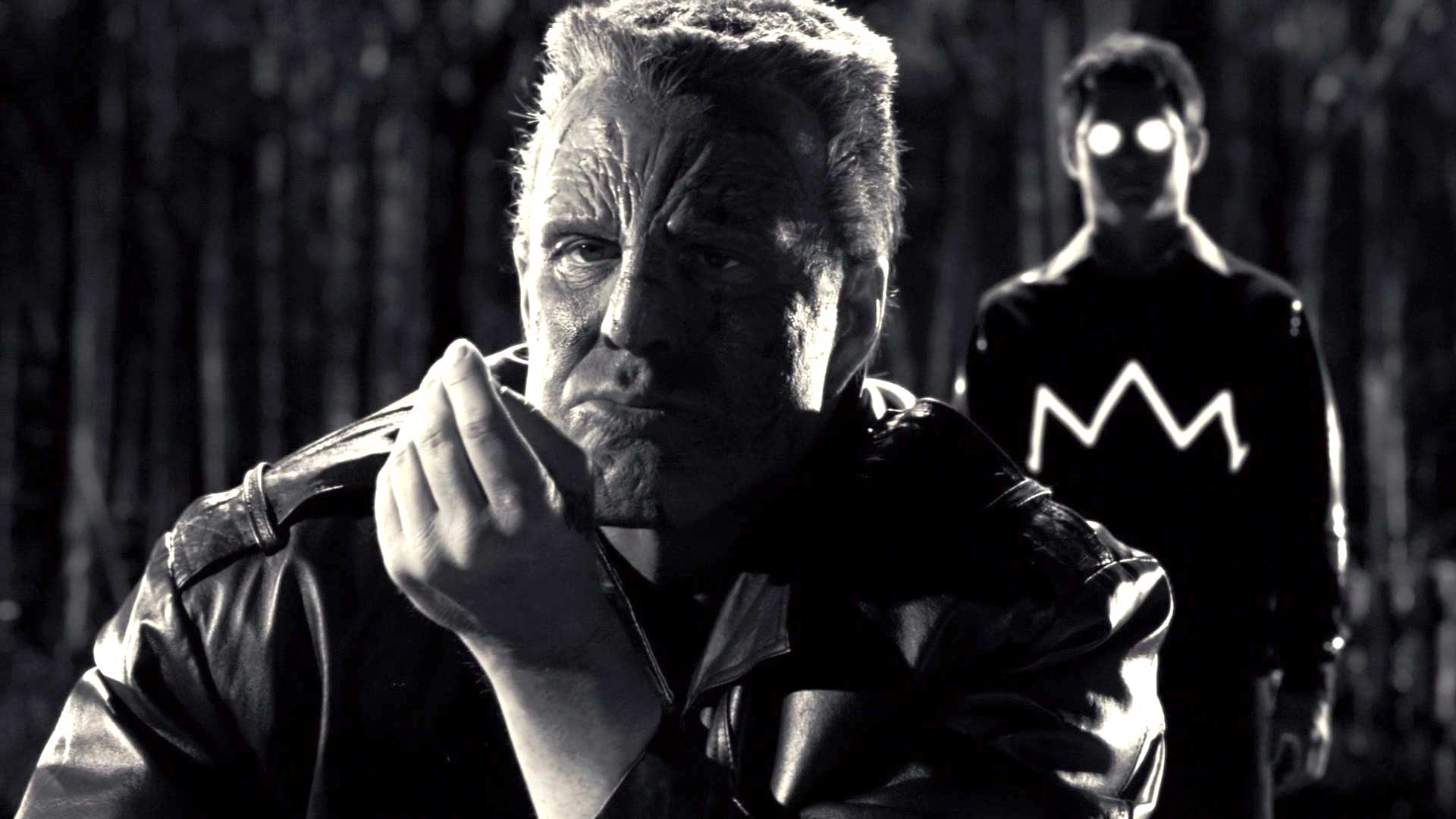


Robert Rodriguez and Frank Miller’s Sin City (Rotten Tomatoes score: 76%) electrified both the world of cinema and comic book fandom upon release in 2005, earning about $158.7 million worldwide on a $40 million budget. The heavily stylised film blended moody noir, the classic appeal of black-and-white cinema, and the movement of comic book storytelling into a unique motion picture that few had attempted up to this point. Even if someone wasn’t a fan of the genre or the comic book series created by Miller, this production caught the eye and made a splash in the film industry for its innovation.
In many ways, this bold approach is synonymous with Rodriguez and Miller’s careers as artists. Both are visionaries who haven’t been afraid to go left when all their contemporaries turn right. They push the boundaries of what is the norm, upsetting the gatekeepers and the risk-averse conformists who worship at the altar of the status quo. It’s exactly what needs to happen for art to evolve and explore new frontiers. Despite the initial positive reception to Sin City, the celebration proved to be a fleeting moment as the comic book movie genre largely forgot about the road the film paved and resorted back to conventionality.
How Sin City’s Visual Style Influenced 300, Watchmen and The Spirit
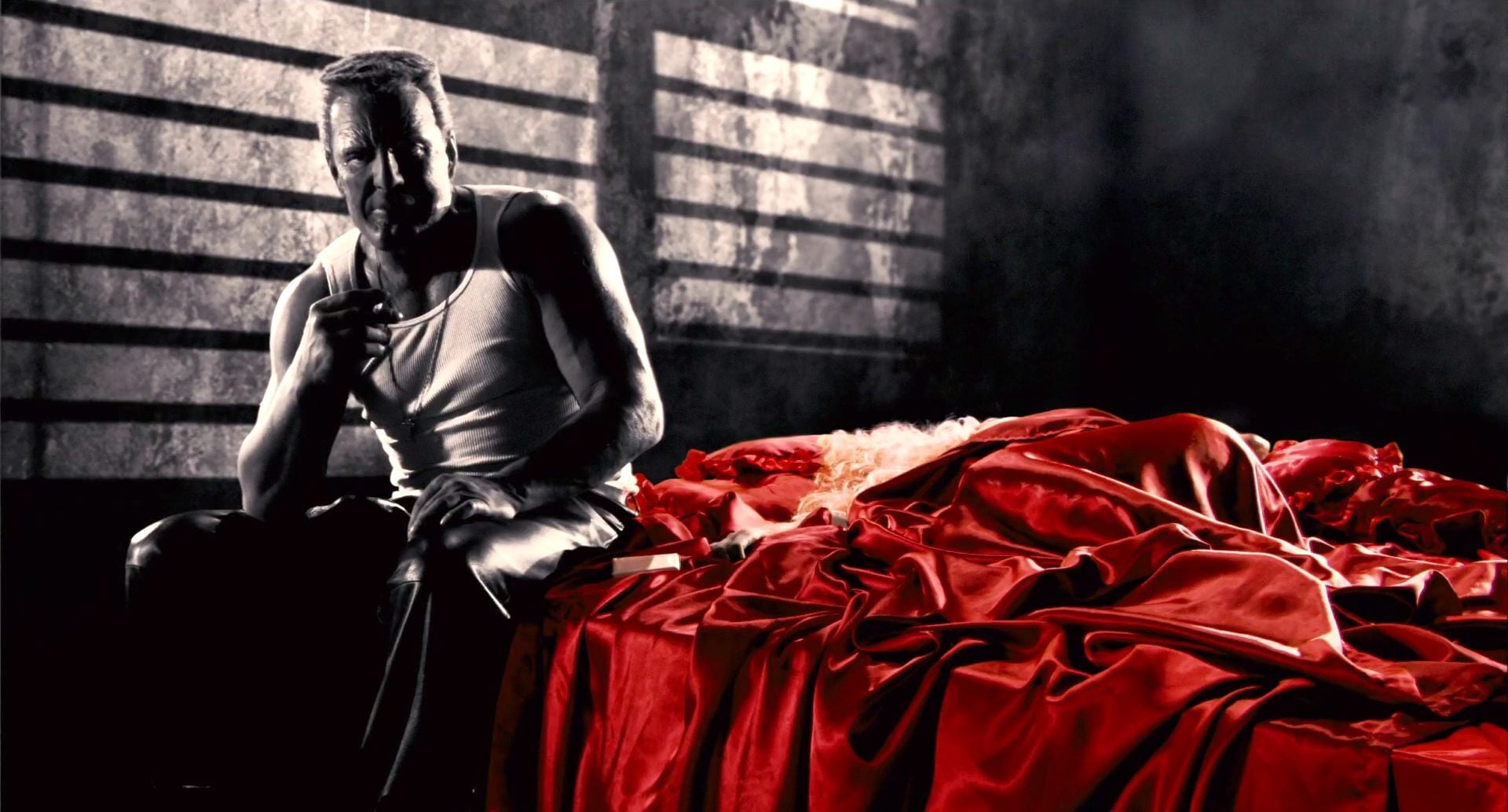
One director who embraced the aesthetics of Sin City was Zack Snyder. In 2006, Snyder adapted Frank Miller and Lynn Varley’s 300. While not black and white, nor noir in nature, Snyder incorporated the use of bluescreens to recreate the backgrounds from the comic book to bring the Battle of Thermopylae to life. In addition, the filmmaker played around with the colour saturation in the same way a comic book colourist would – to infuse a shift of moods and emotion through visual cues. Snyder arguably took another page out of Sin City‘s book to influence his work on 2009’s Watchmen (based on the graphic novel by Alan Moore and Dave Gibbons), which often looked like a comic book come to life on the big screen and borrowed its flashy noir tricks.
RELATED: “Audiences Weren’t Ready For It” – Patrick Wilson Believes Zack Snyder’s Watchmen Was Before Its Time
Miller also applied everything he learned from his time on Sin City to his 2008 adaptation of Will Eisner’s The Spirit. While the film wasn’t deemed a critical or commercial success, it certainly contained striking visuals that still stand out to this day. Miller would team up again with Robert Rodriguez in 2014 for the sequel, Sin City: A Dame to Kill For, which built on everything they had done before. However, at this point, the audience didn’t react as enthusiastically to the follow-up like they did the original 2005 film (it earned roughly $40.6 million worldwide on a $65 million budget, with a 43% Rotten Tomatoes score). Ultimately, this cut short the possibility of a trilogy.
Why Sin City Broke the Comic Book Movie Rules

Visuals aside, Sin City provided something different from other comic book movies at the time. For one, it wasn’t about superheroes – it was about hardboiled and often nasty characters. It showed how there was an opportunity for other genres from the medium to shine, proving once and for all to mainstream audiences that comics can be mature and whatever you want them to be besides capes and cowls.
Sin City could have easily taken one of its stories and stretched it out for two hours, but it decided to stick to an anthology format and connect several of its tales (The Hard Goodbye, The Big Fat Kill and That Yellow Bastard). It’s something that had rarely been done in comic book movies before and few have really tried to explore since. As a result, it gave the audience something different to experience, aside from the origin stories and cookie-cutter hero’s journey tropes.
And third of all, the film stayed true to the source material through its presentation. Quite often, it comes across as if many filmmakers are embarrassed their stories originated from comics, believing them to be some kind of lowly artform, and they try to distance themselves from them as much as possible. That wasn’t the case here, as Robert Rodriguez and Frank Miller penned a heartfelt love letter to both film and comics, demonstrating how both mediums can live in perfect harmony and inspire each other.
What Modern Comic Book Movies Can Still Learn From Sin City

Three years after Sin City debuted, the comic book movie genre changed forever. The Marvel Cinematic Universe (MCU) was born with the release of Iron Man. From there, nothing was ever the same. What followed was billions of dollars, interconnected stories across movies and television, mega hero team-ups, and a global domination of pop culture.
Now, in 2026, the MCU, and the comic book genre as a whole, finds itself at a pivotal crossroads. After nearly two decades of unimaginable success, the audience has grown far pickier. Every character feels the same. Every story unravels in the same manner. Every movie looks like the last one. For so long, inoffensive and safe entertainment ruled, never taking any real creative risks but bringing in the money. Eventually, the audience caught on to the charade and grew tired of the lack of originality.
But that doesn’t mean the crowds for superhero films have disappeared. Spider-Man: Brand New Day proved that by grossing more than $2.5 billion worldwide this year, And Avengers: Doomsday, which arrives December 18, is set to break records too. However, everything outside of that has been struggling to gain interest – just look at DC’s Supergirl and Clayface. It’s exactly the rut Sin City warned about.
In 2005, Sin City showed how, like in the comics, it’s possible to change the rules and create something that hasn’t been done before. It arrived at the right time too, since a lot of comic book movies merged into becoming too much of the same – funny how history repeats itself, right? Robert Rodriguez and Frank Miller challenged filmmakers and audiences to think about the genre differently. A few took it to heart and embraced originality, while many others followed the money. To be fair, a handful of R-rated outliers broke through — Logan, Joker (the first R-rated film to pass $1 billion) and Deadpool & Wolverine — but they remain the exception, not the template.
In the end, the genre reverted to the same position it was in the mid-2000s. Sin City tried to teach the industry an important lesson then, but few heeded the warning. Maybe now, they will listen.
Frank Miller continues to be at the forefront of pushing the comic book world. At a Lucca Comics & Games roundtable he announced that he has drawn around two-thirds of Sin City: Blood & Dust, which IGN has described as a frontier-era prequel about the founding of Basin City. No release date has been announced yet.
Sin City did something very unique and proved that comic book movies don’t need superheroes, capes, sequels or even a shared universe to work. What they really need is a strong style, a good/mature story and the nerve to be different.
RELATED: Zack Snyder Predicted The MCU’s Fall Years Ago
Where to watch: Sin City is free to stream with a library card on Kanopy and Hoopla. It can also be rented on Amazon Video or Apple TV and Fandango at Home.
Sin City |
|---|
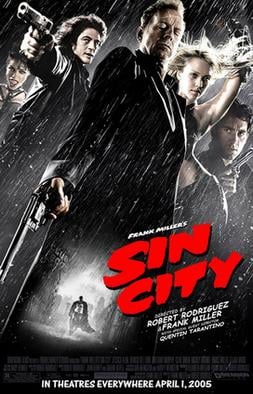
An exploration of the dark and miserable Basin City and three of its residents, all of whom are caught up in violent corruption. |
 |
|---|
| Studio: Dimension Films, Troublemaker Studios |
| Running Time: 2 h 4 min |
| Release Date: Theaters: Apr 1, 2005; Streaming: Sep 3, 2016 |
| Cast: Jessica Alba, Benicio del Toro, Brittany Murphy, Clive Owen, Mickey Rourke, Bruce Willis, Elijah Wood |
| Director: Robert Rodriguez, Frank Miller |
| Writers: Frank Miller, Robert Rodriguez |
| Genre: Action, Crime, Drama, Fantasy |
| Box Office: $158.7 million |