


Even though we live in the so-called golden age of gaming, where everything is seemingly bigger and better than ever (behind a paywall and multiple patches, of course), there’s even more of a yearning for retro games of decades past. The Earnest Evans Collection goes back in time to showcase three games – El Viento, Earnest Evans, and Annet Returns – from the same universe about characters that aren’t as widely recognized as others from the ’90s. After playing them, though, maybe there’s a reason they have stayed buried for so long.
For reference sake, Wolf Team was the developer behind these titles. El Viento was released on the Sega Genesis/Mega Drive, Earnest Evans on the Genesis and Sega CD, and Annet Returns on the Sega CD. With all that out of the way, let’s start by looking at the first title here, since it’s the entry point in this trilogy.
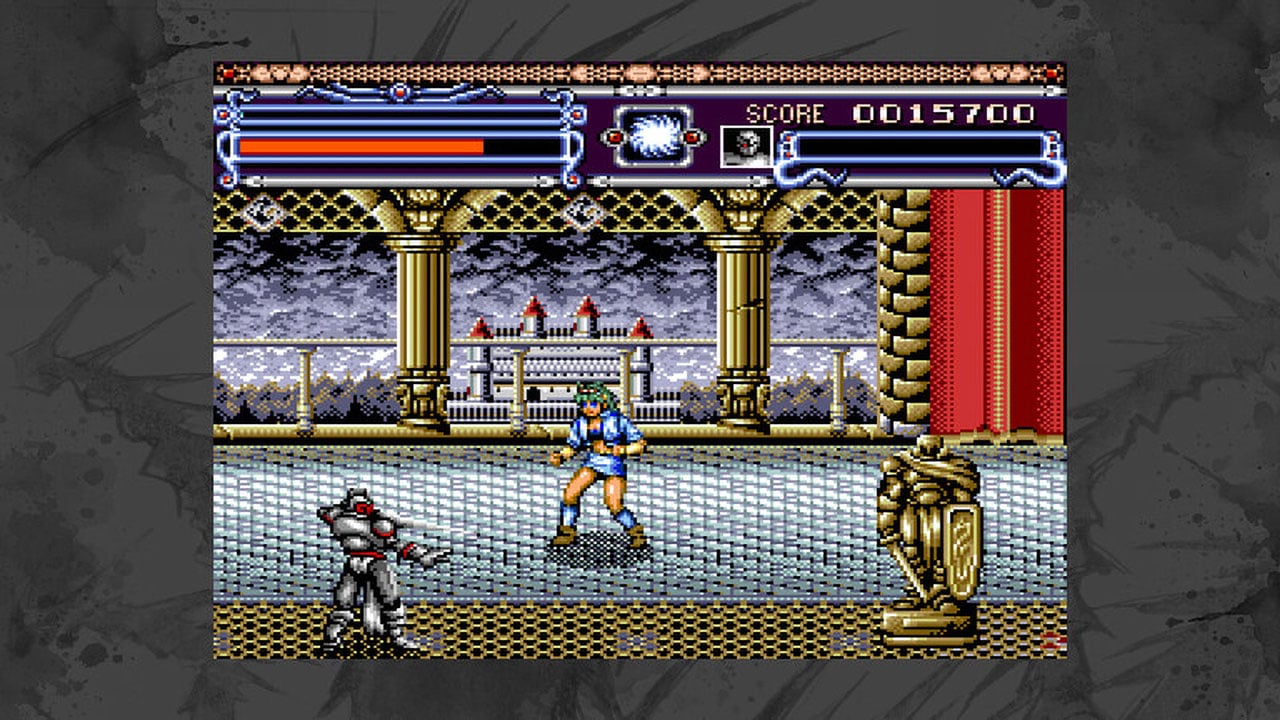
El Viento is an action platformer – think of 1987’s Shinobi as a direct comparison. Instead of a ninja, though, it’s the sorceress Anett Myer running across the screen, flinging boomerangs and spells at the bad guys, as she attempts to stop a great evil from being unleashed in New York City. The famous Motoi Sakuraba provides a scrumptious score that proves to be the highlight of a game that isn’t too challenging nor particularly memorable. The level designs and anime-styled world keep it entertaining, but even in 1991, El Viento struggled to compete with platformers of its era. Ninja Gaiden, this is not.
Next up: 1991’s Earnest Evans. A combination of Indiana Jones and Castlevania, the hero – Earnest Evans – searches the world for ancient idols that could destroy the planet. Naturally, he wants to get his hands on it before the villains do. This is Castlevania through and through, as Evans uses his whip the same way that the Belmonts use theirs for combat, as well as to swing across platforms when hooks are present. Although the Sega CD version of the title features outstanding cutscenes for its era and the story is compelling enough, the gameplay is rubbish because of Evans’ movement. It’s like his limbs have a mind of their own, as he turns into a human calamity who rolls and crawls at random. The controls and enemy hitbox are already mediocre as is without this addition; now, imagine how much more frustrating it is with this too.

The best is saved for last here, as 1993’s Annet Returns makes up for what its predecessors lack. This game’s storyline takes place after the events of the previous games, concluding Anett’s arc and also strengthening the ties between her and Evans. It’s a side-scrolling beat ’em up fashioned in the same vein as Streets of Rage, and the arcade-styled action and pace work in its favor, even if the boss battles are tougher to finish than grandmother’s steak. Somehow, this tweak in genre feels more organic to the storyline and feel of this trilogy, making one wonder if the previous games might not have benefitted from this approach as well. Once again, the cutscenes turn out to be great for its time, while the anime design of the characters and environment enhances the overall experience.
With a plethora of retro remakes hitting the market, Limited Run Games is at the forefront of bringing many of these experiences to gamers. However, when compared to some of the previous releases, the Earnest Evans Collection doesn’t quite have the same staying power. This one is strictly for the fans of the original games.
RELATED: The Outer Worlds 2 Review – More Story, More Fun, More Consequences
The Review
Earnest Evans Collection
The Earnest Evans Collection tries to tug on the nostalgia strings, but it isn't exactly a trilogy of games that has everyone longing for a simpler time in gaming.
PROS
- The Sega CD versions feature great cutscenes for the era
- Annet Returns is the best of the trilogy
- The anime-designed characters and environments look terrific
CONS
- El Viento is simple and unremarkable
- Earnest Evans should be Flailing Frank
- None of these titles are the best in genre