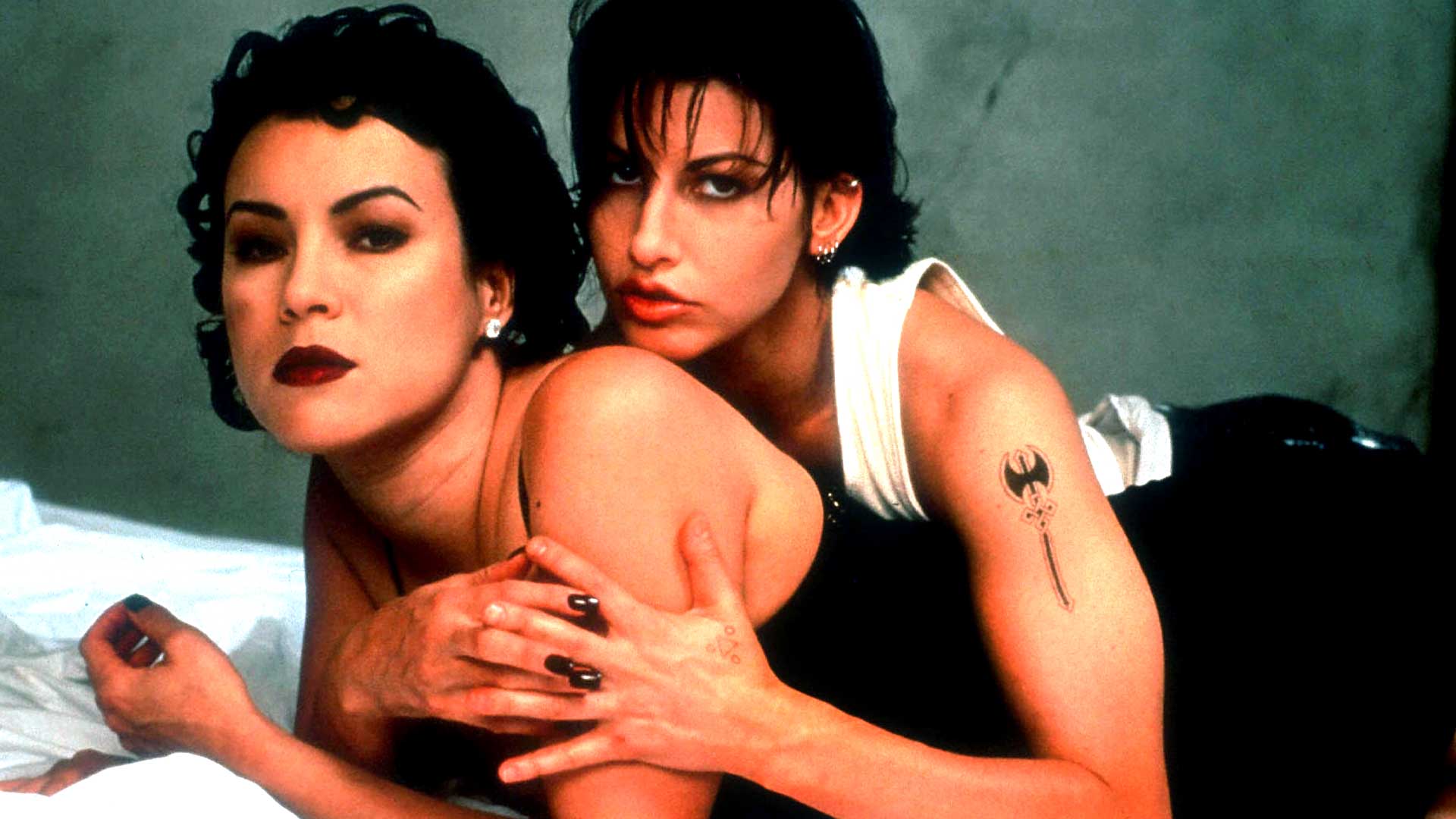


Bound arrived in US theaters on October 4, 1996, and the 30th-anniversary celebrations began in June, when Lilly Wachowski reunited with Gina Gershon, Jennifer Tilly, Joe Pantoliano and Christopher Meloni for a Tribeca Festival screening and Q&A in New York on June 7.
Looking back at Bound, which marks its 30th anniversary this year, the Wachowskis’ feature-length directorial debut feels like an anomaly, particularly compared to the rest of their work. After all, we have grown accustomed to the Wachowskis’ high-concept sci-fi blockbusters, including The Matrix trilogy, Cloud Atlas, and Jupiter Ascending, all of which cost a sizable Hollywood budget. Even their rare pivot to family adventure in the colorful live-action version of Speed Racer didn’t come cheap either, costing a whopping $120 million.
But they started their directorial careers with a small-scale project. Not a sci-fi genre that they often associated with, for better or worse, but rather a neo-noir film made on a tiny $6 million budget. The Wachowskis – Lana and Lilly, who publicly came out as transgender in 2012 and 2016, respectively – also co-wrote the screenplay that sticks to the familiar neo-noir formula: Two women – one’s an ex-convict named Corky (Gina Gershon) and the other’s a money launderer’s (Joe Pantoliano’s Caesar) girlfriend, Violet (Jennifer Tilly) – are secretly working together to steal $2 million belonging to a mob.
Corky and Violet come up with an elaborate plan and go through every detail to ensure they can get away with the money by making Caesar the scapegoat, so the mob would think he’s the one who embezzled it. Of course, there’s no such thing as a perfect plan in the ever-unpredictable world of neo-noir, and the Wachowskis do a great job navigating these characters’ inevitable ordeal when things go wrong and forcing them to improvise as the stakes escalate.
RELATED: Roger Ebert Gave It 4 Out of 4 Stars. The Matrix Made Sure Nobody Remembered It
How the Wachowskis Gave Bound a Sin City-Style Comic-Book Look
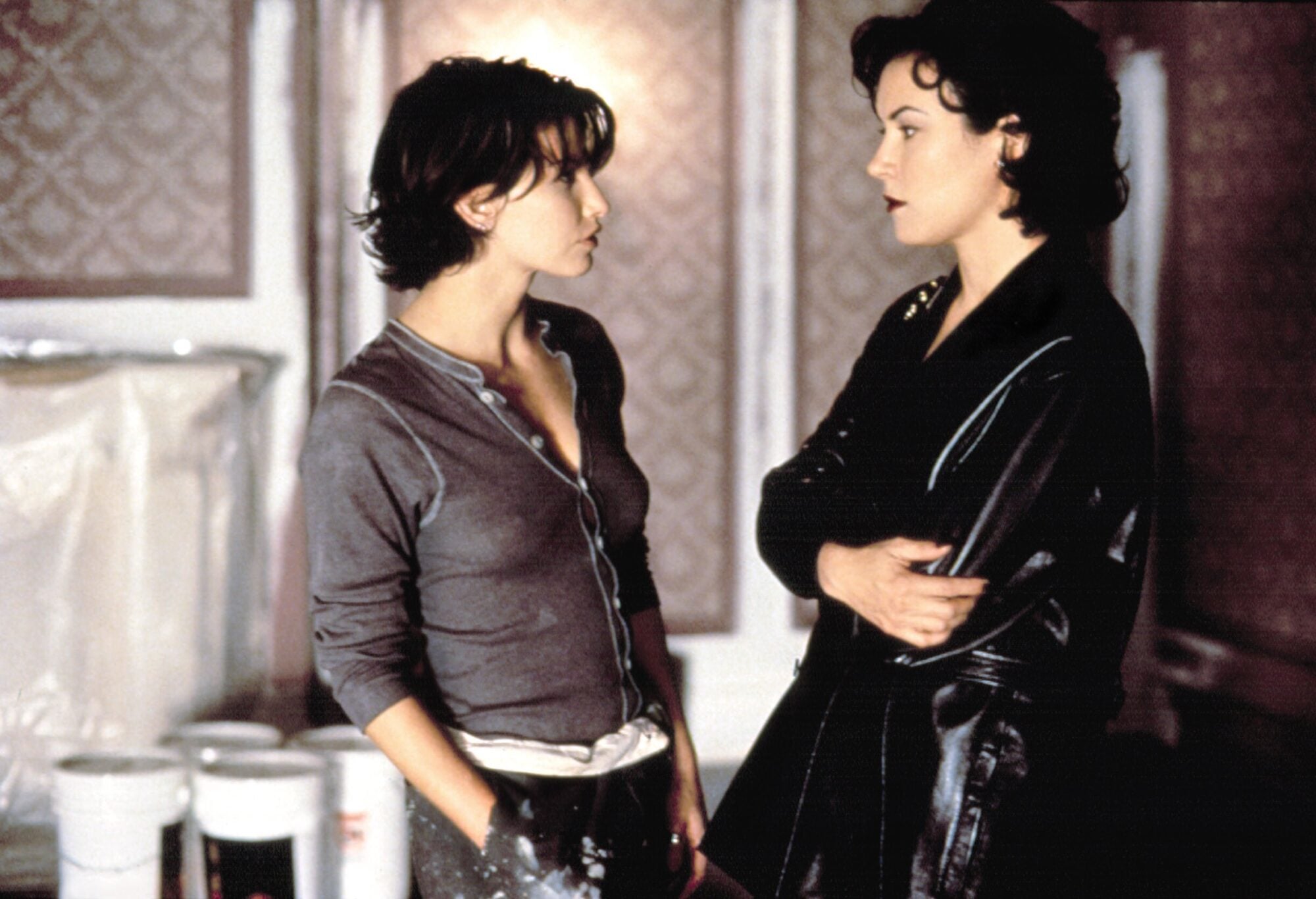
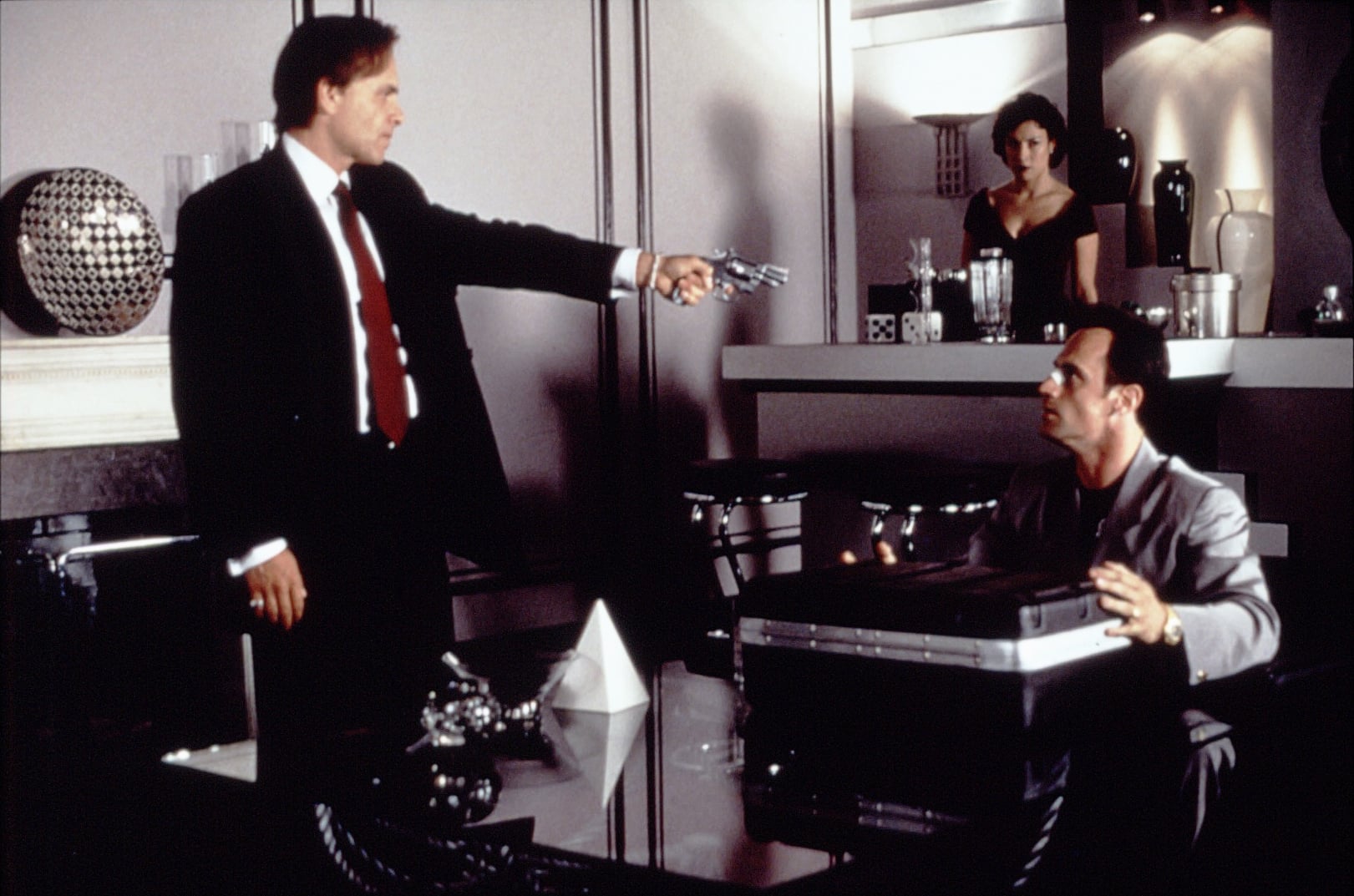
Most of the movie takes place in the apartment building, but the otherwise confined setting becomes the Wachowskis’ visual playground in delivering a tense, claustrophobic game of cat and mouse as Corky and Violet try to outwit Caesar. Interestingly, it’s worth noting that the Wachowskis came from a comic book background long before their Hollywood debut, including writing contributions to Clive Barker’s Ectokid, Hellraiser, and Nightbreed horror series.
The directing duo’s prior comic-book sensibilities remain intact while making Bound, evidently in their distinct color scheme leaning heavily towards blacks (among them are Corky’s dark leather jacket and the atmospheric shadows in the apartment), and occasional red and white primarily featured as a vivid contrast between blood and milky toilet or the thick puddle of paint all over the floor.
They deliberately wanted to mirror the look and feel of Frank Miller’s Sin City comic-book series, where cinematographer Bill Pope achieved what the Wachowskis were aiming for through high-contrast lensing. It also helped that this wasn’t the first time Pope worked on a stylized comic book/graphic novel-inspired look, given his experience in Sam Raimi’s Darkman.
RELATED: The Matrix’s Biggest Fan Theory Got Killed Off In Resurrections — Matrix 5 Could Bring It Back
Inside the Bound Sex Scene: Tequila, a Sex Educator and Eight Takes
Despite the limited budget, Pope managed to elevate the overall visuals with interesting camera movements, notably the unbroken take during the movie’s much-talked-about sex scene between Gershon’s Corky and Tilly’s Violet. The camera, which acts like an invisible POV of a voyeur, seamlessly moves fluidly around the bed while highlighting the two characters kissing and rubbing against each other’s naked bodies.
The scene itself wasn’t just an immersive technical achievement, but the Wachowskis demanded it be purposefully filmed as a strategic move to prevent producer Dino De Laurentiis from altering or chopping up the footage. By embracing the single, continuous shot, this would give the Wachowskis absolute control over fulfilling the vision they always wanted.
Still, even though the sex scene was filmed on a closed set, it didn’t come easy for Gershon and Tilly, who were initially uncomfortable about engaging in a graphic gay love moment. But they managed to overcome it over a bottle of tequila and chocolates that helped calm their nerves. Coupled with the essential assistance from sex educator Susie Bright, she worked closely with Gershon and Tilly, not only advising but also responsible for choreographing every physical movement, allowing the shot to feel more organized, despite taking eight takes to get everything right.
But the one-take gamble came with a catch. According to Tilly, the ratings board threatened the film with an NC-17 over the scene, and because it was a single continuous shot, the Wachowskis couldn’t simply trim it. Instead, they had to substitute take seven for the take they preferred. Gershon and Tilly revisited the NC-17 fight at the Tribeca reunion in June.
Bound’s Legacy: From Cult Favorite to The Matrix
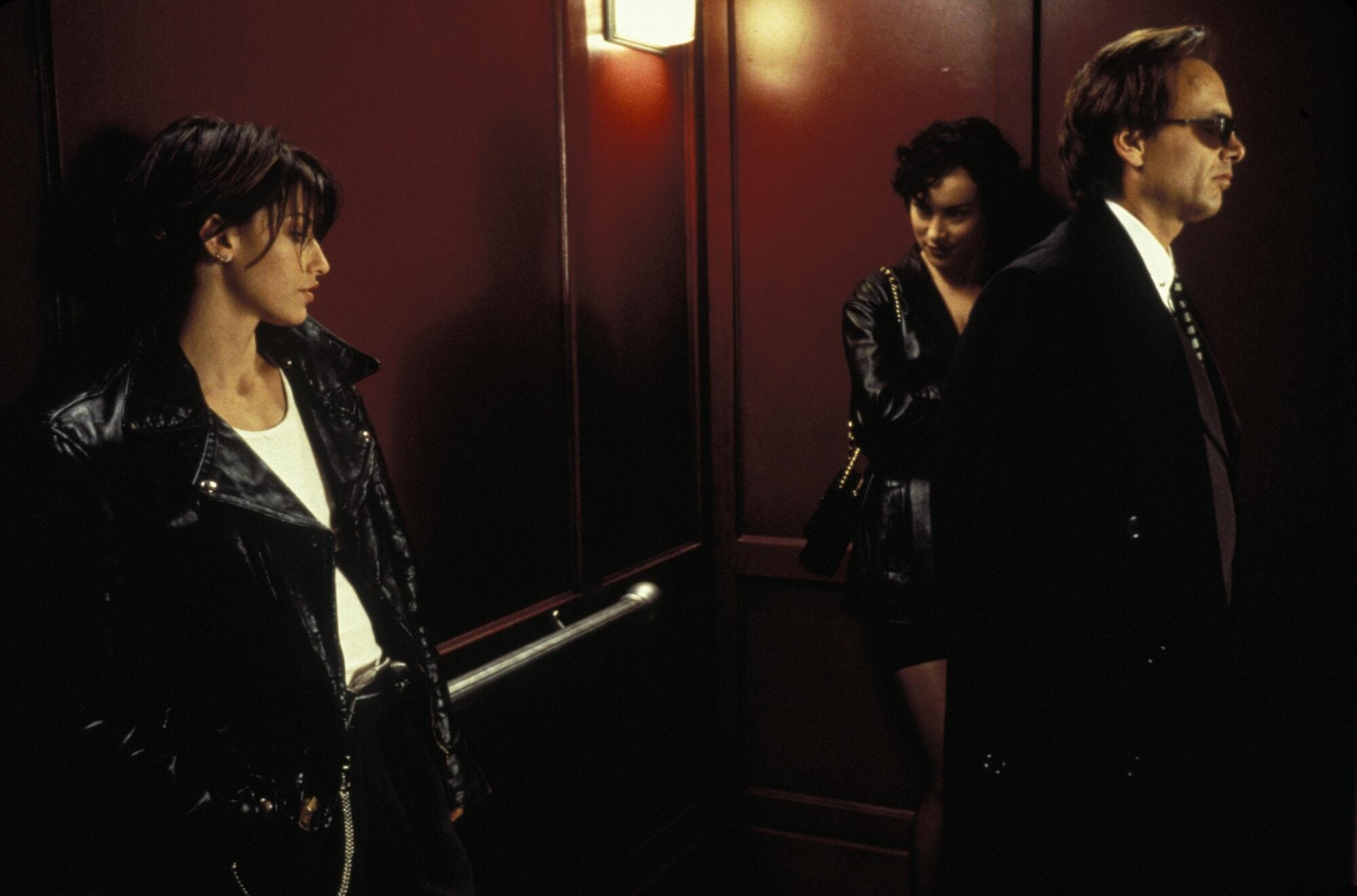
Although Bound didn’t emerge as a huge financial success (it grossed about $3.8 million at the US box office against its $6 million budget), the Wachowskis’ debut caught significant attention at film festivals, including Venice, earning raves for its queer theme and the stylish direction (it holds an 87% Tomatometer score on Rotten Tomatoes). The acclaim was more than enough to prove their worth as up-and-coming filmmakers, where Warner Bros. and mega producer Joel Silver, who previously worked with the Wachowskis on Richard Donner’s Assassins a year before, subsequently greenlit their ambitious sophomore effort, The Matrix. The rest, as they say, is history.
Where to Watch Bound
Bound is available for rent or purchase via Apple TV and Prime Video, and may also be free through library service Kanopy, depending on where you live.