

Like the simians swinging from one place to another, the decades-long Planet of the Apes franchise has its fair share of ups and downs. The franchise started strong with the legendary Charlton Heston-starred 1968 sci-fi classic, but subsequent sequels from 1970 to 1973 ended with mixed results.
Then came 2001, when Fox invested $100 million and got Tim Burton on board to direct the expensive reboot. And while it became a mainstream box-office success that summer, Burton’s vision was surprisingly all style but little substance, trading the franchise’s underlying sociopolitical complexity for a standard-issue Hollywood blockbuster gloss.
The sequel never materialized, especially after it received a mixed response from both critics and fans of the franchise. It would take the studio 10 years to finally revive the franchise with Rise of the Planet of the Apes under Rupert Wyatt’s direction. Enlisting the British director seems like a risky gamble, given his unproven track record in handling a big-budget Hollywood tentpole. And his prior movie? An indie prison drama titled The Escapist, which also marked his feature-length directorial debut.
Still, Fox entrusted the franchise to Wyatt, proving they have the right man for the job after Rise of the Planet of the Apes made bank at the worldwide box office, bringing in over $481 million on a $93 million budget. The overall reviews were mostly positive, and the movie even landed a much-deserved Oscar nomination for Best Visual Effects, despite it losing to Martin Scorsese’s Hugo.
The Directors Who Turned Down Rise of the Planet of the Apes First
Surprisingly, Wyatt wasn’t the shoo-in favorite when Fox first developed the project in the 2000s. They initially went for Scott Frank, best known for writing Get Shorty and Out of Sight before he made his directorial debut in 2007’s The Lookout starring Joseph Gordon-Levitt. It was originally known as Caesar, focusing on a character-driven sci-fi film about a genetically engineered chimp. But his vision was deemed overly cerebral and too costly, and Frank chose to exit the project after he refused to make a compromise.
Robert Rodriguez was next – since co-producer Peter Chernin believed his past expertise in managing CGI-heavy blockbusters and high-concept premises on a budget, as seen in the Spy Kids movies, would be a valuable asset for the project. Unfortunately, Rodriguez rejected the offer since he was more keen on developing his own studio’s projects, namely Machete.
Fox also approached Kathryn Bigelow and Tomas Alfredson, the latter best known for Let the Right One In, but neither was interested. The Hughes Brothers – Allen and Albert – and their post-apocalyptic work in The Book of Eli made Fox take notice and offer them the job, but things didn’t work out as planned due to scheduling conflicts. Finally, Pierre Morel, who already helped Fox deliver an international action-movie hit in Taken, was given the opportunity, only for the French director to drop out after they couldn’t sort out their creative differences.
Wyatt eventually landed the chance to direct Rise of the Planet of the Apes. He managed to impress the Fox executives and co-producers, Rick Jaffa and Amanda Silver, with his pitch in highlighting the second half of the movie as a high-stakes prison thriller. He even insisted that 100% performance-capture technology be used for bringing the apes to life, instead of relying on practical effects including actual simians and men-in-suits.
How Weta Digital Reinvented Motion-Capture Technology for the Apes
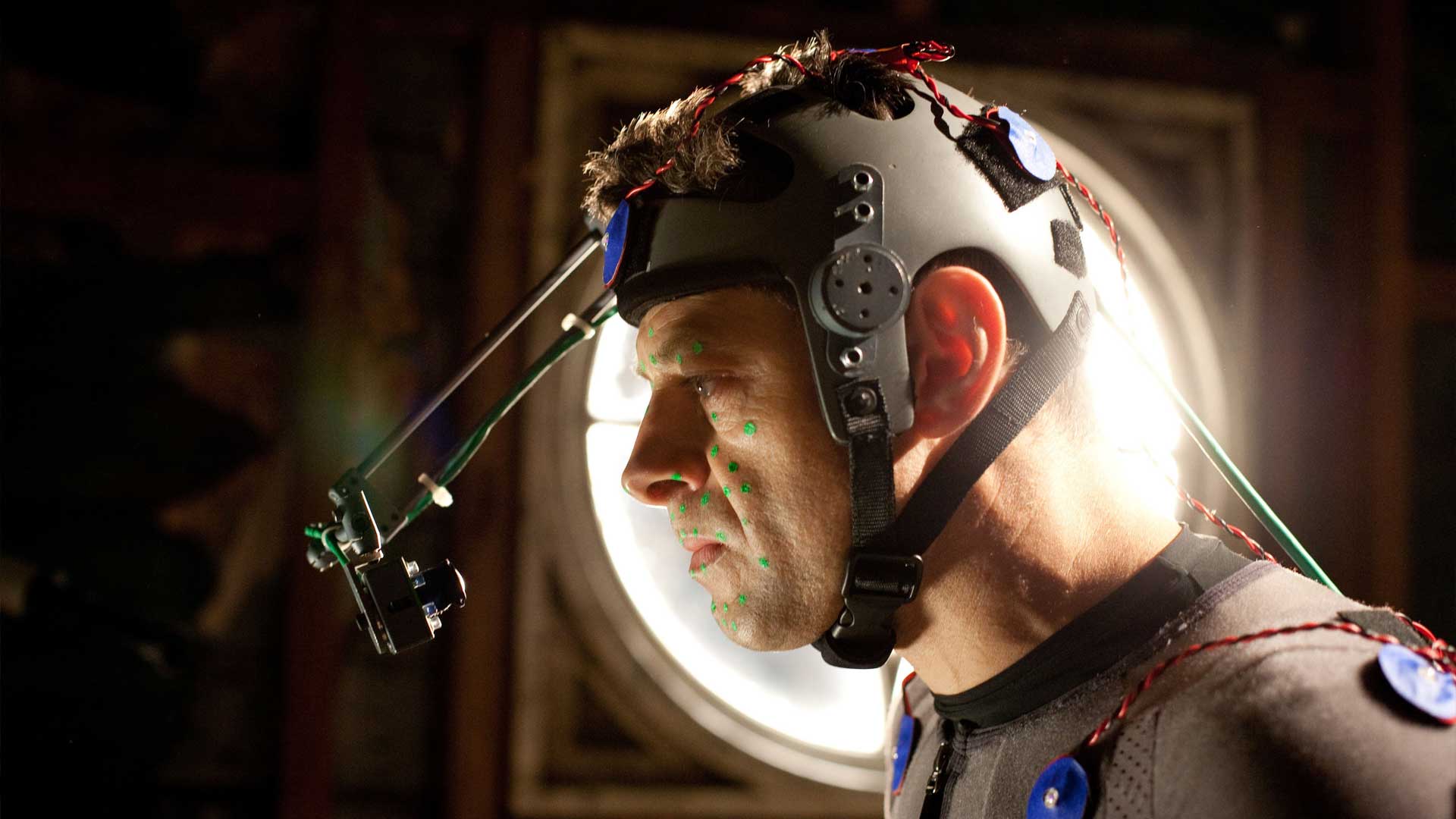
Getting Weta Digital, the New Zealand-based visual effects and computer animation studio that famously worked on The Lord of the Rings trilogy, King Kong, and Avatar, proved to be the right move. They successfully revolutionized motion-capture performances by combining active LED markers and specialized cameras to focus on the actors’ movements while shooting on location and even in broad daylight.
It was a technological breakthrough that motion capture was no longer restricted to just a controlled indoor environment. The special effects went as far as capturing facial micro-expressions of the actors’ performances playing the apes, where they were required to wear the custom-built helmets equipped with an extension arm that held a tiny camera near their faces.
And to ensure every expression was thoroughly detailed, these actors would have their faces painted with little ink dots for camera-tracking purposes. The amazingly lifelike ape effects were the result of intricate software simulations, devoid of the basic 3D modelling techniques that would make them look visually unsettling, commonly known as the uncanny valley.
The Weta Digital team worked painstakingly to layer the ape effects with simulated muscles, fats, and skins. Not to mention overcoming the challenge of rendering realistic-looking animal fur, even making sure their hair interacts differently based on environmental changes.
Andy Serkis Only Needed 2 Sentences to Own Caesar
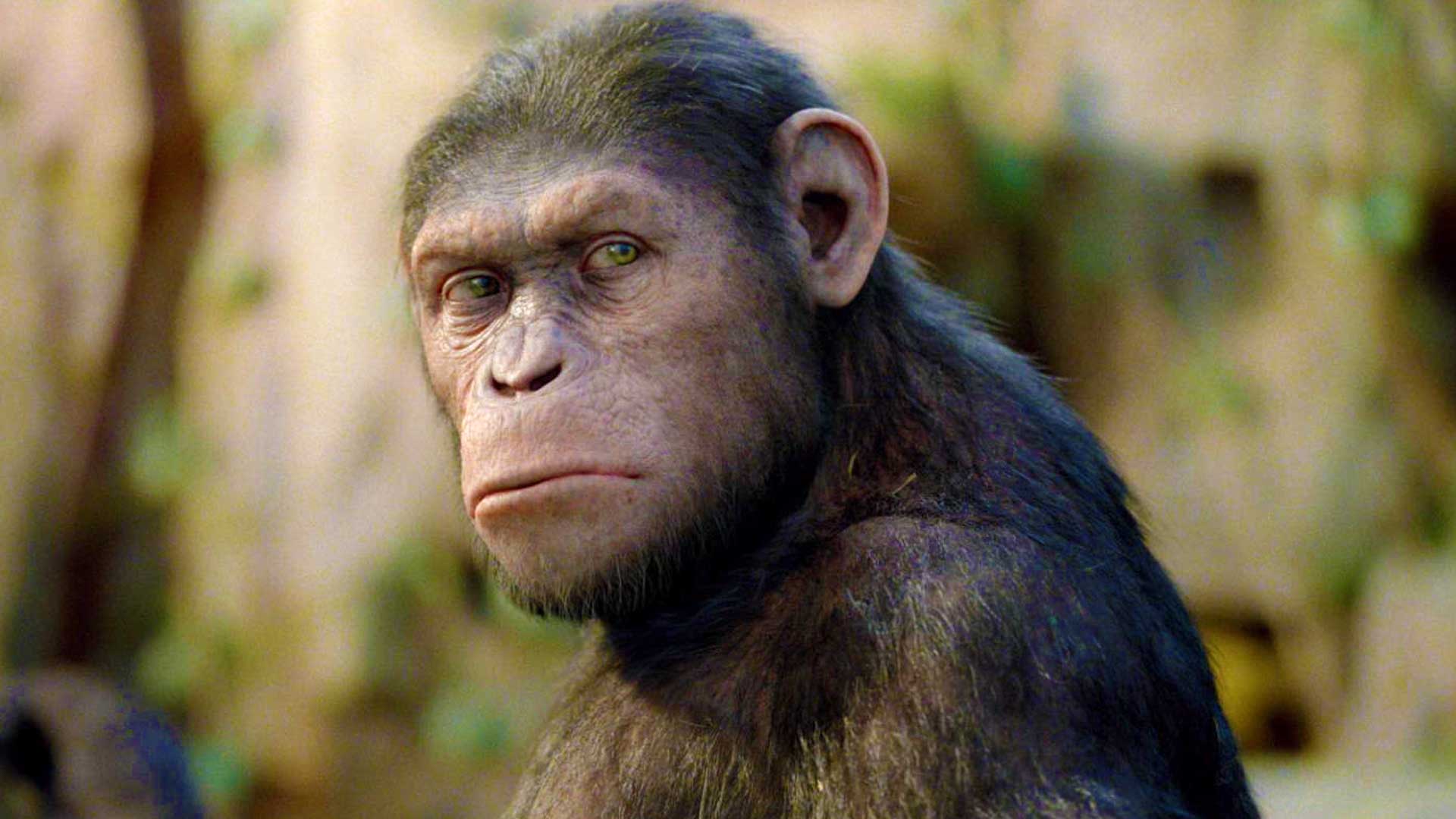
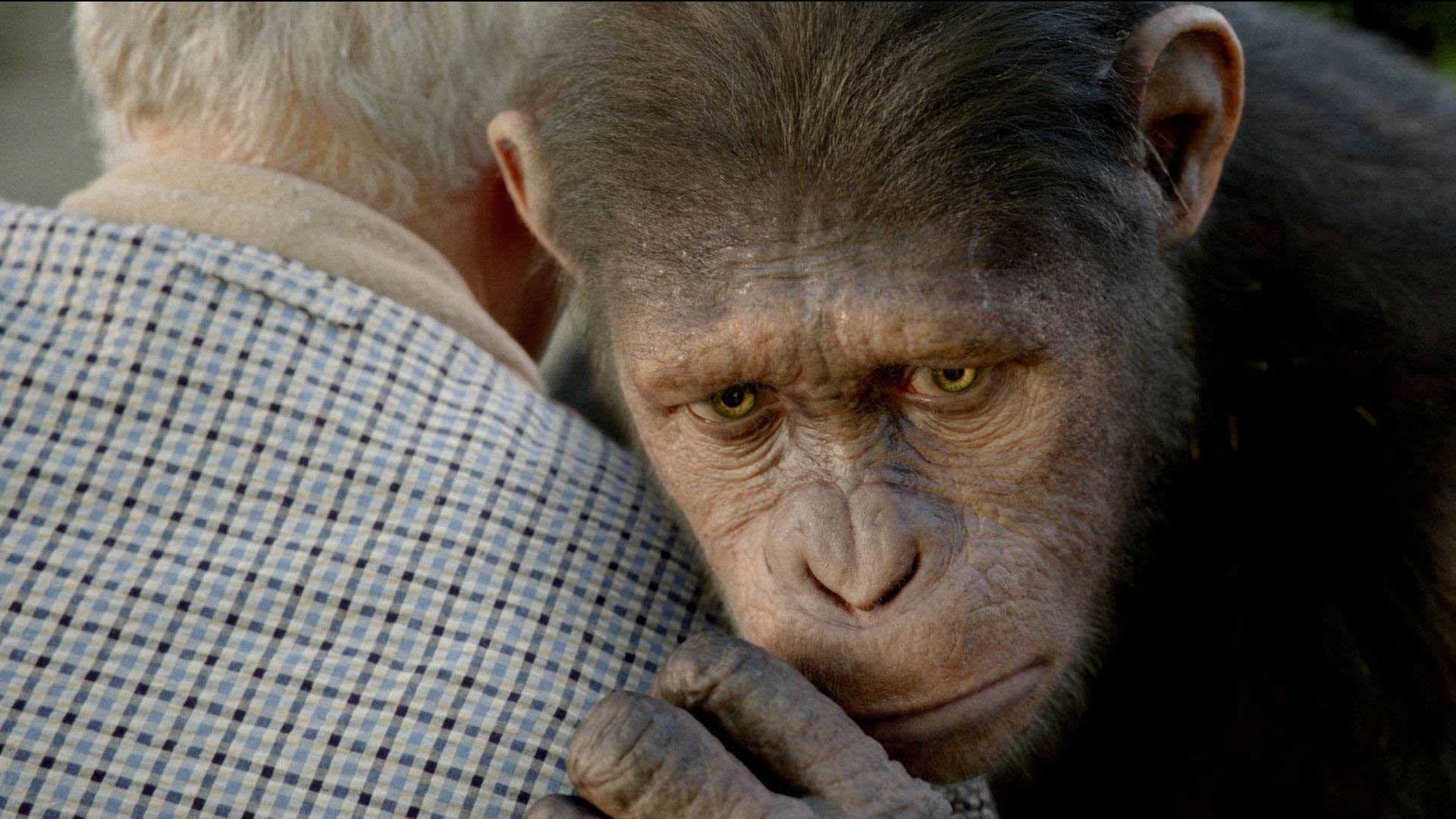
One of the major contributing factors that elevates Rise of the Planet of the Apes is the brilliant casting of Andy Serkis as Caesar, who leads the ape evolution against humans. Given his prior experience in a motion-capture performance as Gollum in The Lord of the Rings trilogy, he brings nuanced acting that captures Caesar’s emotionally raw trauma and anger over the course of the movie. His physical acting prowess is put to good use since Caesar barely speaks in the movie, limited to just two sentences: “No” and “Caesar is home”.
The Golden Gate Bridge Finale Wasn’t Actually Filmed in San Francisco
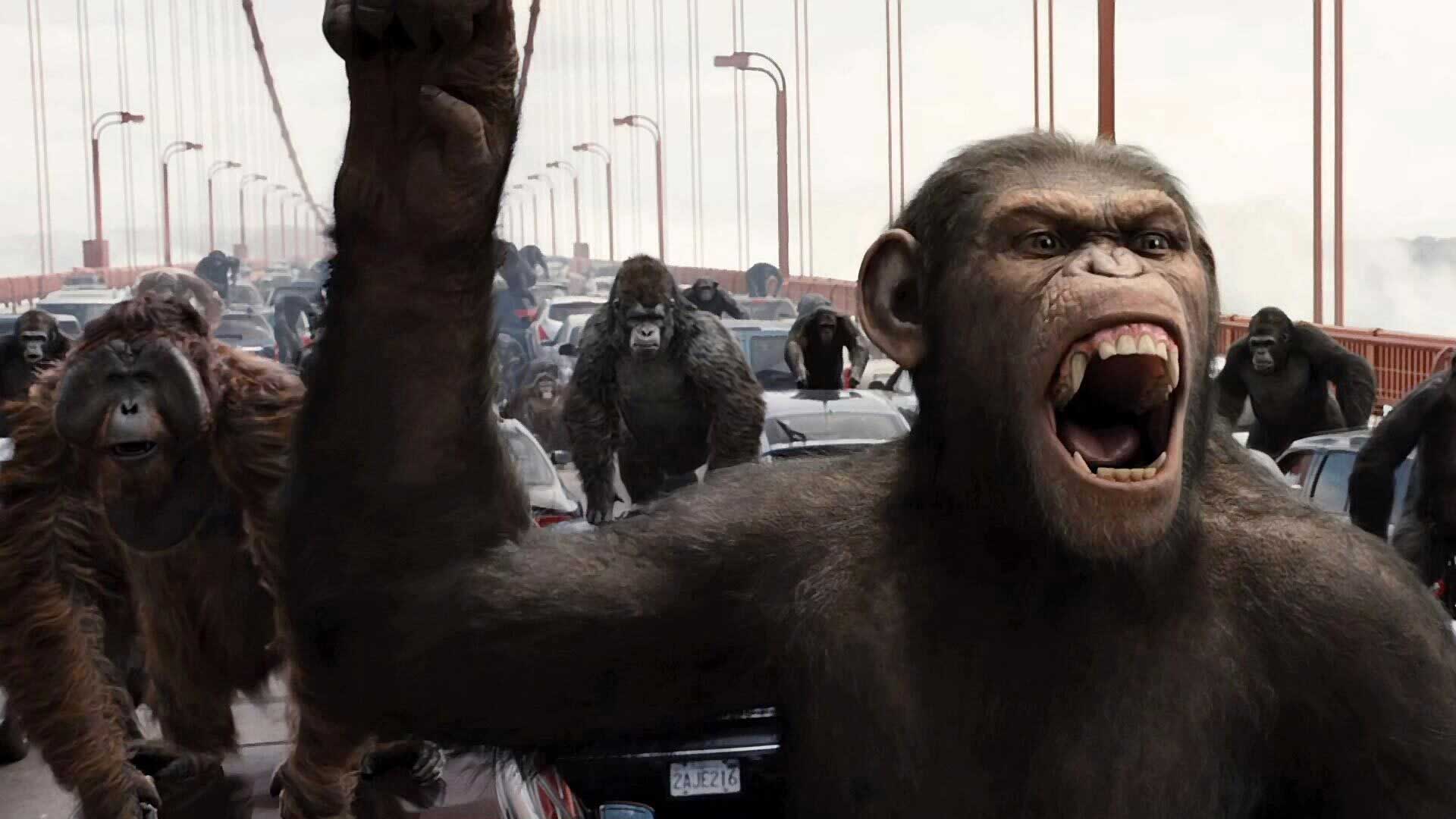
Speaking of the third act, Wyatt does a great job of escalating the stakes into an action-packed climax set on San Francisco’s iconic Golden Gate Bridge. Interestingly, it wasn’t filmed on location since shutting down such a major connecting bridge would be a logistical nightmare.
Wyatt and his production team opted to film the Golden Gate Bridge scene in Canada by constructing a massive physical replica, complete with impressively built-to-scale tarmac lanes, concrete barriers, and guard rails. The tangible sets allowed the actors to react naturally rather than depending solely on their imaginations, before Weta Digital worked its magic, blending the set piece seamlessly with green screens and digital special effects.
The success of Rise of the Planet of the Apes paved the way for two successful sequels, including Dawn of the Planet of the Apes and War for the Planet of the Apes, both of which were spearheaded by Matt Reeves. The Maze Runner’s Wes Ball subsequently took over the franchise with 2024’s Kingdom of the Planet of the Apes, which did reasonably well both critically and financially. At the time of writing, The Fantastic Four: First Steps’ Matt Shakman would be handling the follow-up.
Where to Watch Rise of the Planet of the Apes
Ready to revisit Caesar’s origin story? Rise of the Planet of the Apes is currently streaming on Hulu and Disney+, and available to rent or buy on Amazon Prime Video, Apple TV, and Fandango at Home.