




There’s something strange happening in Nottingham. No, it’s not a sleeping dragon, an all-seeing eye or a precious ring that has students upset. It’s a history module at the University of Nottingham that has managed to turn J. R. R. Tolkien’s The Lord of the Rings into a full-blown culture fight about race.
The course, titled Decolonising Tolkien et al, argues that Tolkien actually built Middle-earth on his own racial bias of the time. According to the material, darker-skinned characters are often framed as corrupt, while lighter-skinned characters get the hero treatment. Orcs, Easterlings, Southrons, the men of Harad are all bad guys. All of this is dragged into a single argument that Tolkien’s fantasy reflects what some academics label “ethnic chauvinism.”
The person teaching the module, Dr Onyeka Nubia, wants to push students to re-examine British literature through non-white perspectives. He also teaches that medieval England was more diverse than classic texts suggest, and that writers from John Milton to Tolkien actually secretly erased Africans from their stories. The course even takes aim at C. S. Lewis, pointing to the Calormen in The Lion, the Witch and the Wardrobe as colonial caricatures too.
These are wild takes that are bound to be controversial. And not everyone is happy, of course.
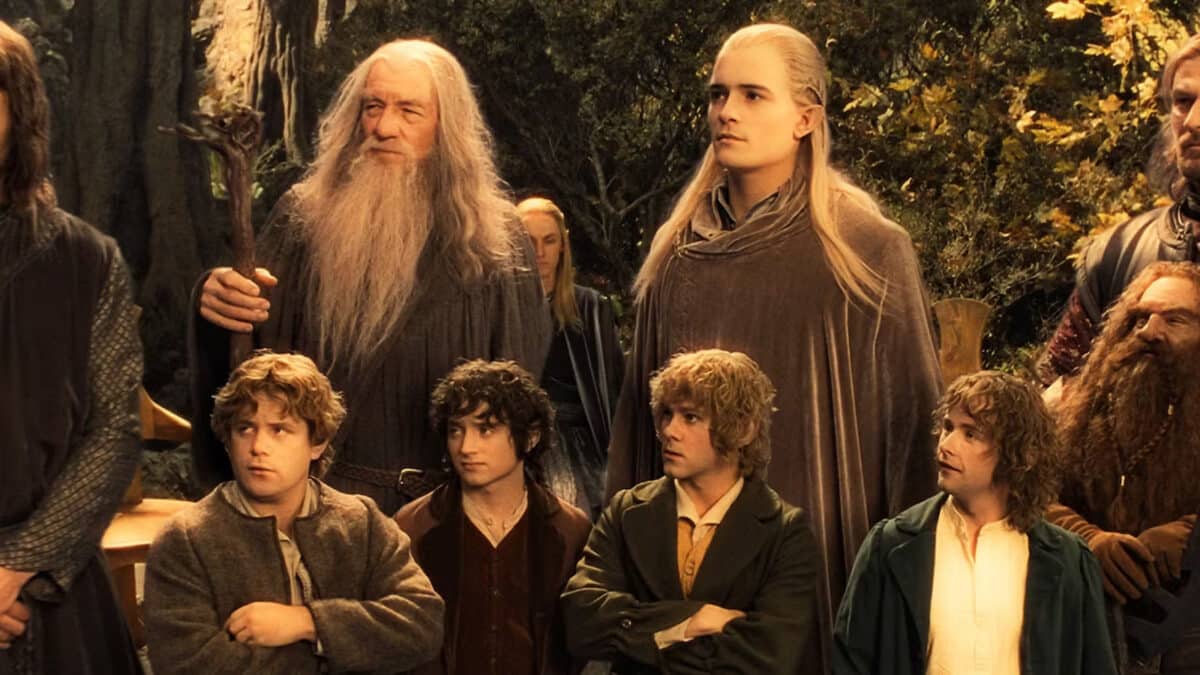
One academic source didn’t mince words, calling the idea of recasting Tolkien as anti-African “ridiculous and ignores both authorial intent and genre conventions.” Students who spoke to RadarOnline were blunt, “It feels like we are being pressured to accept this view to pass the course. Turning fantasy into a political litmus test is too much.”
The backlash is about whether fantasy should be flattened into a checklist of modern politics. Tolkien died in 1973. His books arrived between 1954 and 1955. Middle-earth was built as myth, not sociology. This isn’t a real world. It’s not set in our world. It’s set in an imaginary universe with dwarves and elves.
You can question old texts. Maybe we even should. But when coursework starts assuming what someone who lived five decades ago envisioned for his characters, it doesn’t seem fair. That’s exactly what’s happening in Nottingham.
RELATED: Walk To Mordor App: Walking The Lord of the Rings Way





for the love of all stop the crazy crap its a book froom long agao i’m white and i don’t see color in these old books becoming movies its just a damm movie