
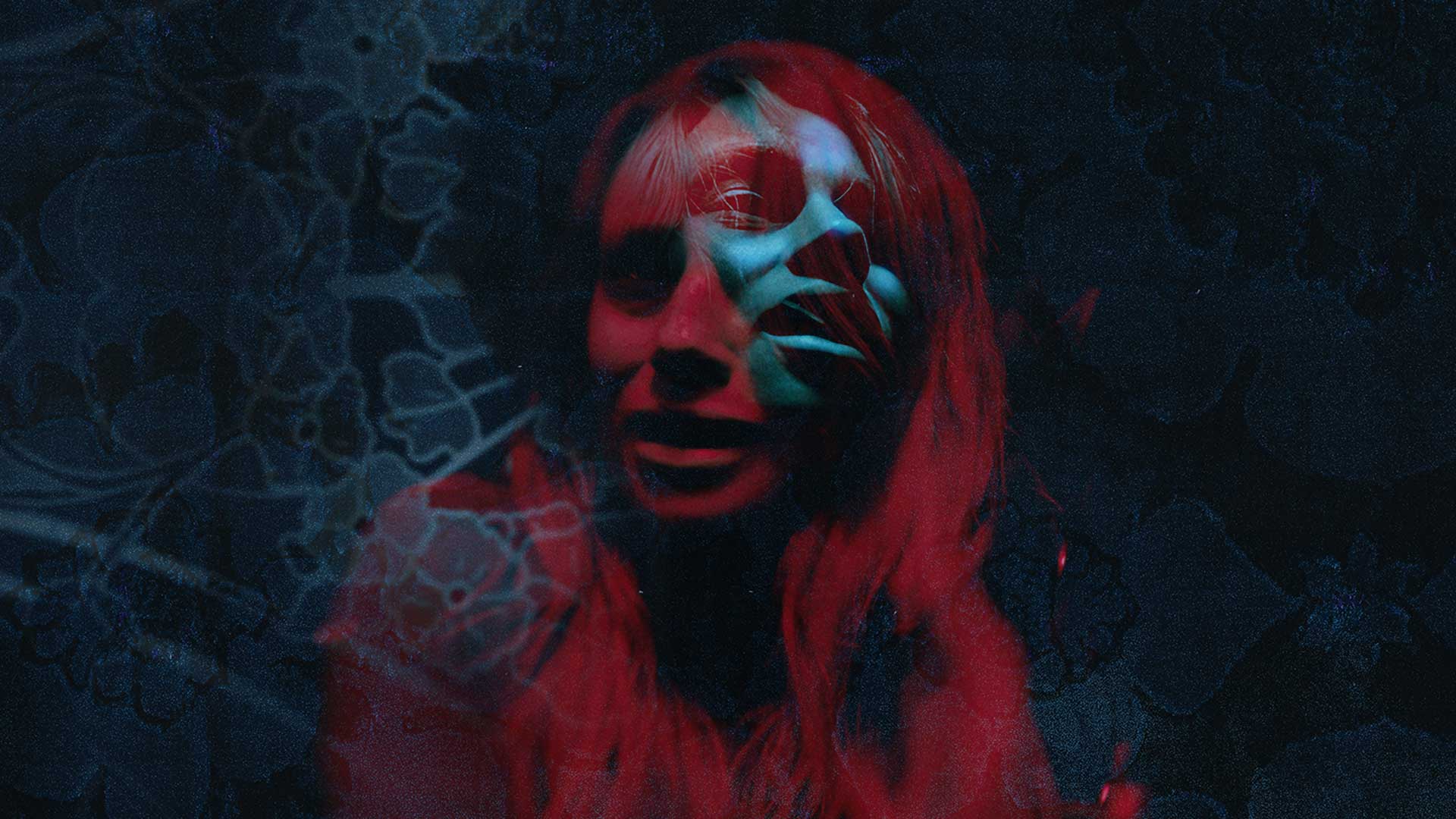


Have you ever watched a movie that feels like one giant dump of stream of consciousness? That’s Julie Pacino’s I Live Here Now in a nutshell. A little giallo, a little David Lynch, this psychodrama is what happens to your brain after eating a toasted cheese sandwich after midnight. There’ll be shakes. There’ll be sweat. There’ll be conversations with God.
Needless to say I Live Here Now won’t be for everyone, since its lack of cohesive storytelling will put off the average viewer. However, this is a film made by a filmmaker for filmmakers. The metaphors and visual language are visceral and poetic, clawing at the effects of trauma – both past and present – and how they need to be faced to move toward the future. In fact, the film’s power comes from what it refuses to say outright, choosing instead to speak through allegory.
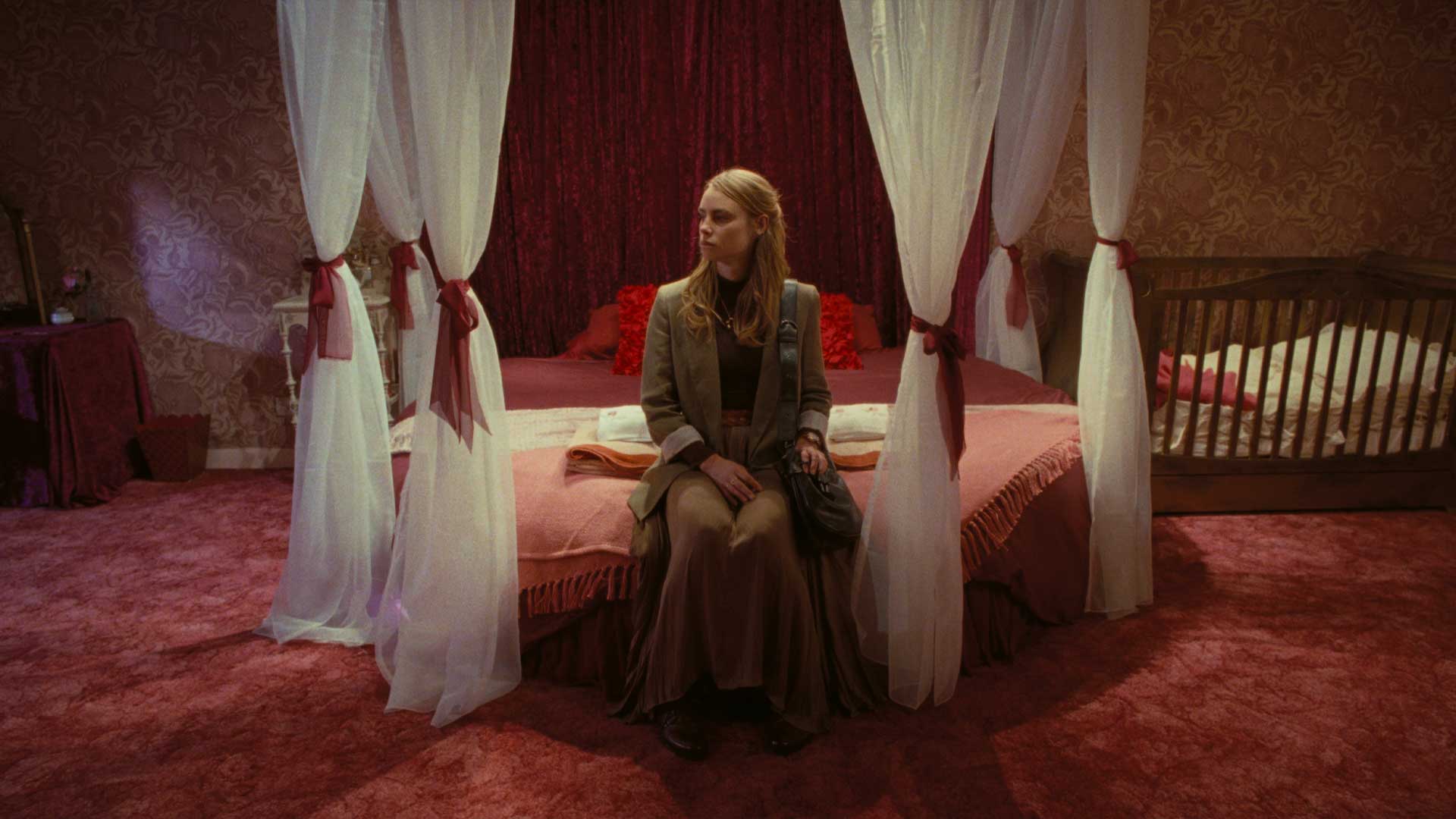
Lucy Fry plays Rose. From the moment we meet her, it’s made clear that she experienced a procedure as a young child that left a mark on her. Rose harbors ambitions of becoming an actor, securing an opportunity with top agent Cindy Abrams (Cara Seymour). Her world gets turned upside down, though, when she finds out she’s pregnant – something she didn’t believe could be possible. She tells her boyfriend, Travis, portrayed by a slimy and convincing Matt Rife, about it, but Travis gets his mother (Sheryl Lee) involved, and she attempts to force Rose into an uncomfortable situation. At this point in I Live Here Now, everything plays out coherently and proves easy to follow.
This all changes as Rose escapes to the Crown Inn, hoping to escape the noise for the weekend and focus on her upcoming audition. As she walks through the door, though, the film shifts into a surreal nightmare – or dream – depending on what Rose experiences. Rose oscillates between awake and asleep, struggling to discern if something happens or not. At the same time, she confronts her past and present, all while dealing with the strange guest Lillian, played by an absolutely sensational Madeline Brewer.
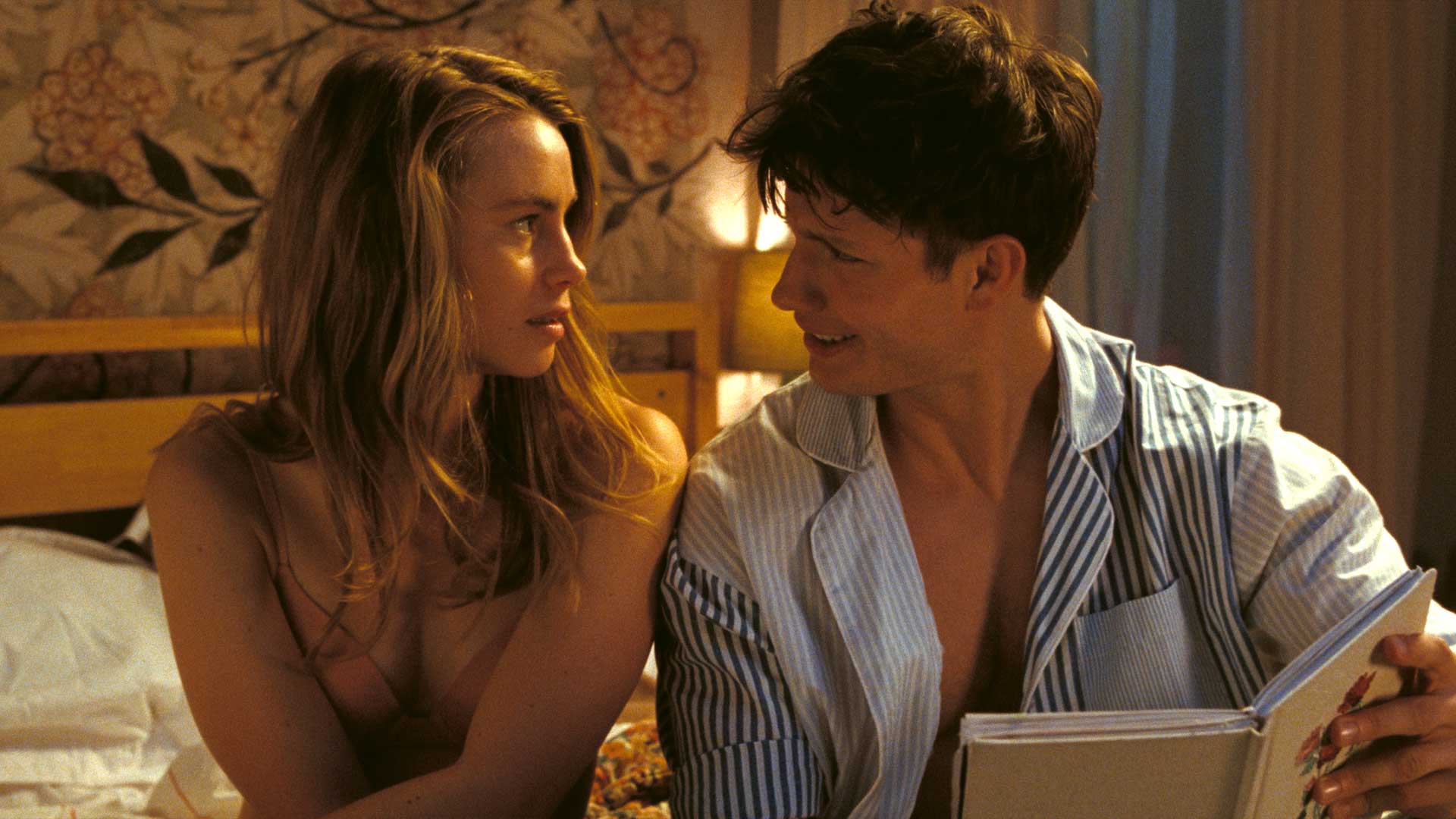
As Rose, Fry puts on a transformative performance. There are so many facets to this character that require her to use the full scope of her toolbox as an actor. From the subtle nuances to the full-blown rage, Fry demonstrates it all. It’s easy to see why she would have been attracted to a part like this, since it’s a showcase that every actor craves in their career.
Pacino paints a haunting dreamscape that symbolizes Rose’s fractured mind. At one point, the Crown Inn reminds you of Wes Anderson’s The Grand Budapest Hotel on LSD, while there are other parts that intentionally mess with the brain. In one scene, Lillian locks Rose in the sauna. Looking through the glass at Lillian, Rose asks to be let out, but the reflections keep changing as they argue and Rose turns into Lillian, Lillian into Rose, and then they morph into a hybrid. It’s mindbending, but a stunning and powerful shot from cinematographer Aron Meinhardt.

If you’re looking for sense in I Live Here Now, you won’t find much. Like the human mind, it experiences a flurry of emotions, ideas, and memories all at the same time, especially when dealing with traumatic events that have been compartmentalized. Having said that, the film captures all this phenomenally well, taking the audience on a trippy journey with Rose, who needs to reconcile her past and present. While the movie could have tightened a few areas where it goes off into the “it’s all vibes” territory, it turns out to be a compelling and indelible feature film debut from Julie Pacino – and yes, she is the daughter of Al Pacino.
RELATED: The Conjuring Director Is Open To “New Chapter” Starring Matt Rife & Annabelle
The Review
I Live Here Now
I Live Here Now is a colorful and surreal journey down the rabbit hole of a fractured mind.
Review Breakdown
-
Verdict