

The Mission: Impossible movies live and die by Tom Cruise’s commitment to death-defying stunts, thrilling action set pieces that were primarily shot in-camera, and high-stakes, race-against-time storytelling. And yet, it’s easy to forget that the first Mission: Impossible didn’t get its start with an action-focused approach, unlike the one seen from John Woo’s Mission: Impossible II onwards. The movie series grew with more stunt-heavy installments before it purportedly ended with the epic two-part saga Dead Reckoning – Part One and The Final Reckoning, leaving the 1996 franchise starter feels like a minor effort compared to the rest of them.
Why Brian De Palma Was the Most Unlikely Choice to Direct Mission: Impossible
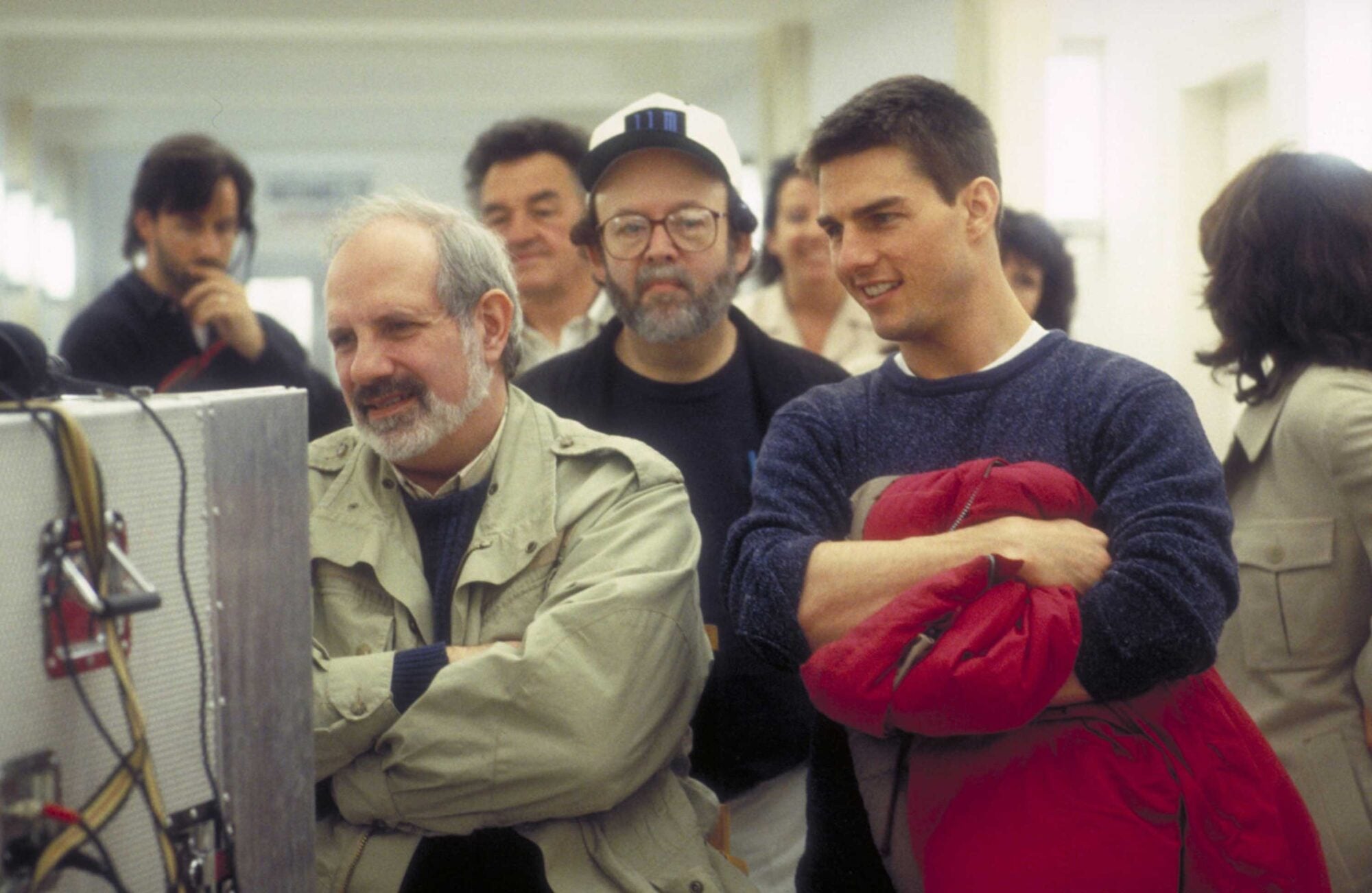
Celebrating its 30th anniversary this month, it’s hard to believe that Brian De Palma of all people was picked by Cruise himself, who also served as a producer for the first time, handling such a high-profile project. If you look into De Palma’s filmography, his work is leaning more into lurid Hitchcockian territory and violent gangster genre seen in the likes of Body Double and Scarface, making him an odd yet risky choice to direct an espionage action-thriller blockbuster like Mission: Impossible.
But you gotta hand it to Cruise for taking a leap of faith in entrusting the inaugural project for his then-newly formed Cruise/Wagner Productions company to De Palma. Their unlikely collaboration took place when Cruise visited his then-neighbor Steven Spielberg’s house for dinner one night. Brian De Palma happened to be there, and the three of them even talked about movies. Cruise went home that same night to binge-watch De Palma’s movies for about 14 hours and realized De Palma would be the right fit to direct Mission: Impossible.
De Palma agreed to accept the job, and the timing couldn’t be more perfect for the director, who was eager to make a huge hit. His last movie, Carlito’s Way, which was released in 1993, suffered a lackluster box-office performance. Not to mention his other two movies – Casualties of War and The Bonfire of the Vanities – both underperformed at the box office. And the last time he enjoyed critical and financial success was The Untouchables back in 1987, which went on to gross $187 million worldwide on a $25 million budget.
The Script That Almost Sank the Entire Production
The road to putting together the first Mission: Impossible movie isn’t exactly smooth sailing, notably the script itself. Before De Palma was brought in, Cruise had already been working with Sydney Pollack. The two attempted to develop story ideas following their successful collaboration on The Firm, even in charge of overseeing Indiana Jones and the Temple of Doom’s William Huyck and Gloria Katz’s early draft. But it didn’t work out as planned, as both Cruise and Paramount Pictures weren’t satisfied and ended up discarding the draft, while Pollack subsequently dropped out of the project after he realized it wasn’t for him.
Still, Huyck and Katz’s initial effort wasn’t entirely wasted since the movie retained the major plot device revolving around the stolen NOC list. Oscar-winning screenwriter Steve Zaillian from Schindler’s List was then enlisted to write a screenplay that was built around the existing story foundation and pre-designed action sequences (one of which involved the climactic third act atop the high-speed train). However, the scripting process turned out to be a frustrating experience for Zaillian, who subsequently chose to depart the project, even though he still received a “story by” credit in the eventual final product.
Then came David Koepp, who previously worked with De Palma in Carlito’s Way, to iron out the complex narrative into a manageable three-act structure. Despite that, the script was far from polished, even though the filming remained underway. At the time, Koepp had no choice but to leave the project to direct his first movie, The Trigger Effect, prompting Cruise to hire Chinatown’s Robert Towne to help with the urgent rewrites around the production schedule.
How De Palma’s Hitchcockian Style Saved the Film
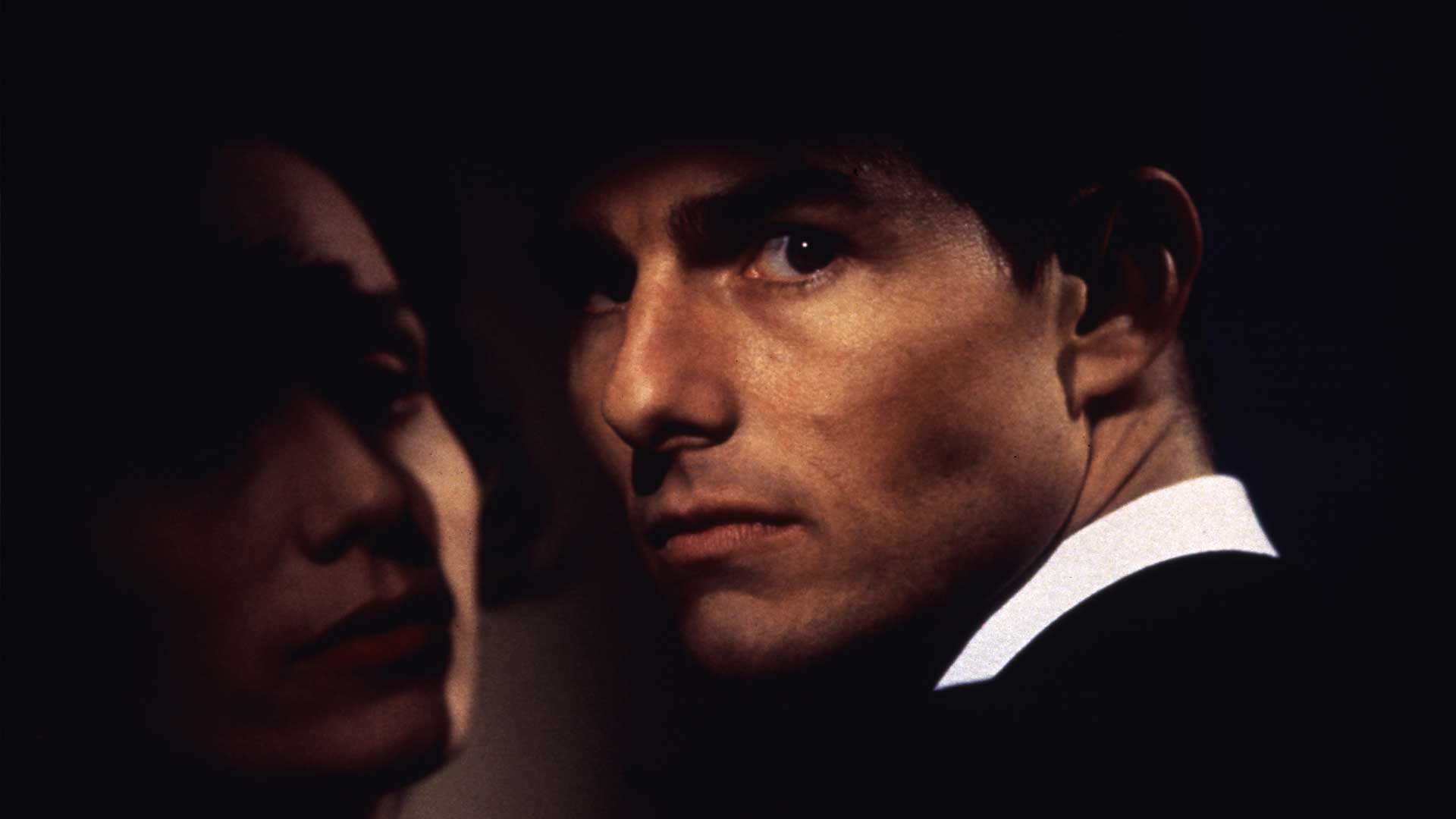
Whatever’s been going on behind the scenes, the result that was shown on the big screen didn’t look like it was a patched-up job, despite the movie receiving mixed responses over its convoluted plot. Besides, the labyrinthine structure is what makes the first Mission: Impossible such a unique big-budget Hollywood blockbuster. De Palma’s Hitchcockian-style crafty direction is put to good use right from the intriguing opening sequence, beginning with the IMF team led by Ethan Hunt (Cruise) in a heavy disguise as a Russian mobster interrogating a distraught-looking man (Ion Caramitru) on a chair in a dingy hotel room. The otherwise brief scene effectively establishes the IMF team’s deceptive method from the elaborate hotel room set-up to Hunt’s famous removal of his lifelike latex facial mask.
The movie continues to impress with the extended Prague sequence, highlighting Hunt and his IMF team’s mission to retrieve the crucial NOC list that contains all identities of their undercover agents in Europe. But things go awry when one by one is systematically killed, leaving Hunt the seemingly lone survivor from the botched mission. De Palma’s domino-like approach successfully combines dread-inducing moments with suspense and thrills.
The earlier setup, where the entire team is wiped out, marks a daring yet subversive move, particularly for those who grew up watching the classic TV series of the same name. The big-screen adaptation is more about Hunt going rogue, relying on his improvisational skills to stay alive while completing the mission, which would become a recurring plot device for the rest of the Mission: Impossible movies. Such a dramatic narrative shift, even to the point of introducing a radical plot twist revolving around the head of the IMF team, Jim Phelps (Jon Voight), feels like a total disservice. Some of the cast members from the TV series, namely Martin Landau, who played Rollin Hand, reportedly despised the plot twist. But the controversial decision somehow works well in this movie.
The Three Set Pieces That Defined a Franchise
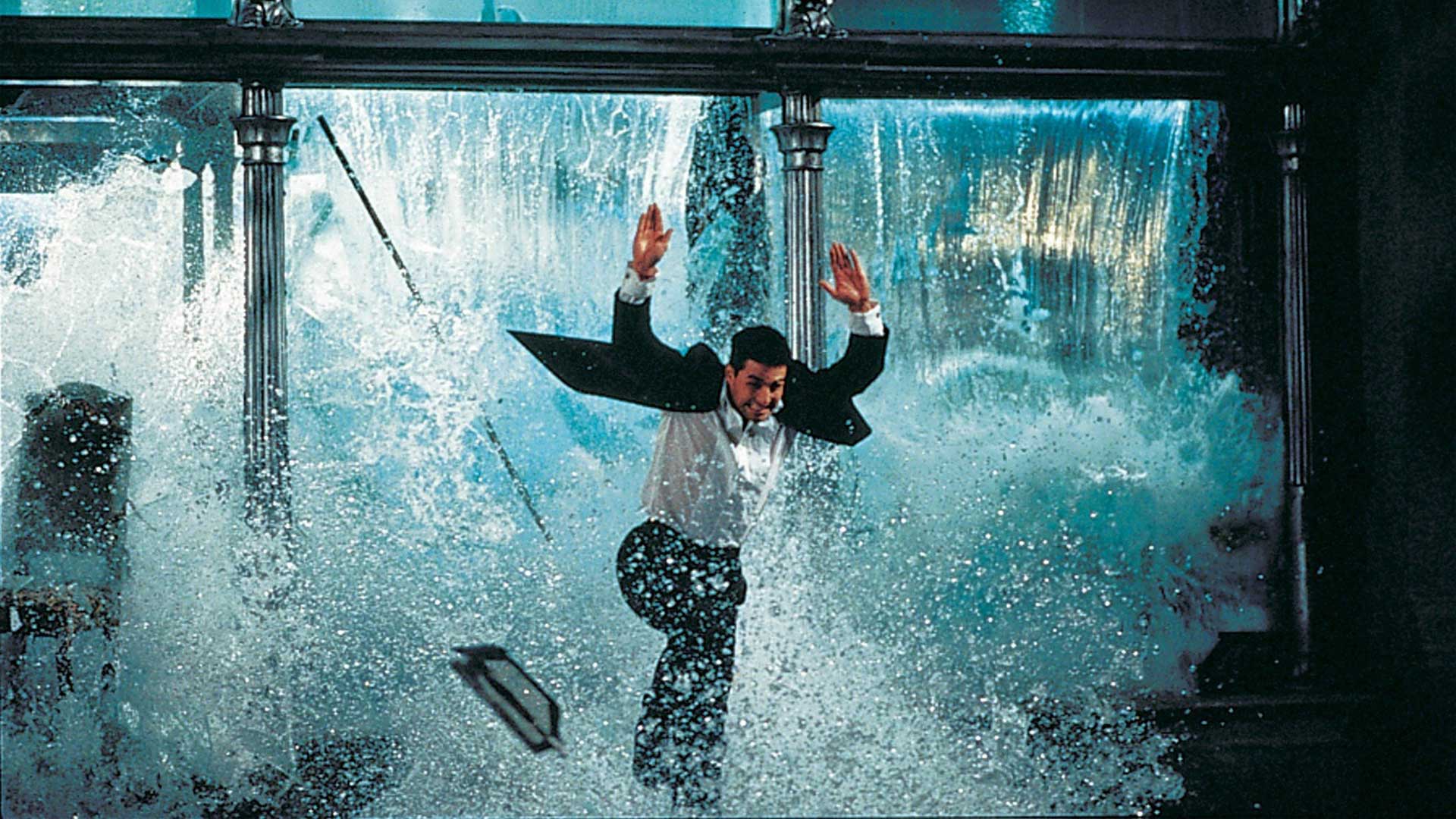
Cruise’s committed performance, coupled with his insistence on performing his own stunts, contributed to the success of this first Mission: Impossible. At one point, the scene where Hunt meets IMF director Kittridge (Henry Czerny) in a restaurant ends with the former fleeing the scene after blowing up the giant fish tank with a piece of exploding gum. The scene requires Cruise to jump and run away as water – reportedly 16 tons were used! — jets out from the burst tank with broken glass all over the place.
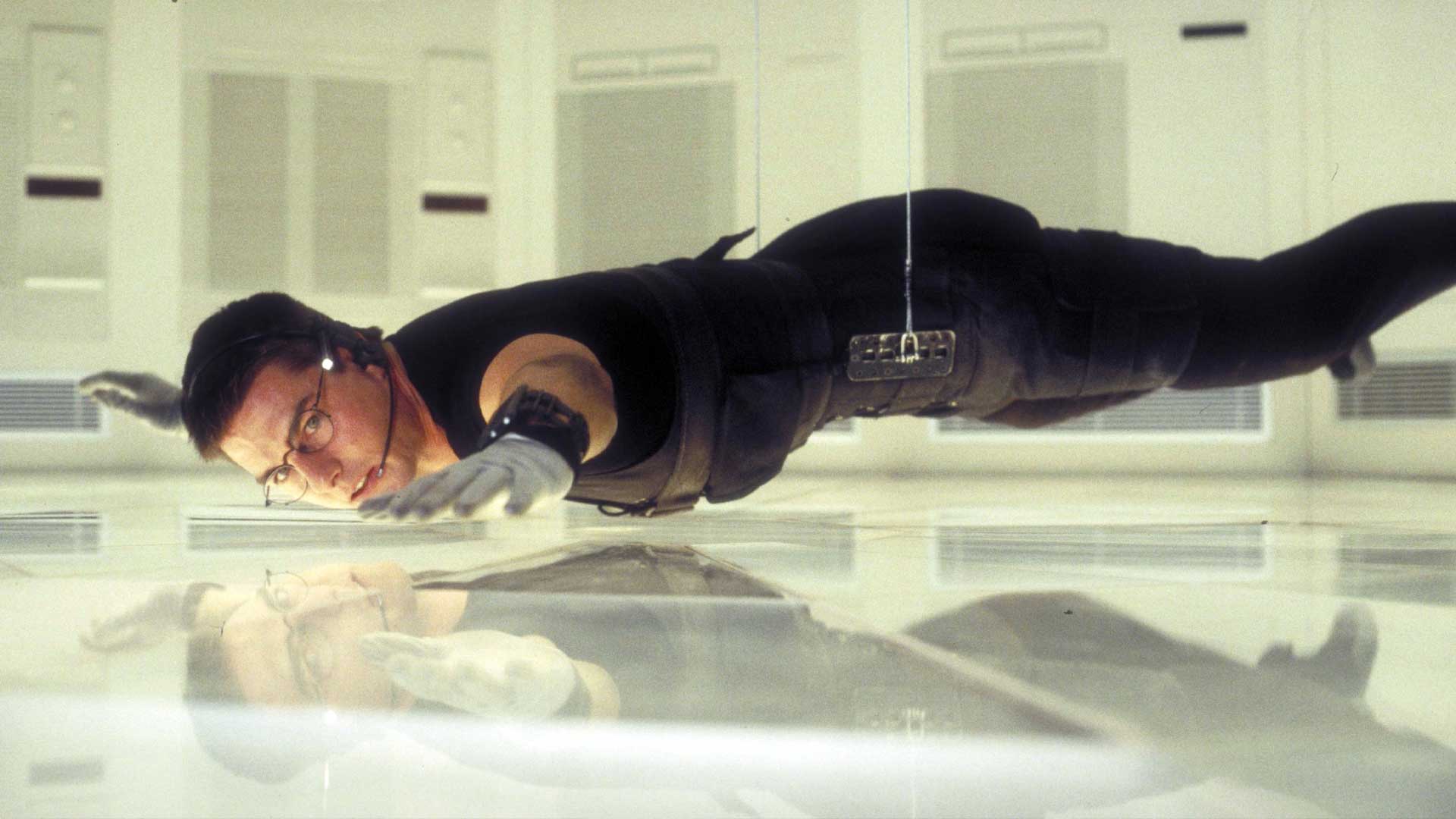
Mission: Impossible is equally lauded for the other two major action set pieces, starting with Hunt and his newly assembled rogue team (among them played by Ving Rhames and Jean Reno as Luther Stickell and Franz Krieger), infiltrating the CIA headquarters in Langley to steal the NOC list from a highly guarded vault. The breathtaking heist sequence features Hunt, who is suspended on a wire from the high ceiling, forcing him to balance his body after nearly dropping just a few inches above the pressure-sensitive floor.
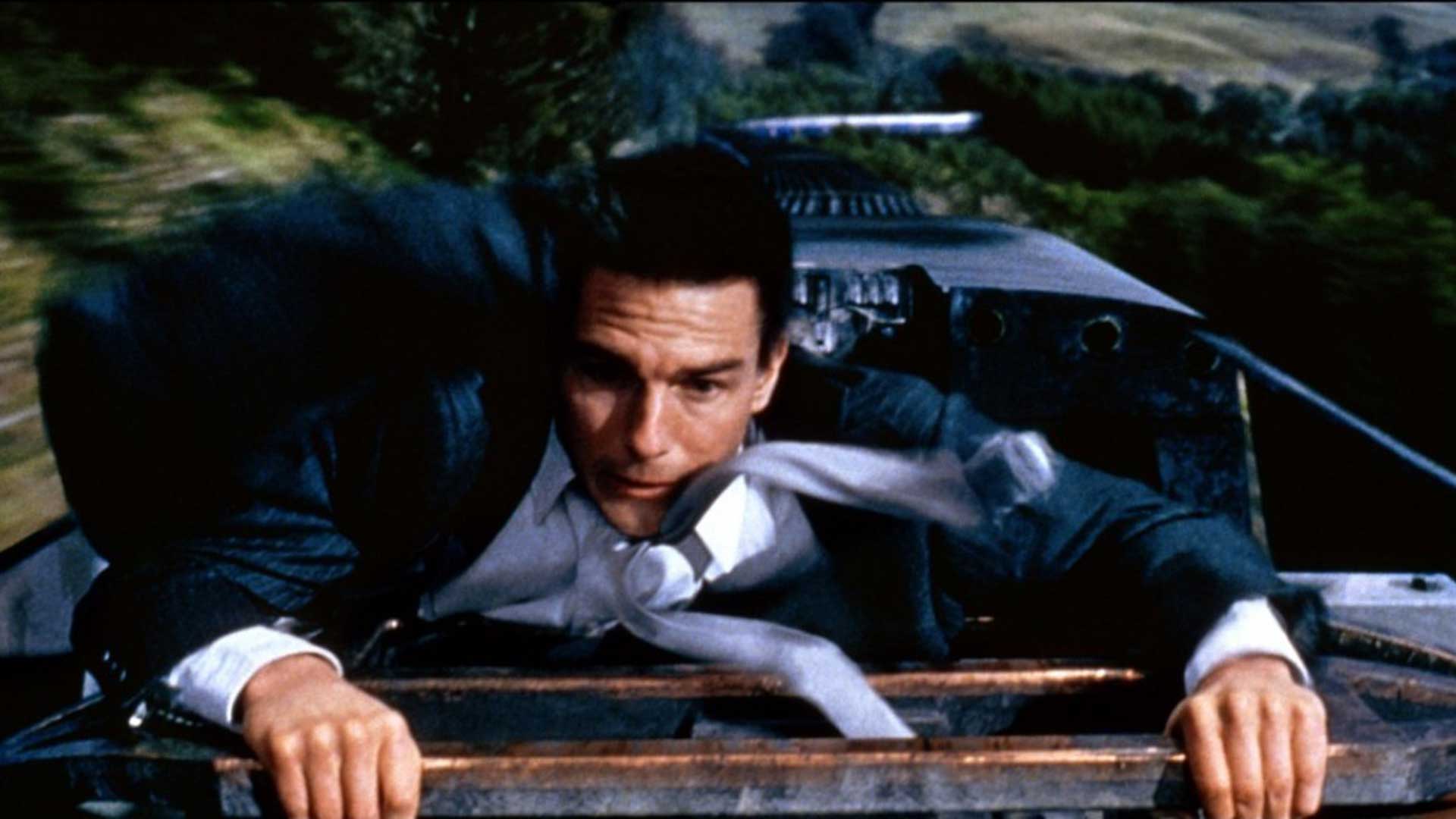
Then, there’s the third act, culminating in Hunt hanging on the top of a speeding TGV bullet train (a wind machine capable of blowing 140 miles per hour was used to make the scene look more convincing), to a helicopter-in-the-tunnel scene. Budgeted at $80 million, Mission: Impossible went on to become the third-highest-grossing movie that year, raking in over $457 million behind Independence Day and Twister. The rest, as they say, is history.
RELATED: 20 Years Later, Tom Cruise’s Best Movie Has Only Gotten Better