

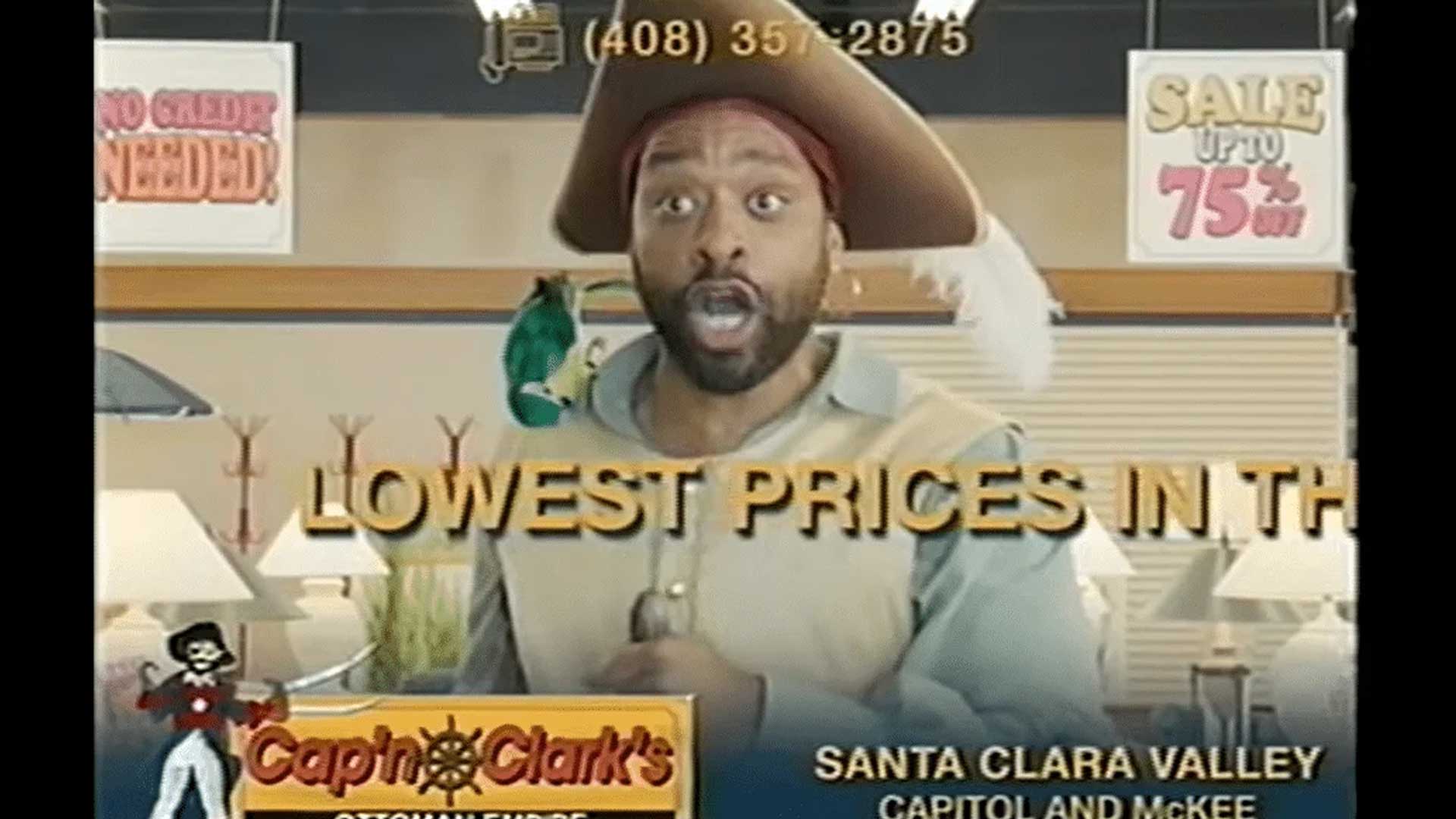
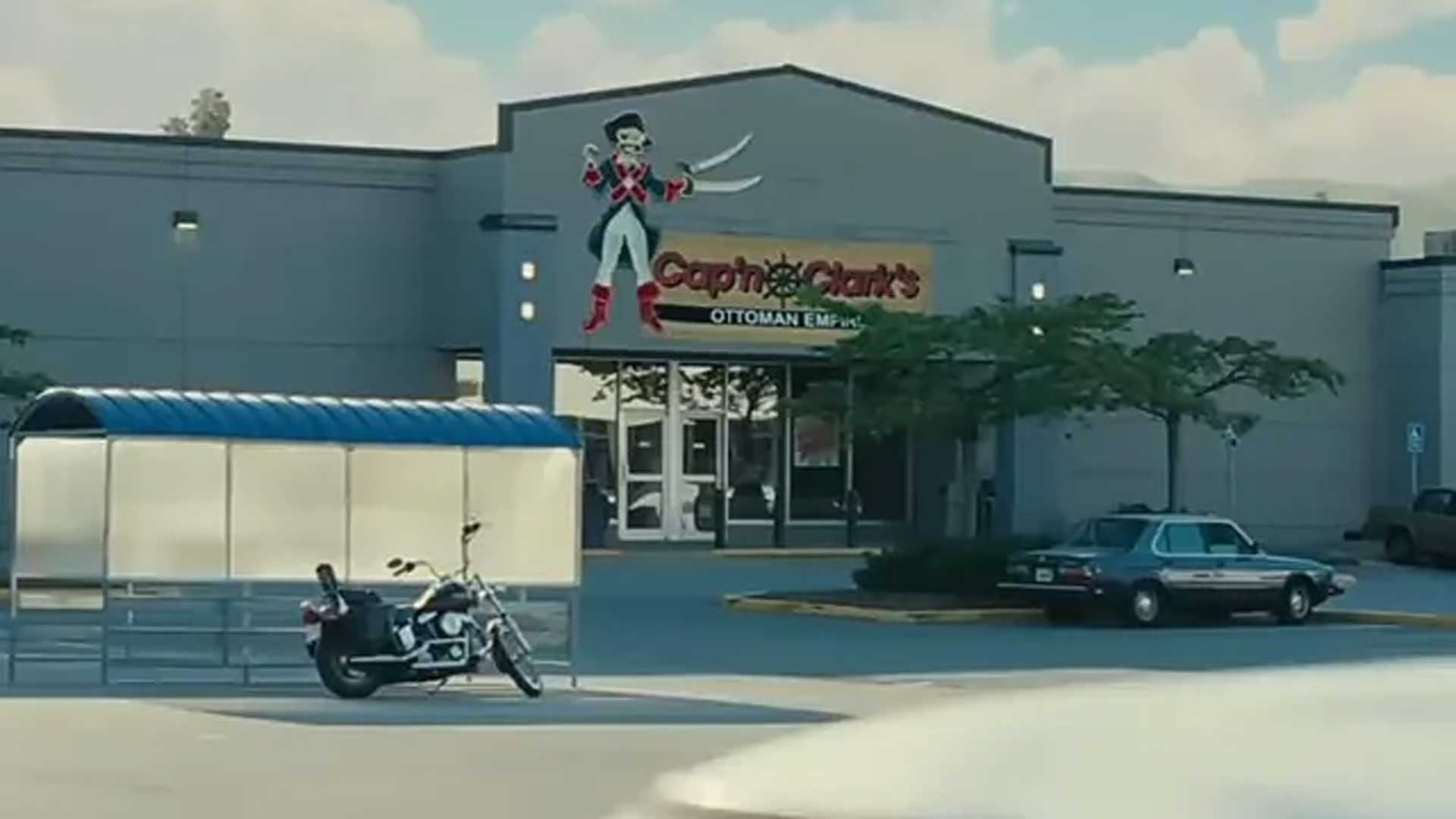
Backrooms opens with Clark’s furniture store, called Captain Clark’s Ottoman Empire. But there’s a very specific reason why the film opens and closes with a similar shot of the store. By the time the final credits roll, the store’s pirate mascot from the commercials has grown into a monster over two metres tall. It’s consumed the man who created it. And it’s chased Dr. Mary Kline through corridors that shouldn’t physically exist. And then we see the store again, but this time it looks different. Like the vague memory of something forgotten.
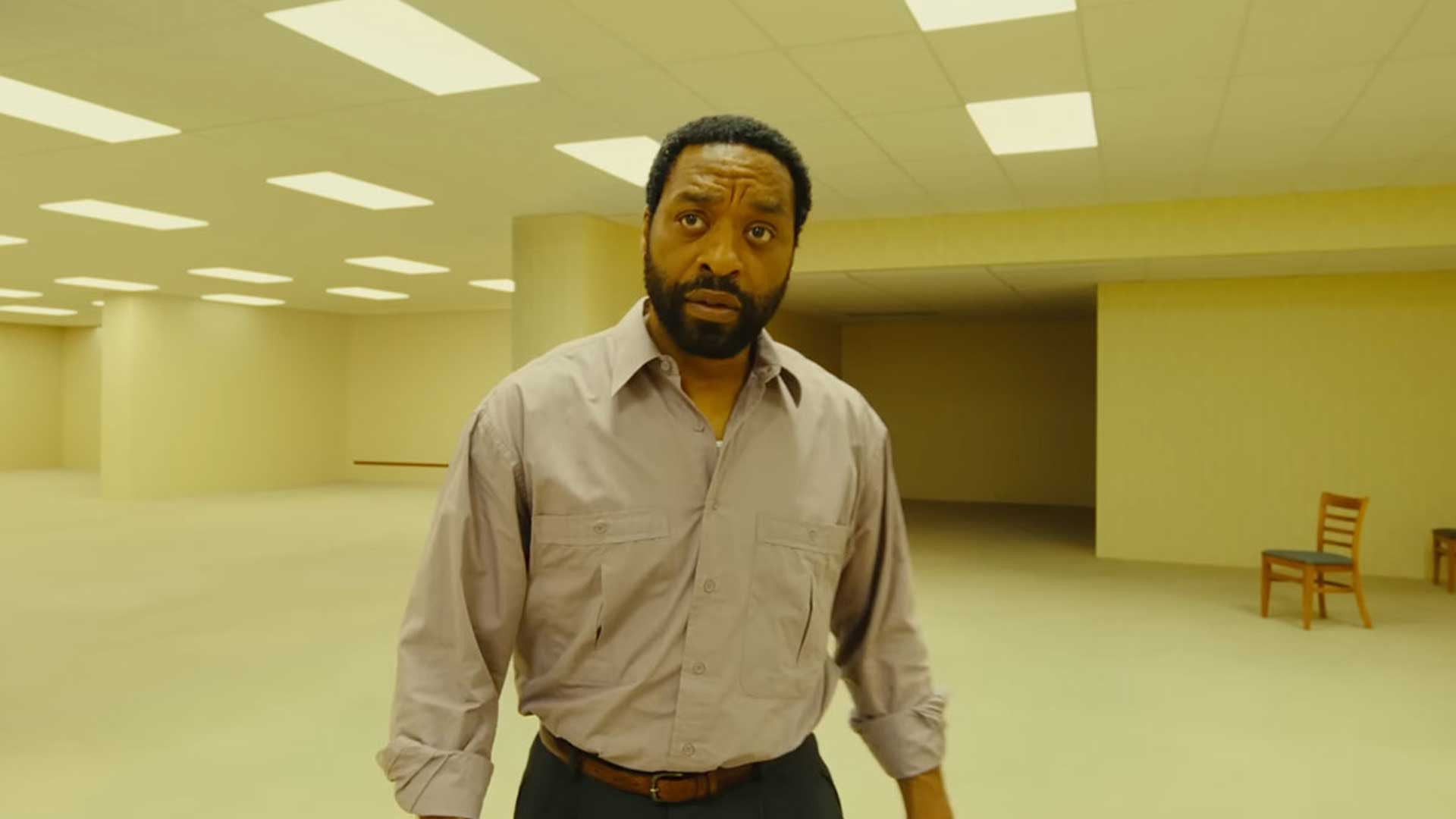
Backrooms follows recently divorced Clark, a semi-functional alcoholic who lost his home and now sleeps in the showroom of his own furniture store. Meanwhile, his therapist, Dr. Mary Kline, is dealing with her own past traumas while she is trying to get Clark to own up to his failures. But he just won’t. He blames his ex-wife for everything. Then he finds a door in his basement that leads to an infinite labyrinth of yellow-lit rooms, and suddenly he feels like he belongs, at least after he’s spent some time there. The rooms represent the things Clark just won’t let go of, and what’s really happening in his mind.
See, what the film does really well, and what the ending leans into, is that the backrooms aren’t just a place or another dimension. They’re a projection of the memories, anxieties, fears, and unresolved damage of whoever enters it.
Clark walks in broken and what comes out of the walls is a distorted version of everything he already was. His store is recreated badly. His ex-wife stands at a dinner table, deformed and silent. His mascot, the pirate from his own commercials, has grown into a monster that eventually eats him. The backrooms didn’t actually create all these weird things. Clark’s mind actually did.
But when Mary eventually enters to find him, the backrooms actually starts building around her too. And by the end, she’s face-to-face with his creature, running through corridors that feel like fractured memories. While Clark had already surrendered to it, seeing as he preferred his broken version of the world to the real one, she fights it.
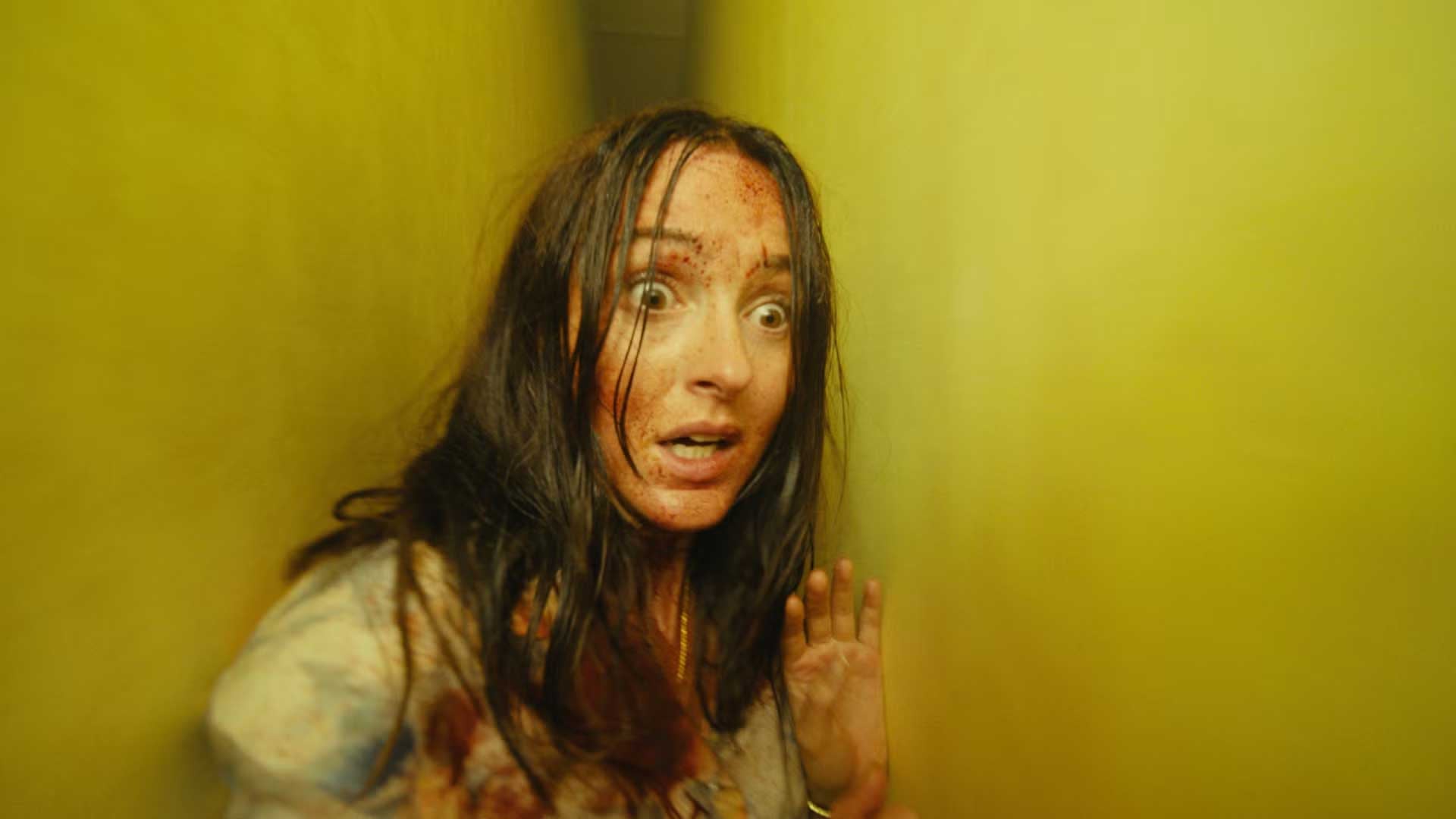
Eventually, Mary escapes by squeezing through a narrow passage that Clarke’s creature can’t follow, and on the other side she gets gassed and taken by scientists in hazmat suits. A man named Phil sits her down and explains that the backrooms may be the most significant discovery in human history. But he doesn’t understand what they are either. Mary is their best lead. But the film ends before Mary even tries to explain it all to Phil. But the fact that Phil doesn’t know if she’ll be released after revealing all of this tells us what the setup for the next film might be: escaping the labs and heading back into the backrooms again – most probably to face what the last few scenes show.
Somewhere in an empty corridor inside the backrooms, there’s a figure that looks like Mary sitting in a chair. But it has a deformed face and multiple eyes. The backrooms made a copy of her the same way it made copies of everything Clark brought in. She’s out, but she’s also still in there.
Phil mentions portals are opening in multiple locations worldwide, which means the mythology is about to get much bigger. A sequel is clearly coming.
What Backrooms gets right is that it never over-explains the dimension, the rooms or even the creatures that live in it. You leave knowing it’s real, knowing it’s dangerous, knowing it’s very personal, and knowing it’s growing.
RELATED: Backrooms Review – Someone Walked Out of the Movie Theater. And That Tells You Everything