
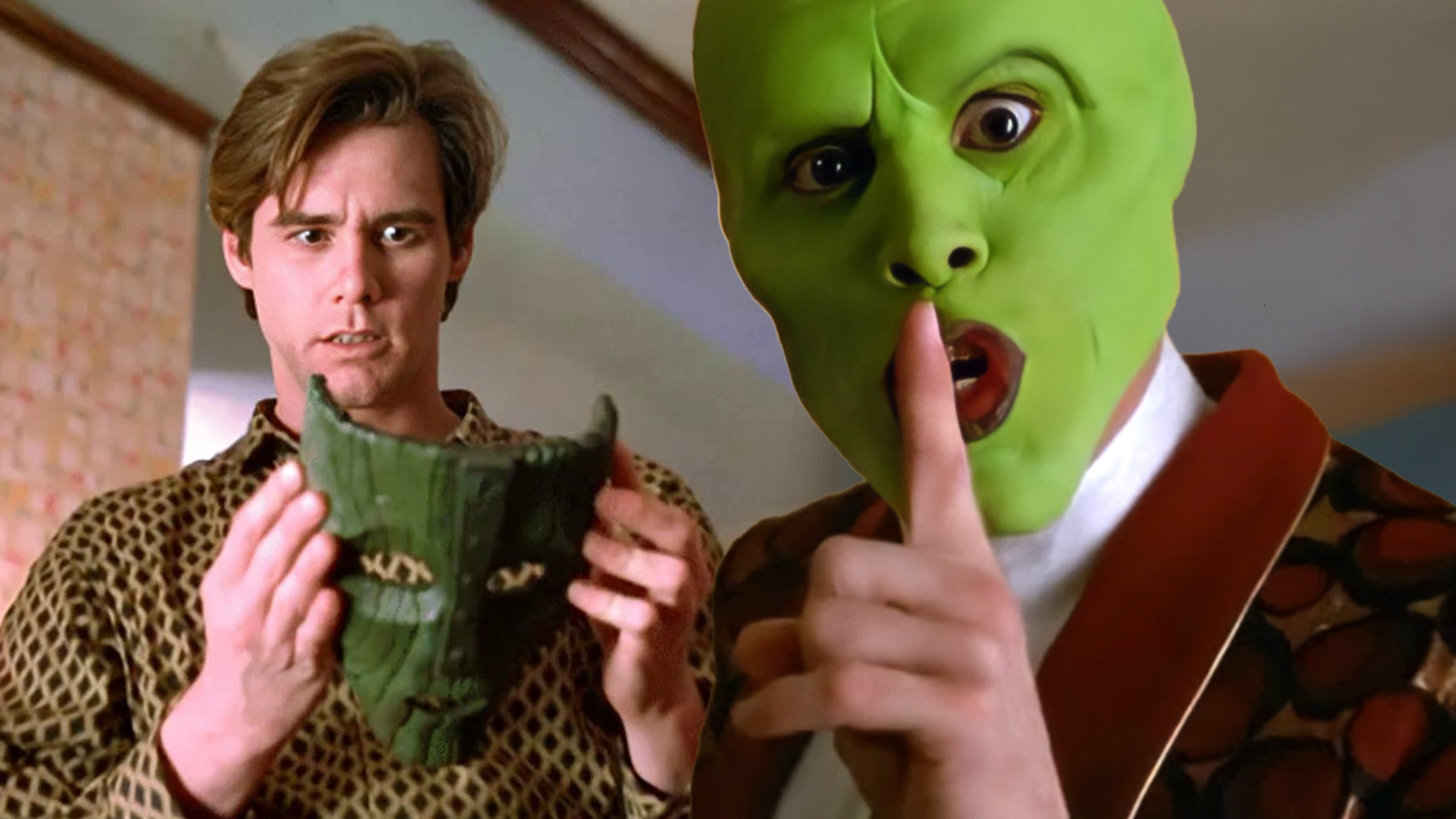


Jim Carrey’s The Mask turns 32 this month. It hit theaters on July 29, 1994, and remains one of the best superhero comedies ever produced. Sure, Stanley Ipkiss’ green-faced alter ego would hardly qualify as a textbook definition of a “superhero,” but his superhuman feats and “heroic” deeds – not to mention his comic book origins – should be enough for him to join the pantheon of comic book legends brought to life on the big screen.
Stanley Ipkiss: A Lovable Loser With a Dangerous Transformation
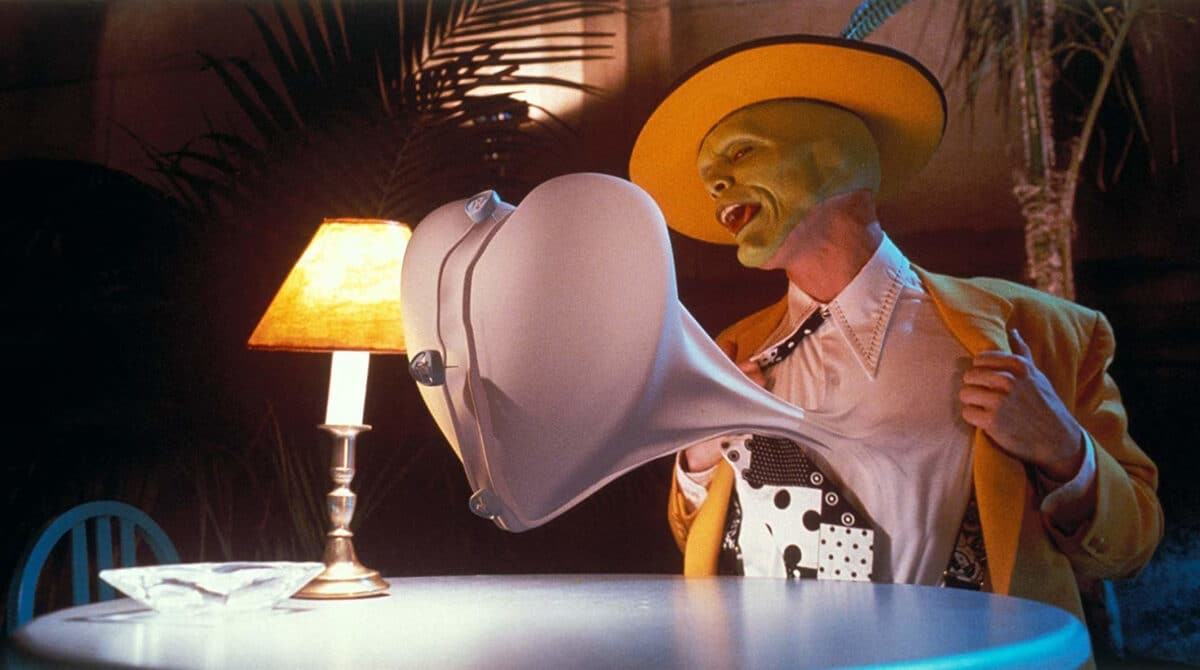
Keeping in line with the rest of Carrey’s performances in the 90s, The Mask presents him as a lovable loser. However, when Ipkiss comes across a magical mask, the object grants him the ability to turn his cartoon-inspired wishes into reality. It all seems rather standard for a comic book flick, but does The Mask hide some deeper meaning behind its gratuitous cartoon violence? Some fans believe the mask itself might be an allegory for alcoholism. Sounds farfetched? Trust me: it makes more sense the more you read into it.
The Mask’s Personality Shift: A Parallel to Addiction
The theory claims that some aspects of the mask’s powers seem to be heavily inspired by depictions of alcoholism, including Stanley Ipkiss’ sudden change in personality. While he’s weak and meek when he’s not wearing the mask, when he dons the disguise, he becomes an idealized version of himself, mostly inspired by the cartoon characters he loves so much.
For some fans, this is similar to the “social lubricant” effects alcohol has over some individuals. The key here is that Ipkiss doesn’t remember most of the acts he commits when he’s using the mask, leading some fans to believe that this is similar to him suffering the effects of a hangover.
Drunk with Power
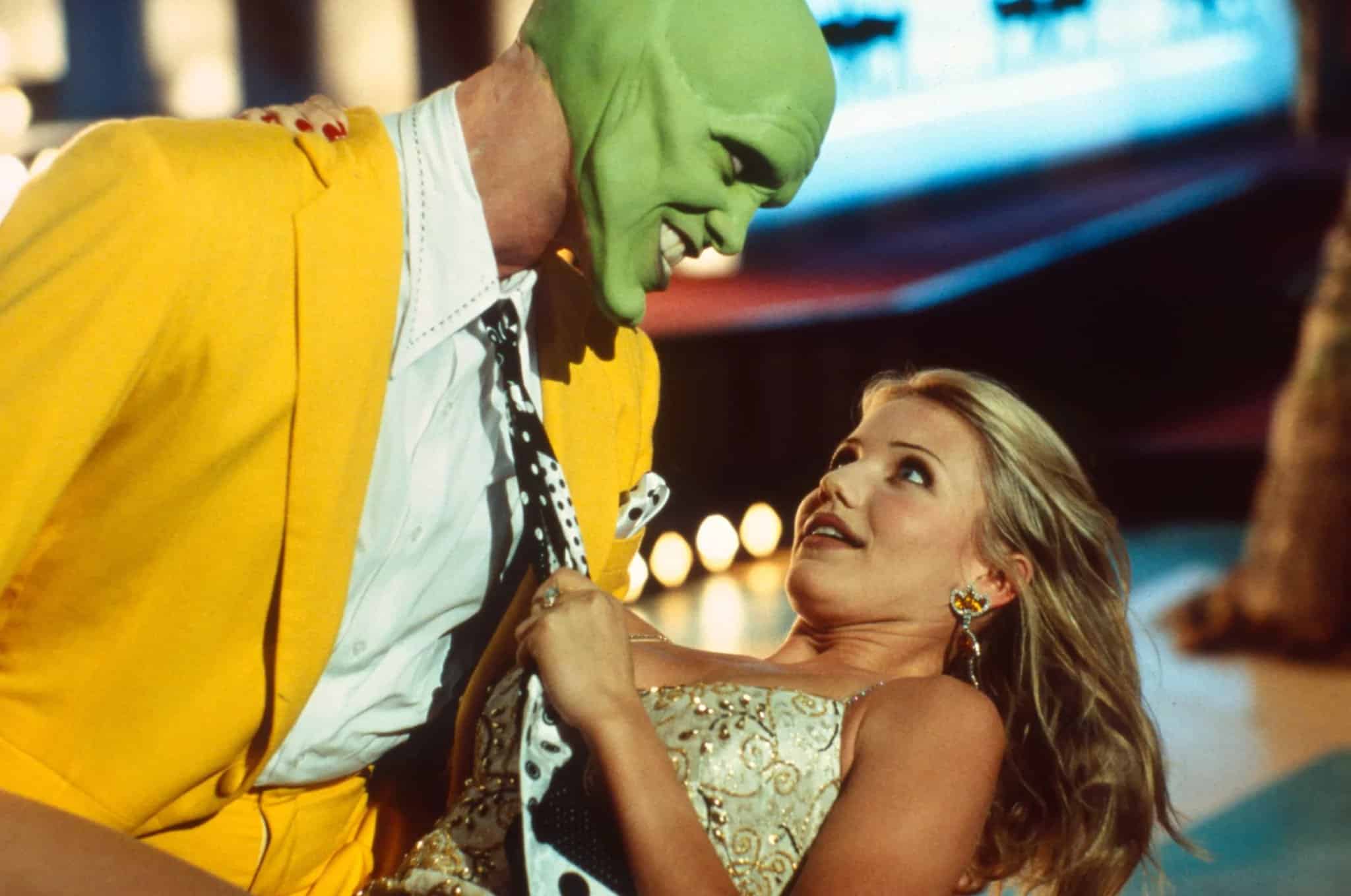
More importantly, throughout the rest of the film, Ipkiss becomes “addicted” to the mask’s powers. The intoxicating feeling he gets when he uses the mask might be pretty self-explanatory as a power fantasy, but it’s also undeniable that he clearly seems to be “drunk with power” when he’s wearing it.
Why Does the Mask Only Work at Night?
Another piece of solid evidence in favor of this theory is that the mask only works at night. Sure, severe alcoholics don’t care about the time of day when they get drunk, but for a casual consumer like Ipkiss, the night offers him the perfect chance to discover a side of him that goes ignored during the day. For supporters of this theory, it makes sense that Ipkiss would only “drink” at nighttime when he’s away from the prying eyes of his acquaintances.
The Mask “Lowers Your Inhibitions” — Sound Familiar?
Even the film itself seems to partially support the theory of the mask’s inebriating powers. Ipkiss explains that the mask works as a way to lower the user’s inhibitions, which would also explain why someone like Dorian Tyrell would be so dangerous if he ever possessed the mask. In other words, Ipkiss is a happy drunk, while Dorian would be an angry drunk.
It Was Almost a Horror Movie
The alcoholism theory gets eerier when you consider how The Mask was originally pitched. Director Chuck Russell — who’d previously made A Nightmare on Elm Street 3 — has said the film was first conceived as a horror movie, with Stanley Ipkiss’ transformation playing more like a monster story than a comedy. Studio executives originally saw the project as a horror film before Russell pushed to make it a comedy vehicle for Carrey and Cameron Diaz, who made her screen debut in the role of Tina Carlyle. Russell had actually pitched the film as a rival to Freddy Krueger before Carrey came aboard and the tone shifted toward comedy. It’s a detail that recontextualizes just how much darkness was baked into the concept from the start — long before anyone was reading it as an allegory for addiction.
A Theory Darker Than Anyone Expected
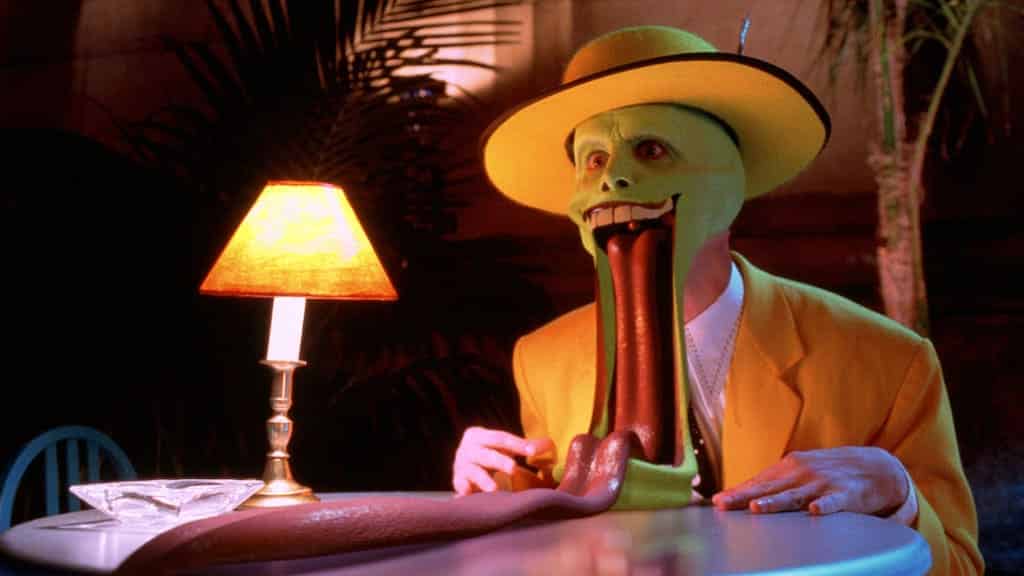
Sure, if we follow the movie’s mythos, we might soon realize that the mask has connections to Norse mythology, particularly to Loki. However, it’s fascinating to think that a movie so seemingly straightforward as The Mask could actually be a Darren Aronofsky-style story about a man struggling with alcoholism. Hey, after all, “Somebody stop me!” might be more of a cry for help than a funny one-liner, if it wasn’t Jim Carrey playing the part, that is.
For more on Carrey’s career-defining run in the 90s, check out Jim Carrey Got Paid $20 Million to Make a Movie That Flopped — Now Everyone Admits They Were Wrong.
Tell us, do you think The Mask is about alcoholism?
RELATED: Marlon Wayans Wants To Play The Mask – And It’s A Good Idea
RELATED: The Mask Director Chuck Russell Is Dead at 74 — Jim Carrey Pays Tribute