

H.R. Giger designed two iconic movie monsters. Only one of them gets to have sex. Species (1995) let him go further than Alien ever did.
When H.R. Giger conceptualized the xenomorph’s design for 1979’s Alien, he aimed to create a creature that was equal parts terrifying and “beautiful” – in its own Xeno way, of course. The result was one of the most iconic extraterrestrial designs ever put on film, and a sort of “awakening” for sci-fi fans who suddenly realized they liked the biomechanical aesthetic.
The deadly beauty of the xenomorph would eventually degrade with each new entry in the Alien franchise, as the aliens themselves became increasingly bug-like. By 1997’s Alien: Resurrection, the franchise had moved away from Giger’s unique combination of deadly alien beauty. Luckily for Xeno lovers, Species had just come out a couple of years before.
Natasha Henstridge and the Horror of Attraction
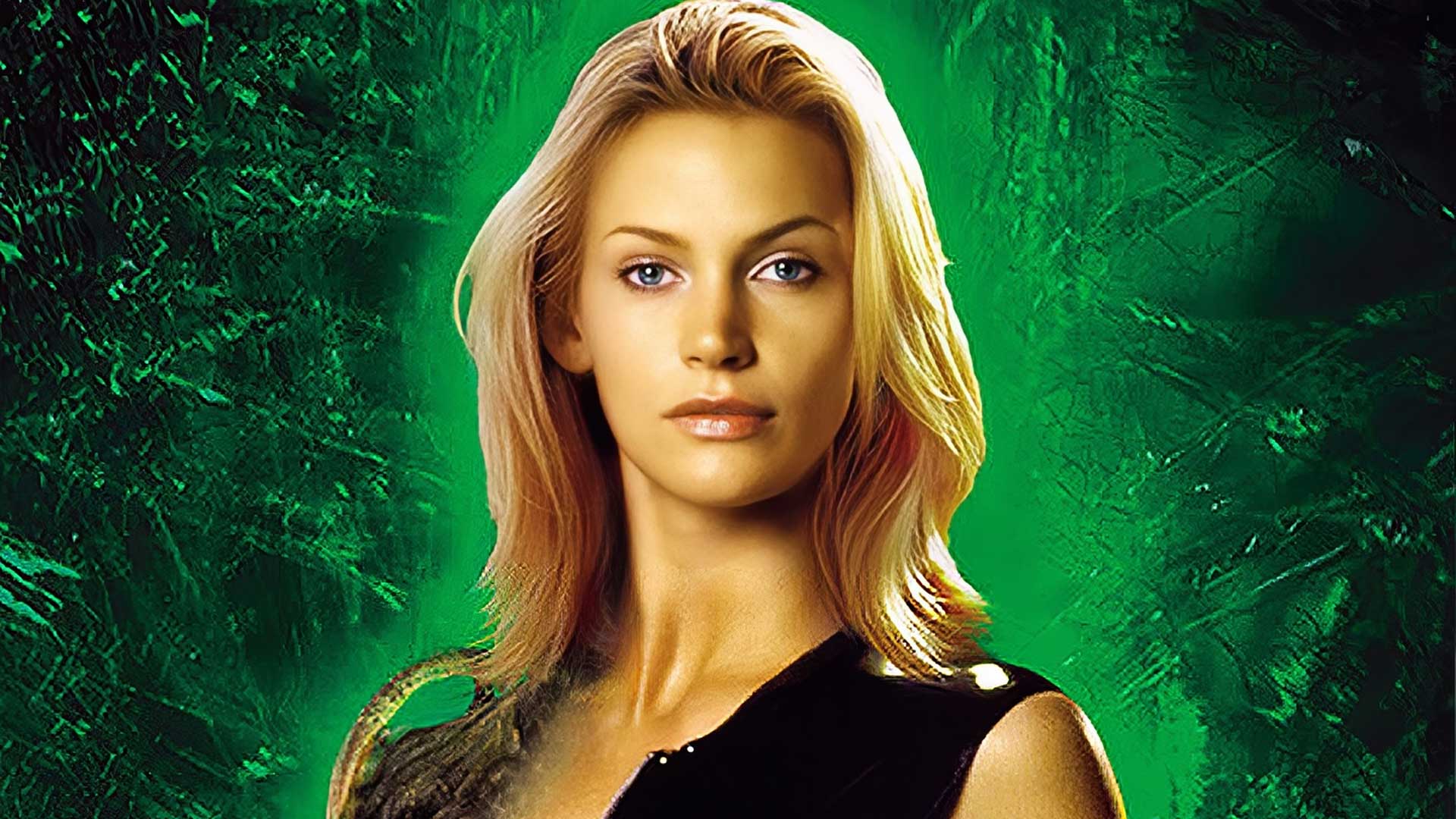
Species, directed by Roger Donaldson, tells the story of an alien-human hybrid on a quest to find a suitable mate to prolong her species. At first glance, it sounds like the pulpiest pulp ever filmed, but you’ll be surprised to see just how effective Species can be as both a sci-fi flick and a genuinely disturbing body horror masterpiece.
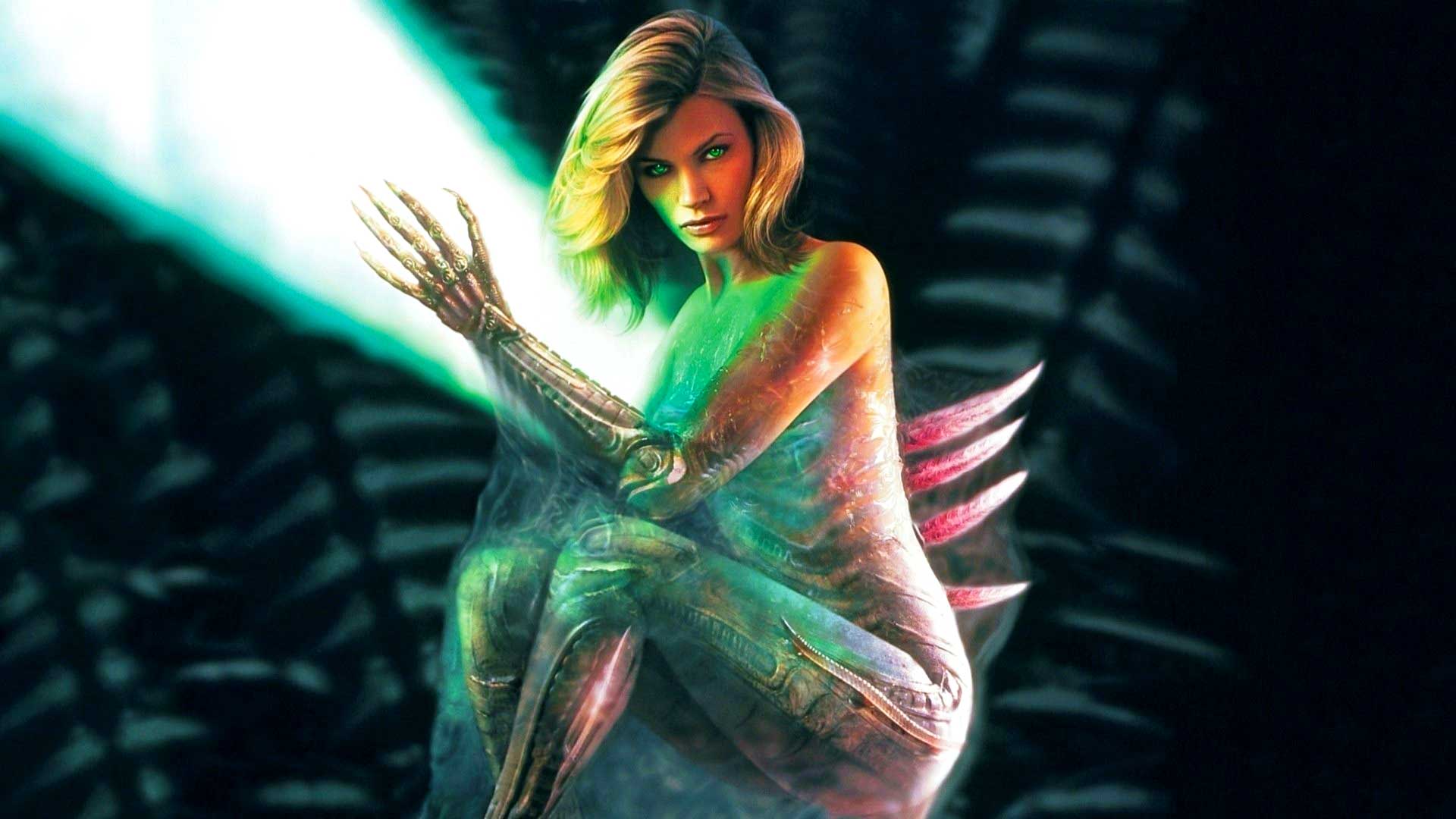
At the center of the whole bloody affair, we have Sil, the alien hybrid in question. Played by Natasha Henstridge, Sil has become a cornerstone of sci-fi. Her alien form has an iconic design that’s equal parts disturbing and attractive. And you know what that means: she was designed by H.R. Giger.
The Body Horror Underneath the Beauty
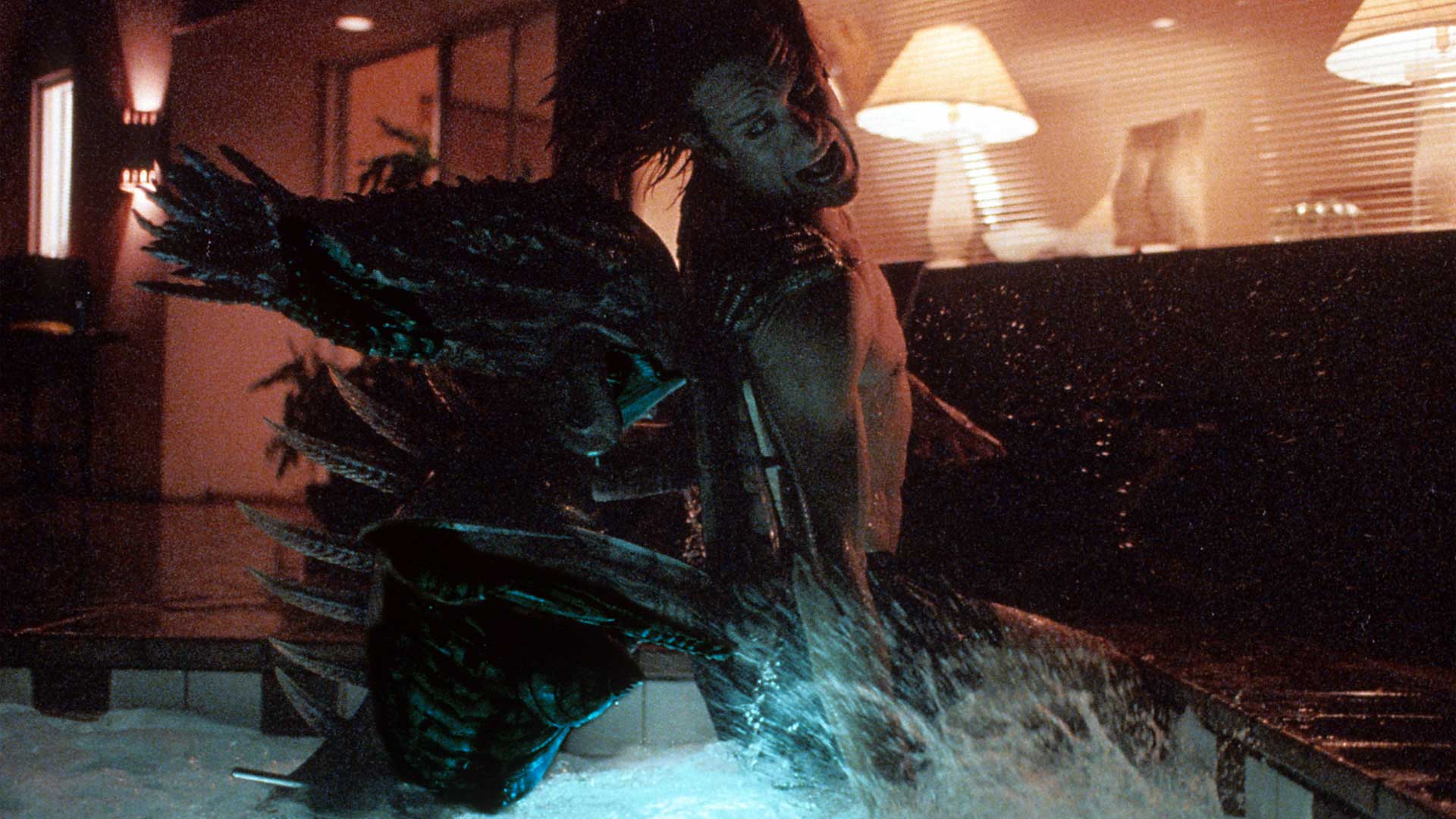
Feeling left out by the Alien franchise, Species became a new home for Giger’s designs. For Sil, he used his signature blend of sexy and deadly, giving her alien form a distinctive translucent skin that allows an unrestricted view of her internal, biomechanical innards.
Anyone who’s a fan of Giger’s unique style will quickly find that Species gave the artist much more leeway than the Alien franchise ever did. Sil is as memorable as she’s seductive – until she starts killing people, of course. That’s when the real horror shenanigans begin, and the film quickly turns into a veritable sci-fi classic.
Species as Spiritual Sequel: What Ridley Scott Started, Roger Donaldson Finished
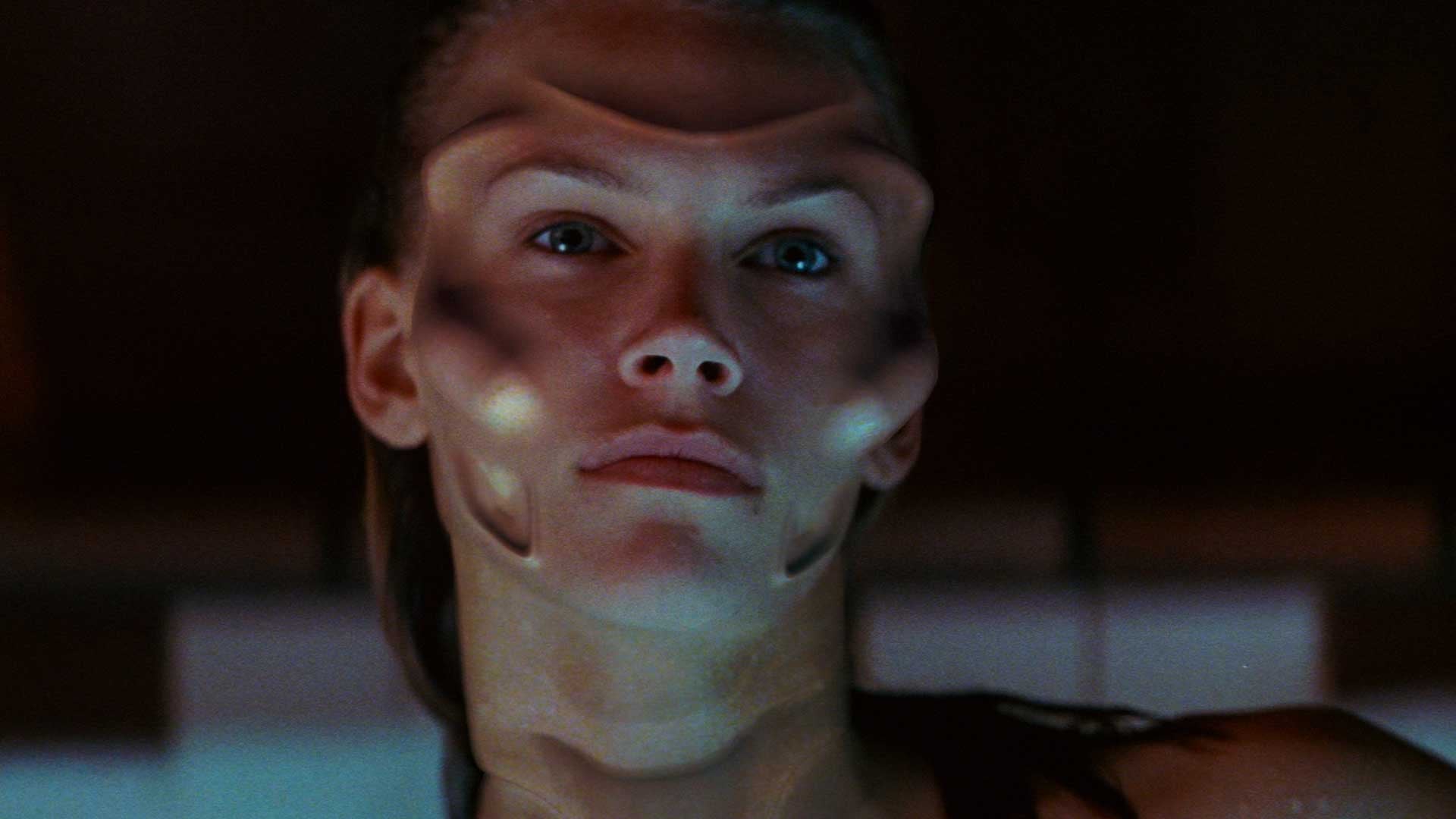
In the 90s, sci-fi films were getting bloody. From Species to Event Horizon and even Alien: Resurrection, sci-fi films were spilling blood and guts left and right. In many ways, Species felt like the edgier Alien that the eighties just wouldn’t stomach. The film forces you into an uncomfortable relationship with its central creature: are you attracted or afraid of Sil? It’s the kind of “forbidden allure” that has immortalized horror stories like Nosferatu and The Shape of Water for generations.
More than anything, Species takes the figure of the classic femme fatale to a cosmic stage. Alien used sexual violence as a metaphor for horror, whereas Species fully embraces its psychosexual scares with gusto. If you, like Giger, felt as if Aliens discarded the horror roots of the original Alien, you’ll find that Species works surprisingly well as a spiritual successor to Ridley Scott’s extraterrestrial thriller.
Species (1995) didn’t just continue what Alien started — it went somewhere Alien never had the nerve to go. Thirty years later, it still makes you uncomfortable. That’s exactly what Giger intended.