

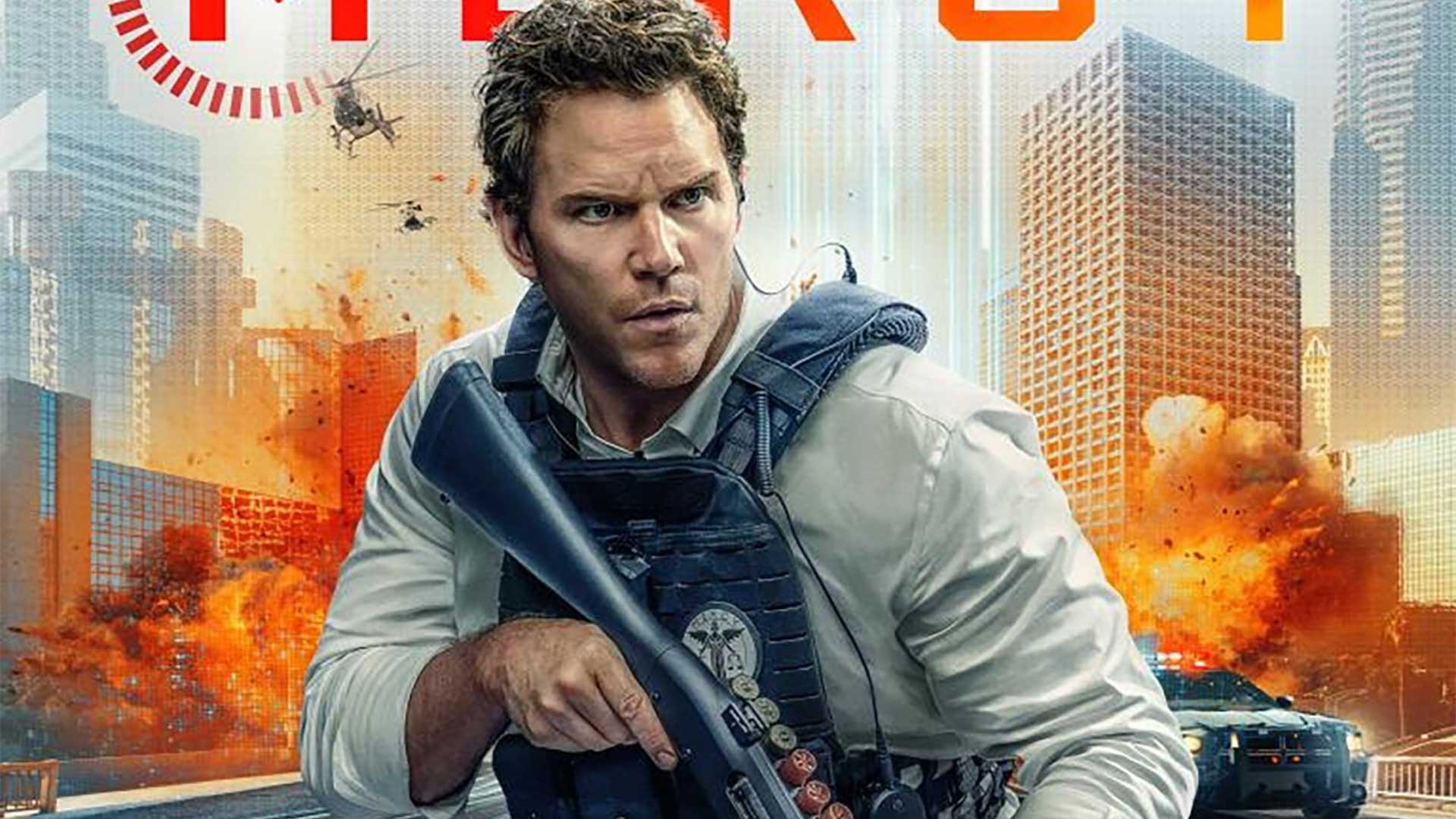


If Timur Bekmambetov’s Mercy had been released in the ’90s, it would have starred Chris Pratt’s father-in-law, Arnold Schwarzenegger, in the lead role. It’s the type of loopy, race-against-time story that would have been catnip for viewers and had them rushing to the cinema back in the day. Will audiences react the same way in 2026? It’s too early to tell.
In August 2029, Detective Chris Raven (Pratt) awakens to find himself in the Mercy Court. This is the evolution of the justice system where an impartial AI judge has access to all the evidence, communication networks, and makes the final call as judge, jury, and executioner. As per the voiceover in the beginning, AI doesn’t make mistakes, so this is the only way to dish out justice fairly and efficiently.
In Chris’ case, he meets Judge Maddox (Rebecca Ferguson), who informs him that he’s been found guilty of murdering his wife, Nicole (Annabelle Wallis). The evidence all points to Chris being the perpetrator of the crime, but he pleads not guilty. Now, he has 90 minutes to prove his innocence or face execution.
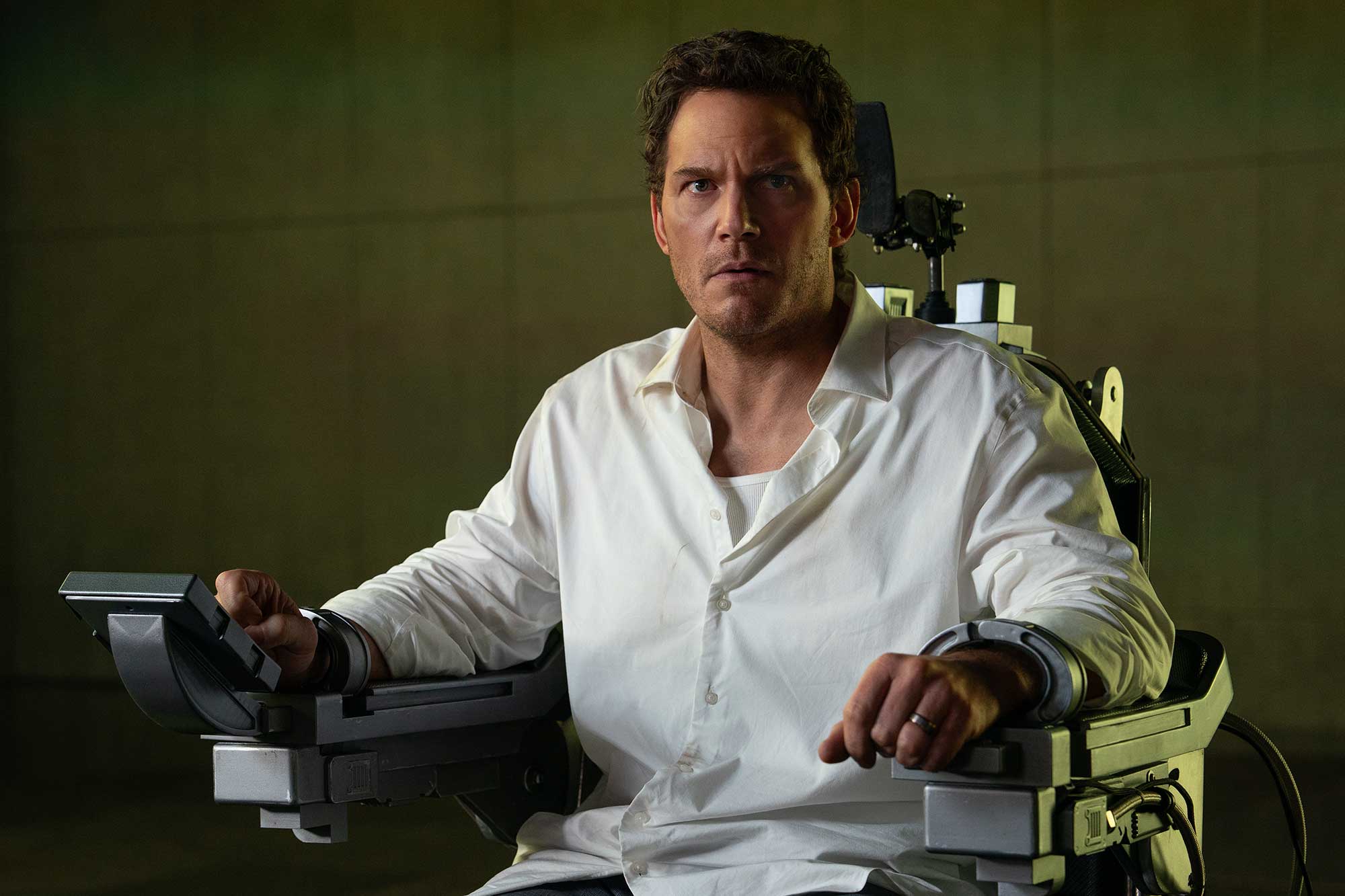
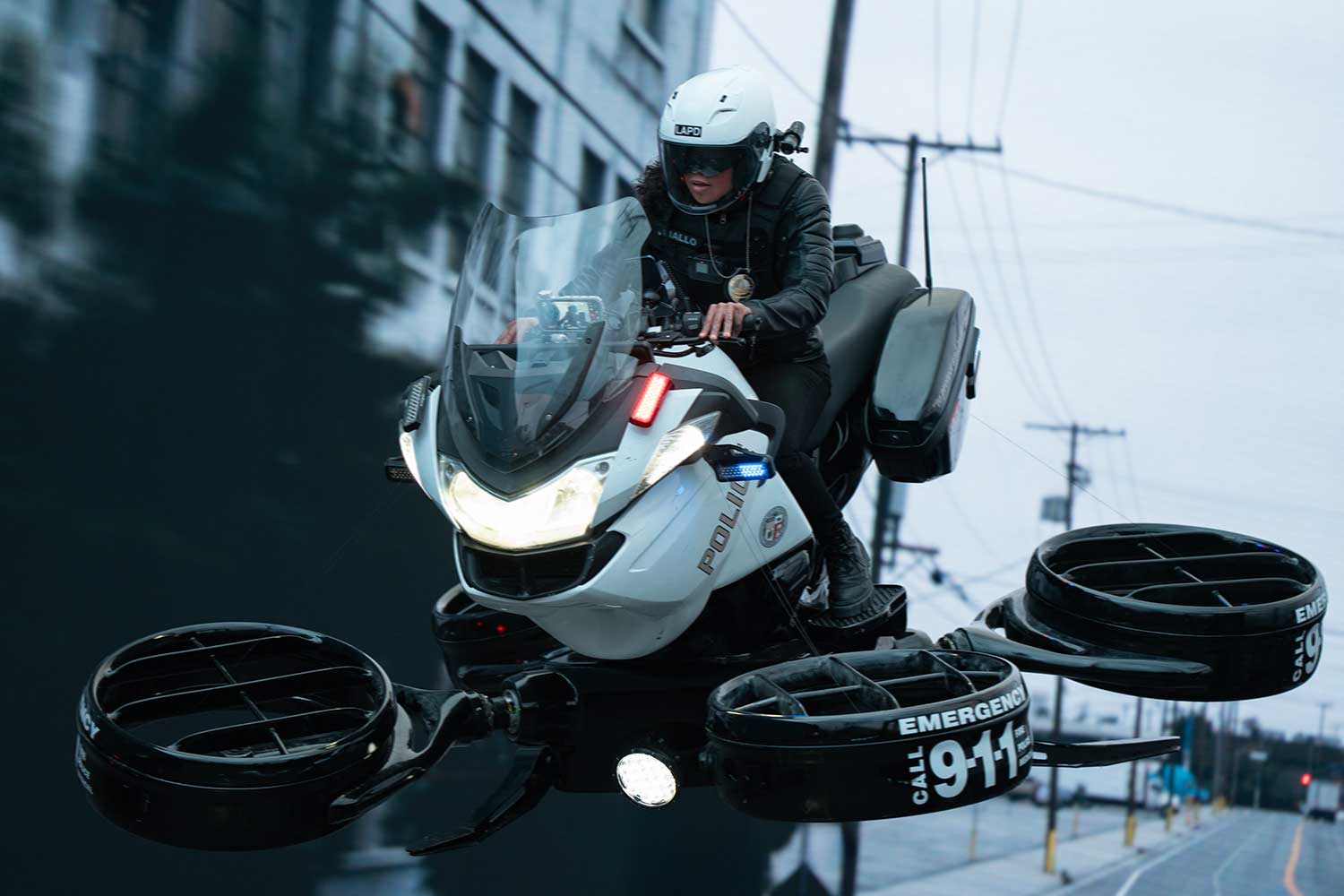
Mercy‘s entire 100-minute run sees Chris situated inside of the Mercy Court, so Bekmambetov and cinematographer Khalid Mohtaseb employ a distinct visual style to tell the story. In between the shots of Chris strapped to the chair, they utilize cellphone cameras, drones, and body cams to capture the action outside of the courtroom, as Chris analyzes the evidence while he also engages with others like his partner, Jaq Diallo (Kali Reiss), and friend Rob Nelson (Chris Sullivan) via video calls to assist him in clearing his name. Occasionally, Bekmambetov and Mohtaseb drop Chris into a virtual recreation of a location, which looks great every time it happens, especially when he’s in the middle of the road and watching cars zip past him.
The visual language turns out to be one of Mercy‘s biggest gambles. While credit needs to go to the filmmakers for trying something that isn’t seen every day, it can be jarring for general audiences who might find the style off-putting when they expected a straight-up sci-fi actioner. In a way it’s reminiscent of Hardcore Henry, which was produced by Bekmambetov, and its first-person perspective. It’s a gimmick, for sure, but how many people will be willing to take a chance on it? Also, the exposition dumps courtesy of Maddox when someone can see what’s happening for themselves feels excessive. But alas, this appears to be the filmmaking way of the future since everyone is on their phones and not paying attention to the movie on screen.
Storywise, the unraveling of the whodunit proves to be more exciting than the final reveal itself. Mercy explores the dynamic of Chris and Nicole’s relationship, demonstrating how things hadn’t been good between them for a while. The film also paints him as someone who struggles with anger and personal demons, leaving a sliver of doubt that maybe – just maybe – he could have done it in a fit of rage. Yet, as the film wears on and through sleuthing that’s reminiscent of video game logic, Chris pieces together who is behind it all. The why is a little generic, as is the mandatory final swerve, but everything up until this point hooks the viewer into finding out more about the murder mystery.
Mercy focuses on Pratt and Ferguson for the majority of the runtime. While their characters are underdeveloped in the story, and everyone has seen versions of these archetypes elsewhere, they do a commendable-enough job to keep you invested in the story. The film leaves open the door for a sequel, so don’t be surprised if they team up again down the line.
The point and relevance of Maddox, as well as the whole Mercy Court, is still hazy, though. On the one hand, Marco van Belle’s script throws a thinly veiled jab at the belief that AI is infallible and humanity’s overreliance on it, but then the film turns into a kumbaya piece about humanity and AI understanding we all make mistakes. Sorry, what?! In a current world in which humans are being replaced by AI because all these greedy little piggies in big corporations want to save a cent here and there, the correct message here should be that AI is a tool – not a solution, nor should people be putting complete faith in it. At no point should the likes of ChatGPT be used for legal or justice advice, or have we not learned anything about AI hallucination?
Funnily enough, this brings it all back to how Mercy feels like a ’90s movie, because hey, this is probably how people would have viewed the potential of AI in that era: Humans and artificial intelligence working hand-in-hand to change the world for the better. Yeah, it’s misguided and not what’s happening at all, so maybe it’s best to drop all expectations for this particular sci-fi film having any real lesson at all and just enjoying it at face value. You’re likely to have a better time with it then.
RELATED: Killer Whale Movie Review – Not a Fin-Tastic Whale of a Time
The Review
Mercy
While Mercy lacks a powerful message about society's relationship with technology, there's still some fun to be had here.
Review Breakdown
-
Verdict