



“Superhero comedies? That’s outrageous! What’s next, a film where the villain is the likable main character and the hero sucks?” In 2010, Megamind kicked dirt in the face of everyone who believed this to be an impossible feat – and it started the way in which the best ideas do: as a funny conversation between friends.
Writers Brent Simons and Alan Schoolcraft met at college. They dreamed of becoming screenwriters, but each of them pursued their passions individually: Schoolcraft worked for the Coen brothers and Simons explored comedy, especially the sketch scene. Struggling to sell their scripts, they decided to team up to see what they could accomplish together. Their first script was a horror film that received encouraging feedback, so they bashed around other ideas in a notebook for potential projects. Eventually, they came back to one specific scribble that made them both laugh and spitball how it would play out.
“What if Lex Luthor killed Superman in the first scene?” Simons said. “Maybe he’d get lonely, and then he’d create a new superhero to fight. And what if that superhero turned out to be an even bigger a**hole than Lex Luthor? And now Lex Luthor had to be a hero in order to stop him.”
This concept evolved into Megamind, or Mastermind as it was initially conceived by Simons and Schoolcraft. As Simons explained, they “wrote it over the phone,” and it resulted in them securing representation and quitting their day jobs. Yet, they encountered their Kryptonite: No one knew what to do with a superhero comedy at the time. This was the early 2000s, and the only superhero films that Hollywood knew were Sam Raimi’s Spider-Man and X-Men. The only other reference point was 1999’s Mystery Men, which was well received but tanked at the box office. For five years, Simons and Schoolcraft’s script did the rounds throughout the town, but it was getting to a crunch point in which they knew they would need to get other jobs if Megamind didn’t sell – and fast.

One fateful day, Simons and Schoolcraft met at Starbucks and pledged to keep writing, but decided they needed to start looking for jobs on Monday. That evening, their lives changed forever. “There had been so many almosts with Megamind – like it almost happened as a live-action movie at one point – that our agents didn’t want to tell us they had been talking to Ben Stiller’s company at DreamWorks about making an animated film,” Simons said. “And so the deal still wasn’t signed, but our agents had to tell us at that point. That led to a very nerve-wracking weekend, waiting for a yes, and that happened that Monday.”
Megamind turned out to be the first spec script that DreamWorks had bought at the time, so this required Simons and Schoolcraft to “reconstruct it because that was DreamWorks’ process.” It was challenging, since they had to adapt to the DreamWorks style, but a positive shift occurred when director Tom McGrath boarded the project. “He really went back to the structure of our original script,” Simons said. “And he’s like, ‘Yeah, for animation, we need to change some things. We need to open the character up a bit more.’ But he had a very clear vision right from the start. And the movie started over from the point he came on.”
Simons credited McGrath for one big structural change to the story that he and Schoolcraft were initially uncertain about: the introductory scene before Megamind accidentally kills Metro Man. “The big thing that Tom said, which we weren’t sure we agreed with at the time, was we have to know Megamind before this,” Simons said.
“In our draft, you meet him at the beginning of the battle. Him and Metro Man have been going at it for years, and we were like, ‘The audience gets these movies. Let’s just throw them in the midst of a battle.’ But his idea was to really start with Megamind as a baby, because he thought it was important for the audience to not necessarily be on Megamind’s side, but be sympathetic towards him. That really ended up being the right decision, because I think between that and Will [Ferrell’s] performance, you’re always on his side, and you see him as an underdog, which was always our intention.”
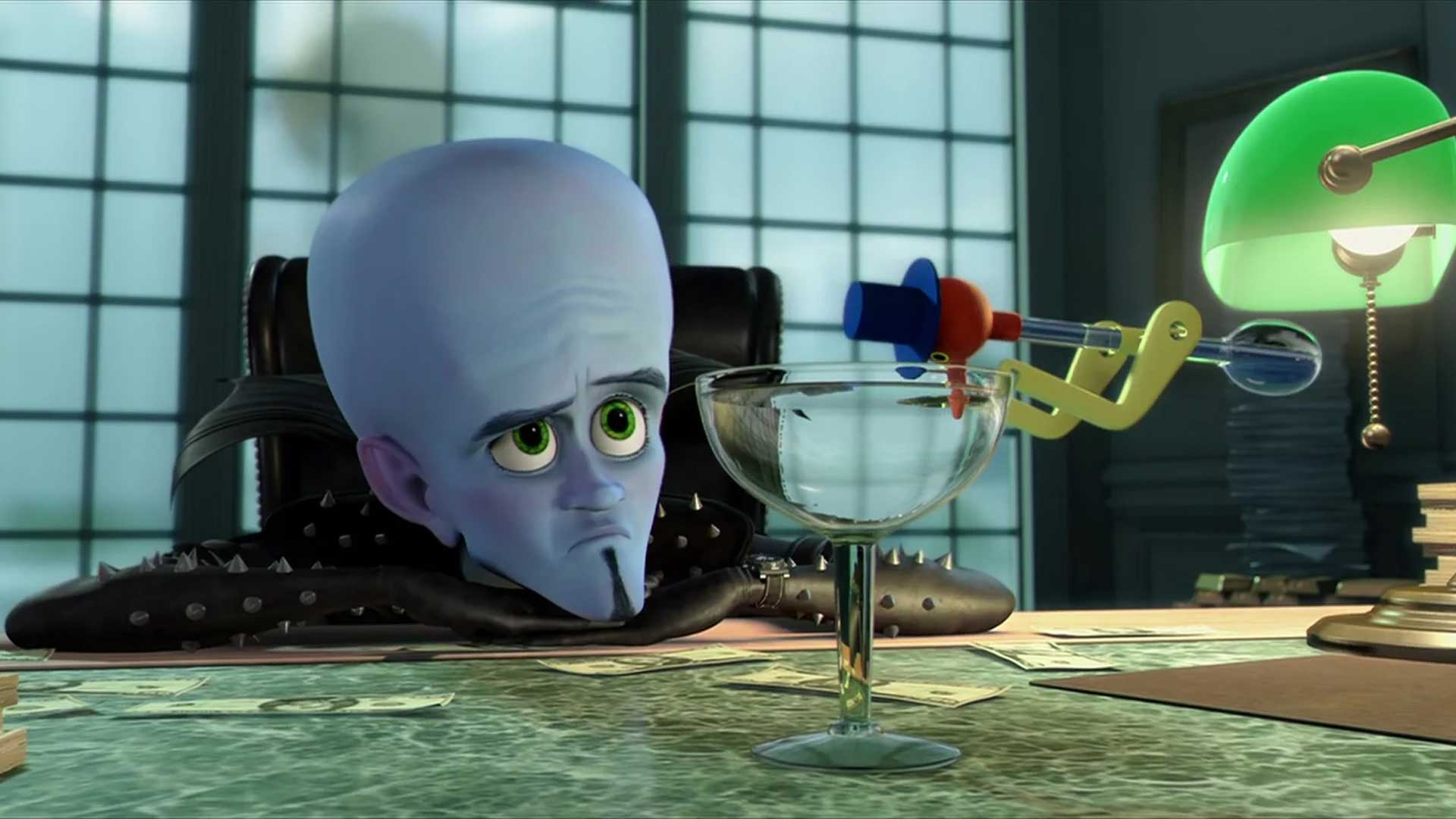
Megamind features a who’s who of stars, including Tina Fey, Brad Pitt, Jonah Hill, and of course, Will Ferrell as the titular character. However, as per Variety‘s 2009 report, Robert Downey Jr. was originally cast as the lead when the movie was known as Oobermind. “The original movie was called Mastermind, but legally they couldn’t use that name, so they went through various names,” Simons said. “At one meeting, it was like, ‘We’re going to call the movie Brainiac.’ And I had to raise my hand, and say, ‘Well, Brainiac’s a superhero villain,’ and they’re like, ‘Is he a big one?’ I’m like, ‘He”ll probably be in a sequel one of these days.'”
Since Megamind was envisioned as a live-action film when Simons and Schoolcraft wrote it, they must have imagined an actor, or a certain type of performer, as the quirky evildoer. As it turns out, a Todd Phillips frat comedy classic sparked a dream that manifested its way to reality.
“That was insane,” Simons said. “When we were writing the script, I remember Alan and I both saw Old School, and we’re like, ‘Oh, man, that was hilarious.’ We talked on the phone about how Will Ferrell would be an awesome Megamind but thought it was just a pipe dream. They actually talked about different actors before it got back to him, and it was just perfect. He can say the most evilest stuff, but still have you with him. And that’s the difficulty with a character like Megamind – it really is all about the voice, right? If the things he said are said by another actor, it can come off as scary or too intense. Because it’s Will, you’re with him from the get-go.”
Rather than run from it, Megamind embraces its comic book roots and wears its influences on its sleeve, alluding to various superheroes and tropes throughout the movie. Simons confirmed that he and Schoolcraft are huge comic book fans, so they threw in even more nods and tributes into previous drafts – such as the Doom Syndicate and a bowling alley named Kingpin Alley – but they realized it might have been too much for the viewers of the era, so they chose simplicity over indulgence. “The audience didn’t necessarily have the comic book vocabulary it has now,” he said. “So we quickly realized this needs to be about a superhero, a supervillain, and their city. There’s a universe outside, but Megamind needs to be centered on that very intimate conflict between these two.”
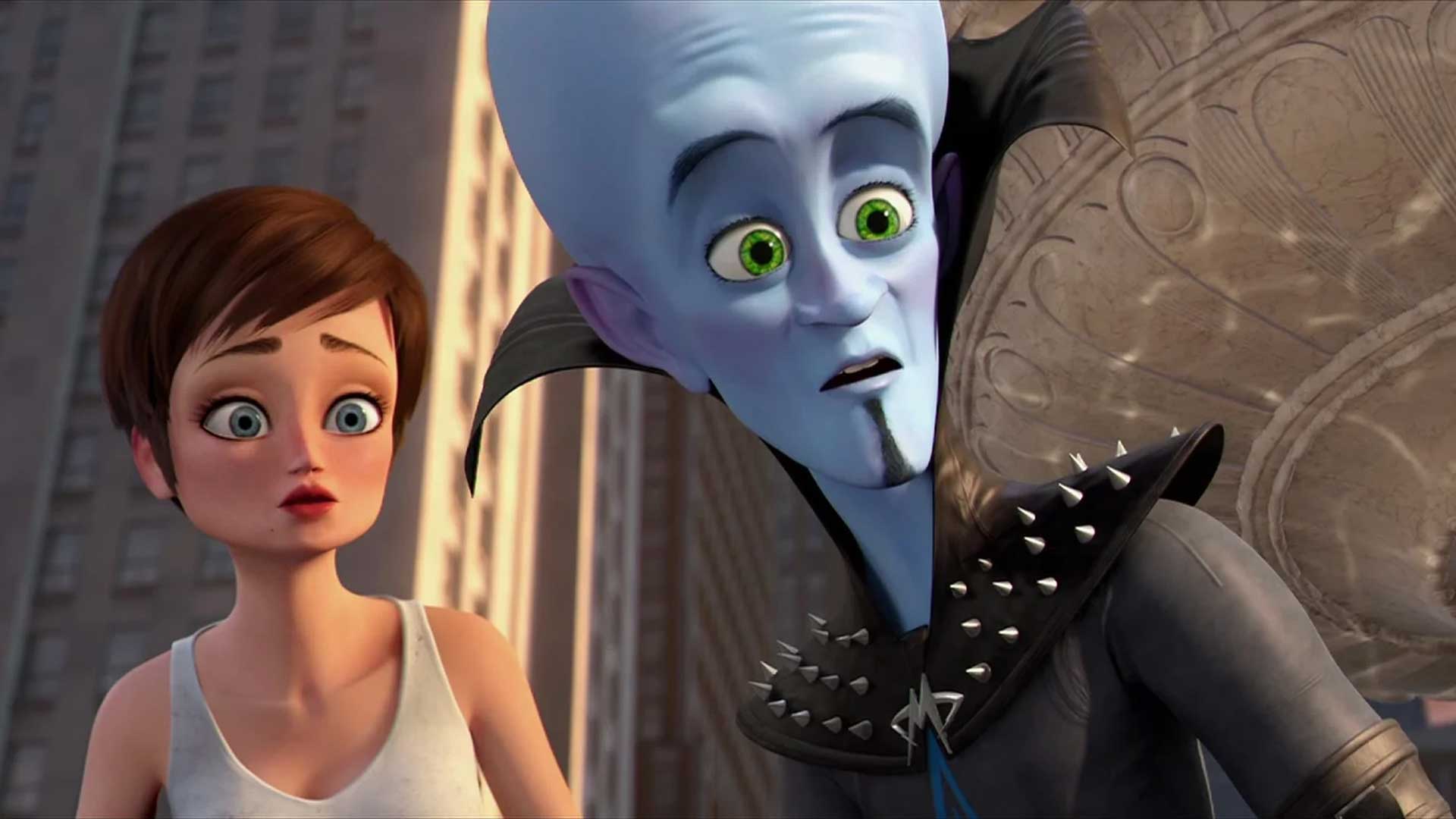
The gamble worked, and Megamind turned out to be a hit. As per Box Office Mojo, it made over $321 million worldwide from a $130 million budget and received positive reviews from fans and critics. Moreover, The Avengers arrived two years later and kickstarted the whole golden age of superhero movies, so this boded well for an original IP like Megamind. Yet, it took 14 years for the sequel, Megamind vs. the Doom Syndicate, and subsequent show Megamind Rules! to materialize. So, why the hold-up and not striking while the proverbial iron was hot?
Simons admitted there were talks about a sequel at the time, but the biggest issue was the similarities between Megamind and Despicable Me, which had come out a few months earlier. Of course, Despicable Me also features a lovable villain as its lead, and the franchise has gone on to make more money than the average country’s annual GDP. Megamind made money, but not Despicable Me money – so it’s obvious which franchise received the push in Hollywood. “A lot of the appreciation for Megamind came much later,” Simons said. “It developed this sort of cult thing, which is more to our taste. We really dug this passionate fan base that’s embraced the movie over the years.”
A decade and a half later, it’s undeniable that Megamind‘s influence shines in the superhero genre and pop culture as a whole. Seriously, just look at all the memes it has inspired. At this point, there’s only one question remaining: Is there still more on the horizon for the character, or is it time for him to leave Metro City for good? “We clearly have a fondness for the character,” Simons said. “We definitely have ideas for stories. There’s nothing officially in the works right now, but we always have plans for the blue guy. We would love to do a feature sequel; that would be great.”
Written by Brent Simons and Alan Schoolcraft and directed by Tom McGrath, Megamind stars Will Ferrell, Tina Fey, Brad Pitt, and Jonah Hill.
RELATED: David (2025) Movie Review – The Best Animated Film Of 2025