
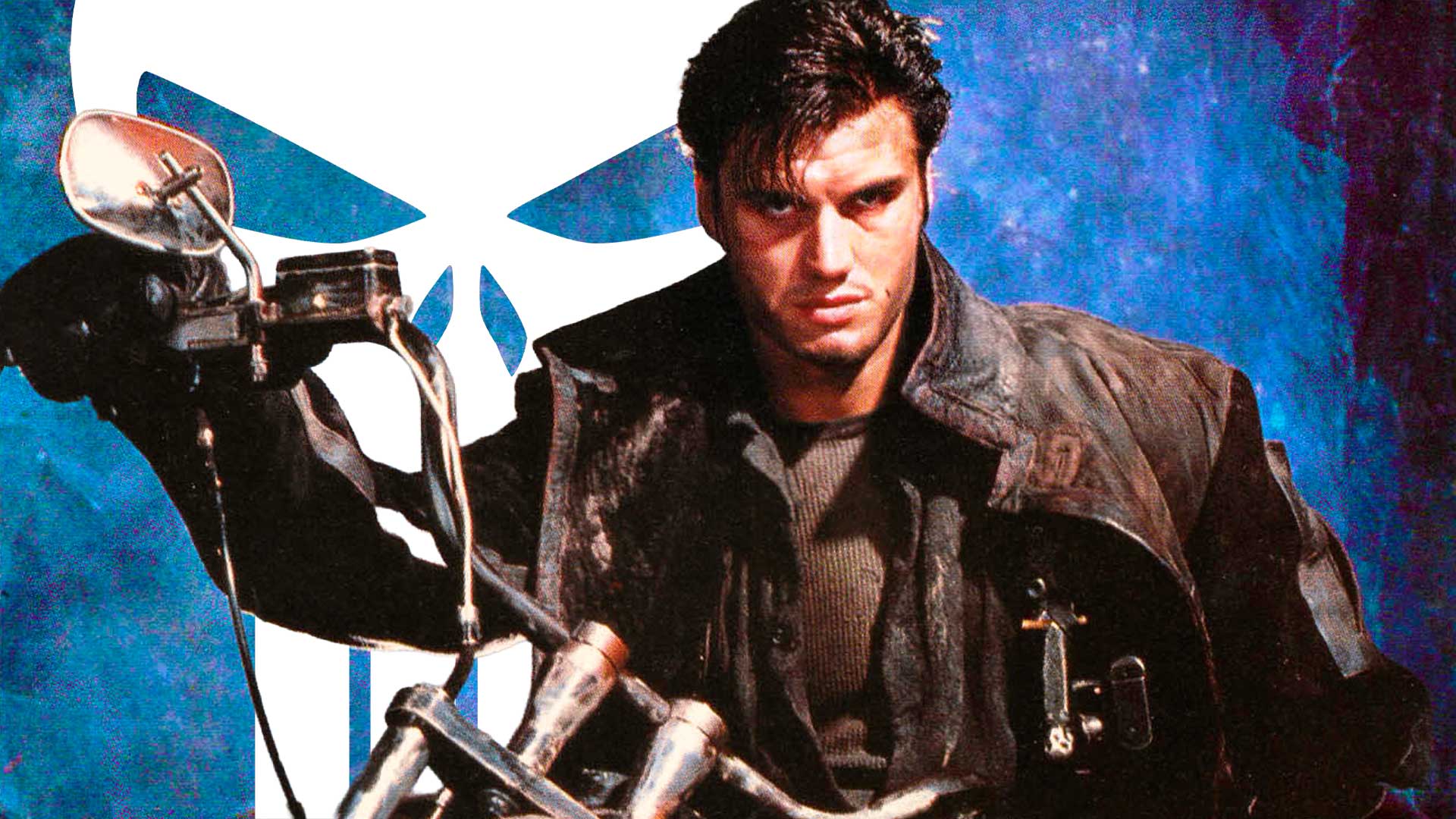


Imagine this: Dolph Lundgren as Frank Castle in The Punisher. What a coup, right? Well, the ball was fumbled right from the start, as the distributor struggled to get the movie into theaters around the globe at the same time. The film debuted in Germany in 1989, but it only found its way to the U.S. two years later, in April 1991.
That isn’t the most bizarre aspect of The Punisher, directed by Mark Goldblatt, who had a hand behind the scenes on both RoboCop and The Terminator. In terms of the origin story, the film gets the basics right: A mobster kills Frank’s wife and two kids, sending him into an endless loop of revenge. He guns down bad guys in the most brutal way possible, as the cops hunt him down and attempt to bring him to justice for vigilantism.
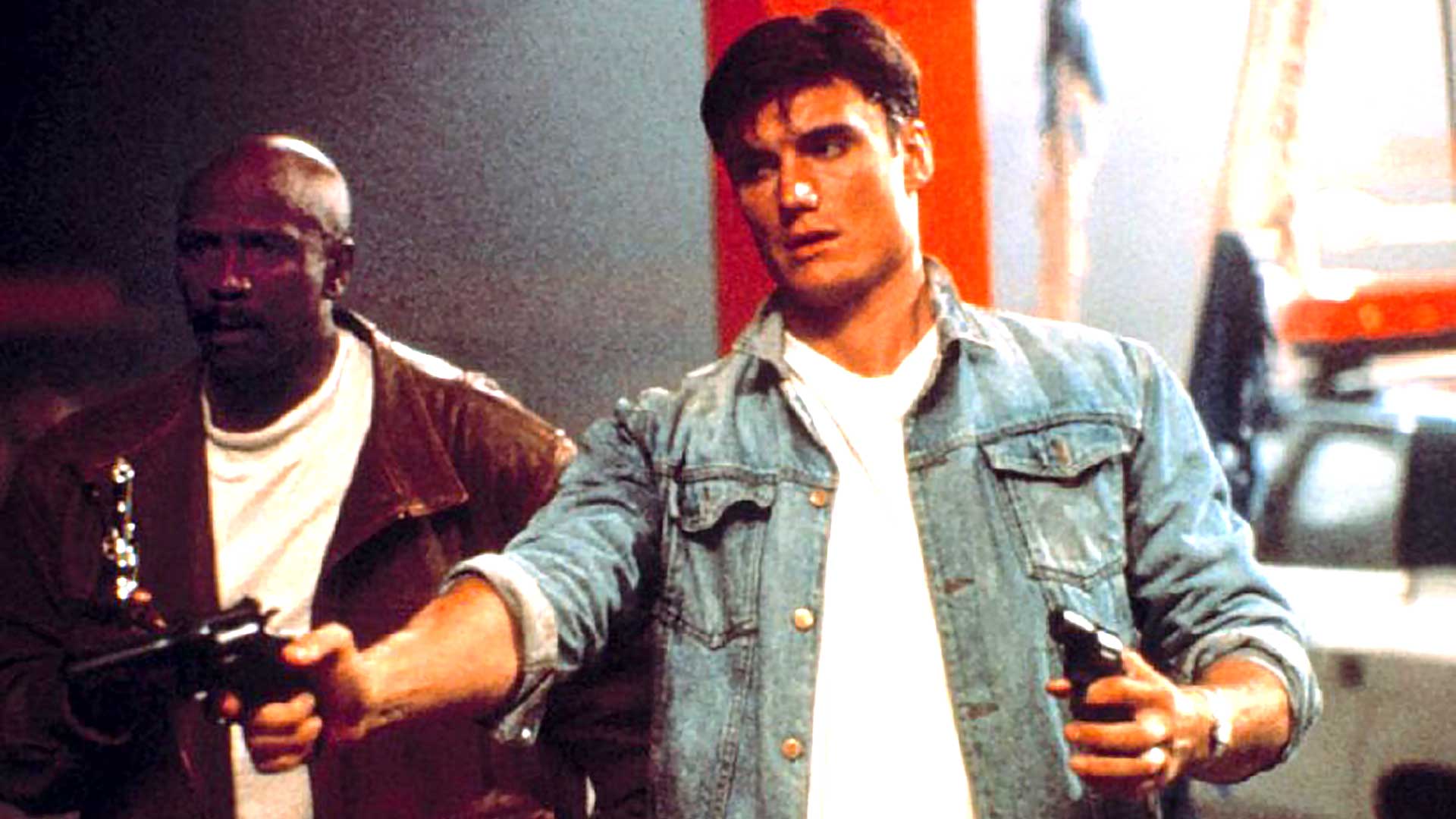
Yet it doesn’t seem like Boaz Yakin’s script wants any further links to the Marvel Universe beyond this. Here, Frank is a former cop, and it’s his ex-partner Jake Berkowitz (played by Louis Gossett Jr.) who chases him down. While Micro helps the Punisher in the comics, the movie sees this role filled by the boozy rhymer Shake (Barry Otto).
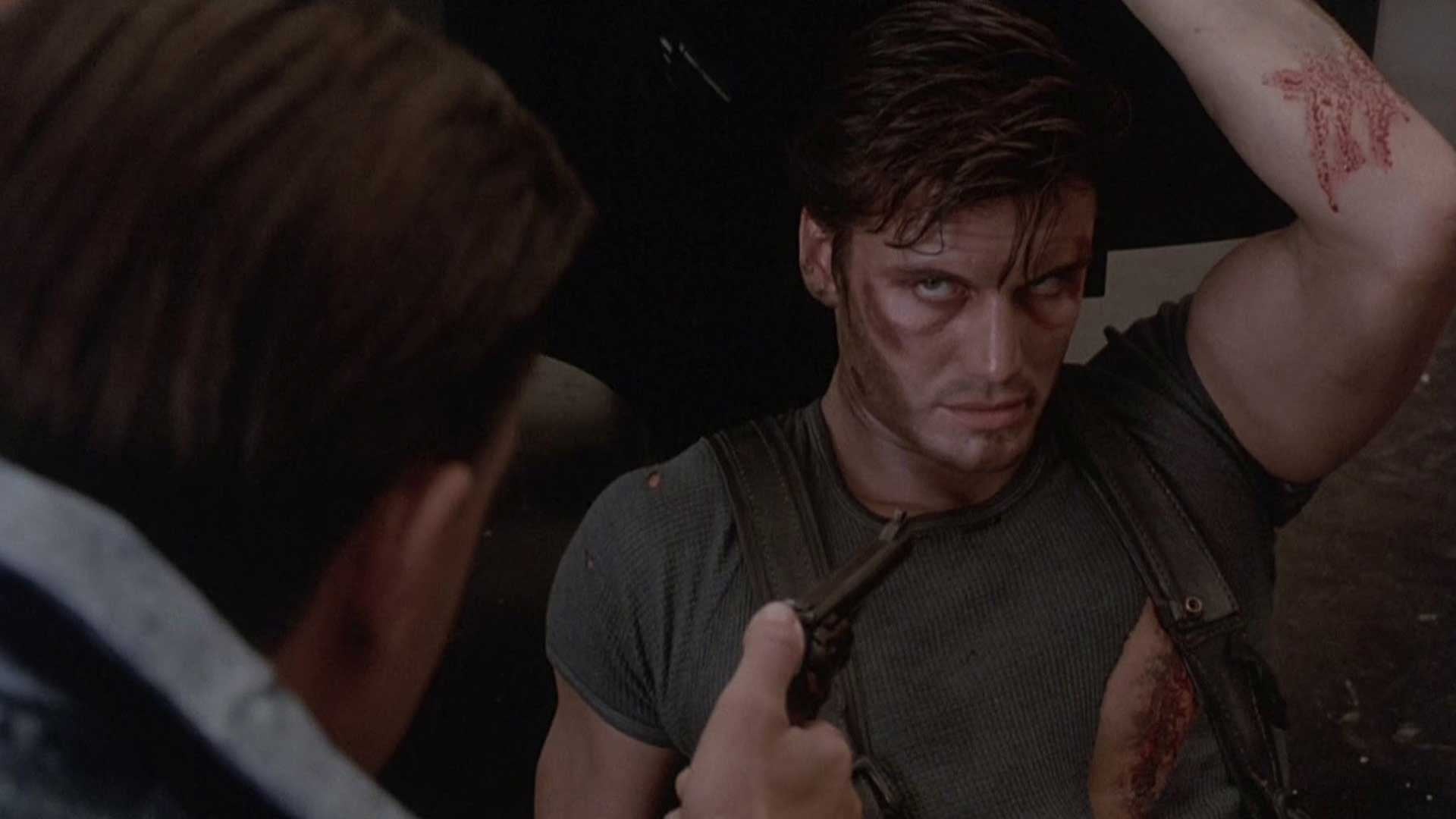
In terms of the main villain, don’t expect Kingpin or Jigsaw to show up. In fact, none of the antagonists are officially recognized in Marvel canon. The plot here is that the Yakuza, headed up by Lady Tanaka (Kim Miyori), plans to take over all the crime families. Tanaka sends a harsh message by kidnapping all of the crime bosses’ children. Now, Gianni Franco (Jeroen Krabbé) – the mobster who ordered the hit on Frank’s family – needs to reach out to the Punisher and ask for his help in getting the kids back.
Despite all the changes to the lore, The Punisher‘s premise could have easily come out of the comics. It wouldn’t be outside the realm of possibility that a villain would ask for Frank’s help for a noble cause, and the vigilante would be forced to put aside his bloodlust for the greater good – momentarily, of course. Expectedly, the villain double-crosses him in the end, allowing for Frank to get his vengeance.
The big problem with The Punisher lies in its execution. It struggles to tell a linear story or allow moments to breathe, as it imitates every other action movie from the ’80s. Too much happens too soon, taking away the focus from the main narrative. If anything, removing all the excess would probably leave the story only long enough for a TV episode.
Execution aside, Lundgren turns out to be the perfect Frank Castle. While there hasn’t been a single terrible actor to play the Punisher yet, Lundgren makes his mark here and convinces as the broken character. He brings a damaged quality reminiscent of the early comics. This isn’t a version of Frank who can be reasoned with. He means business – and his business only accepts blood as payment.
In addition to this, there are some pretty good action scenes for a low-budget affair. Frank loves to use his trusty knife, but he’s still all about guns. It’s bullet casings and explosions galore, as Frank refuses to be a clean killer. It also helps that Lundgren uses his intimidating size to put the squeeze on the bad guys when a weapon isn’t nearby.
Speaking of Lundgren, he admitted to Film School Rejects that he wasn’t in tune with the comic book world at the time, but he enjoyed the experience of playing the Punisher. “I thought it was a fun film to work on,” he said. “We shot in Australia, and Louis Gossett Jr. was in it. He was great, and we had really good stunt people, and a lot of the guys were from Mad Max: The Road Warrior. I enjoyed it for sure.”
All in all, The Punisher is unlikely to go down as anybody’s favorite Marvel film, but it’s far from the worst. With a better hand behind it and more respect for the source material, it might have even been one of the first Marvel movies to make an impression. But hey, at least it gave everyone the chance to see Dolph Lundgren as Frank Castle.
RELATED: Thomas Jane Says He Never Should’ve Been The Punisher










What does “yet” mean in the title? This was the first one.