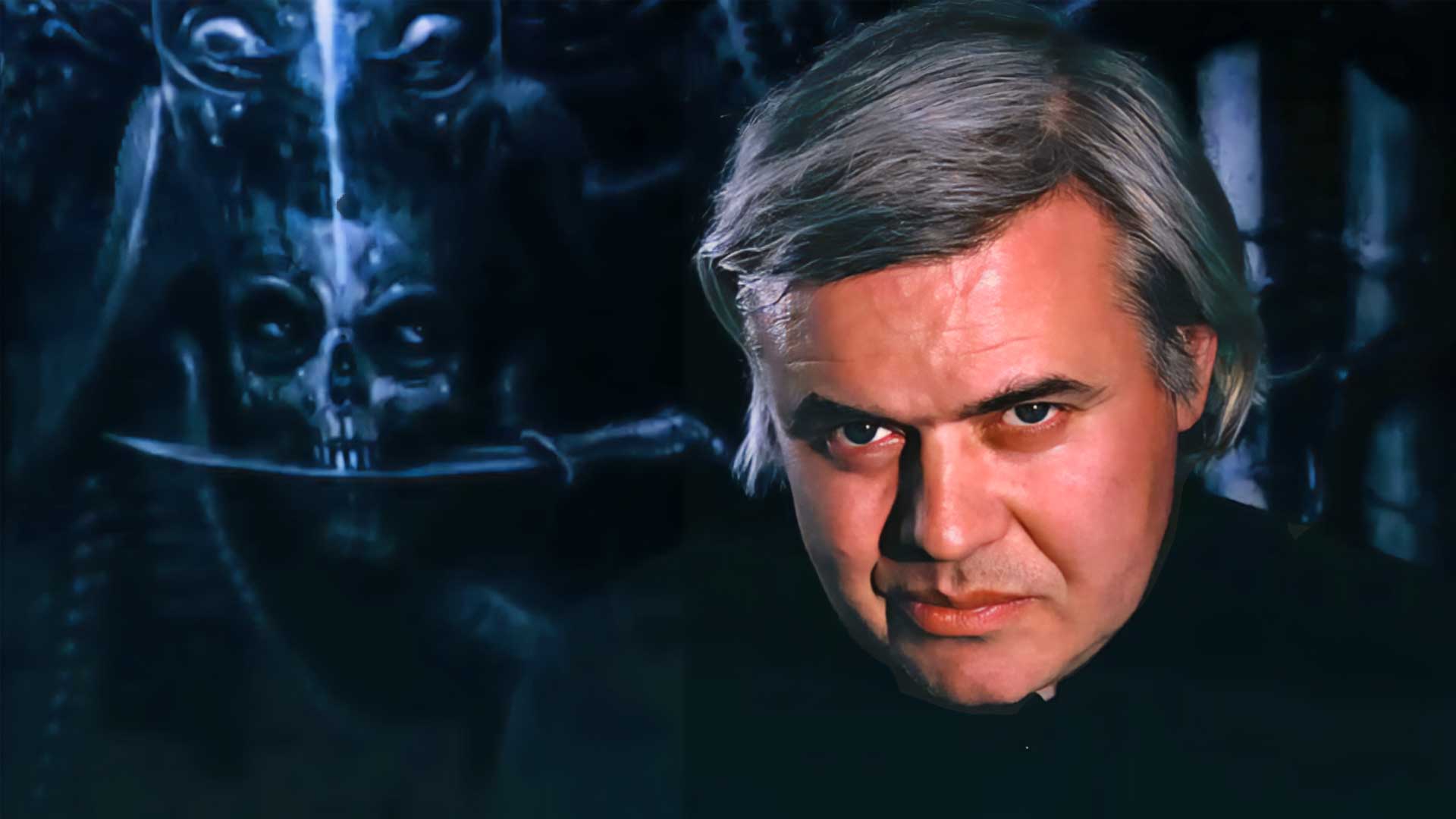


Alien: Earth Season 2 just added Peter Dinklage, Tracey Ullman, Sam Spruell and Jerome Flynn to its cast, and the show is now shooting in London. But every Xenomorph that’s crawled across a screen since 1979 — including the one currently terrorizing Wendy and her Lost Boys in our review of the show’s first season — traces back to one man’s real, documented nightmares.
H.R. Giger, the Swiss surrealist who designed the creature for Ridley Scott’s original Alien, spent his childhood dreaming about his own birth. He wasn’t speaking in metaphor. Here’s the true story behind the artist Hollywood spent decades trying to write out of its own history.
The Recurring Nightmare That Shaped His Entire Career
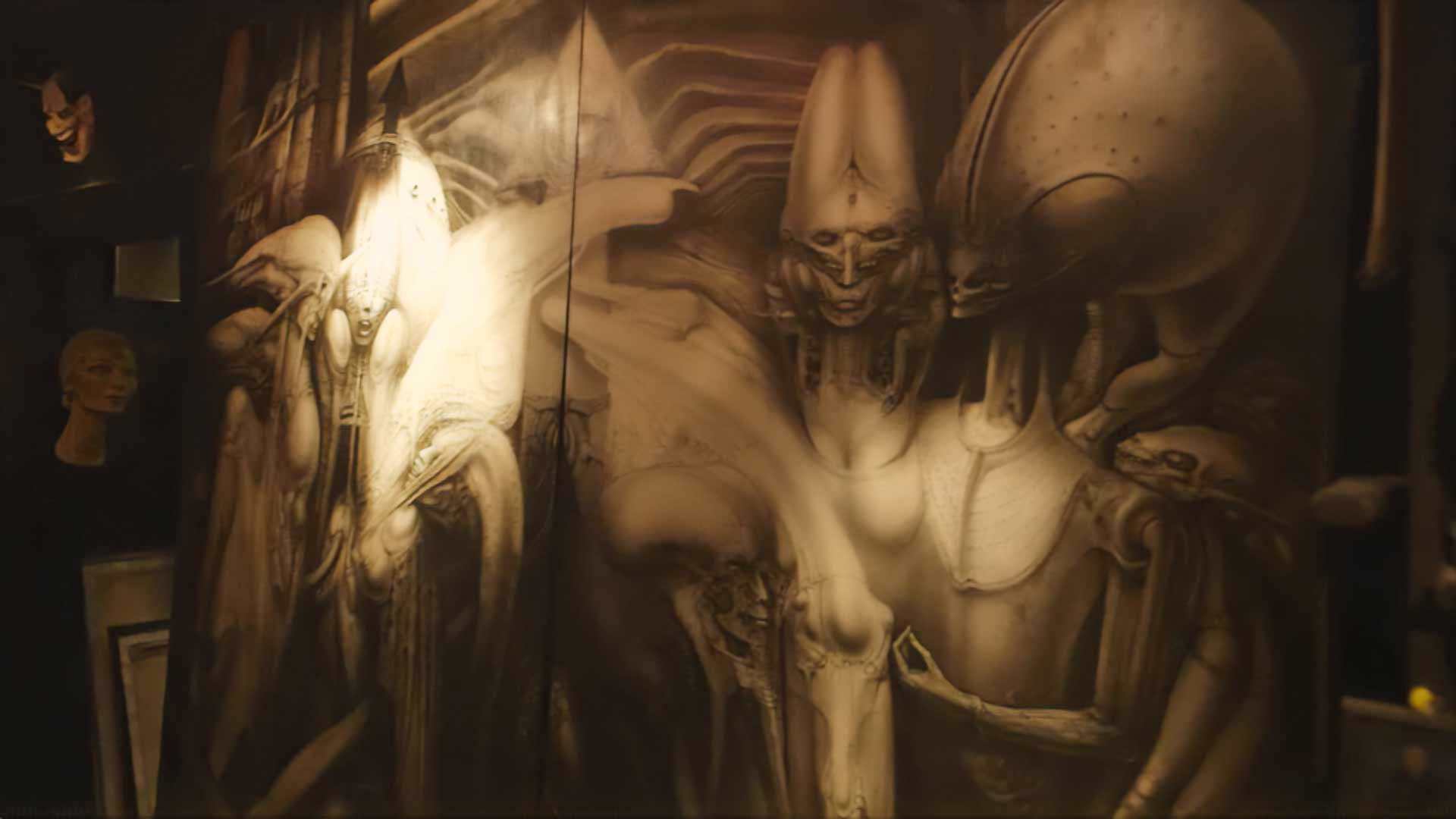
Giger said the recurring dream began the same way every time: trapped in a cramped, airless room with a single tunnel-like opening, unable to leave and unable to get back in. He attributed it to his own difficult birth — he’d been pulled out with forceps, a detail later confirmed by his widow and Giger Museum director Carmen Giger, who said he could remember the trauma of it his entire life. The nightmares didn’t stop until he started painting them out, in a series he called Passages. It’s why so much of his art — including the design work that became the Xenomorph — is full of malformed infants, birth-canal-like tunnels, and machinery fused with flesh he could never fully escape.
Giger scholar Andreas L. Hirsch, who curated the 2011 show H. R. Giger Traume und Visionen (Dreams and Visions) at Vienna’s Kunst Haus Wien and became a personal friend of the artist, put it this way: “He repeatedly spoke about that. He addressed his personal fears and collective fears. He reacted to them by creating visions that sort of transformed those fears — not to a happy ending, but in an artistic way that he could handle.”
Who Was H.R. Giger?
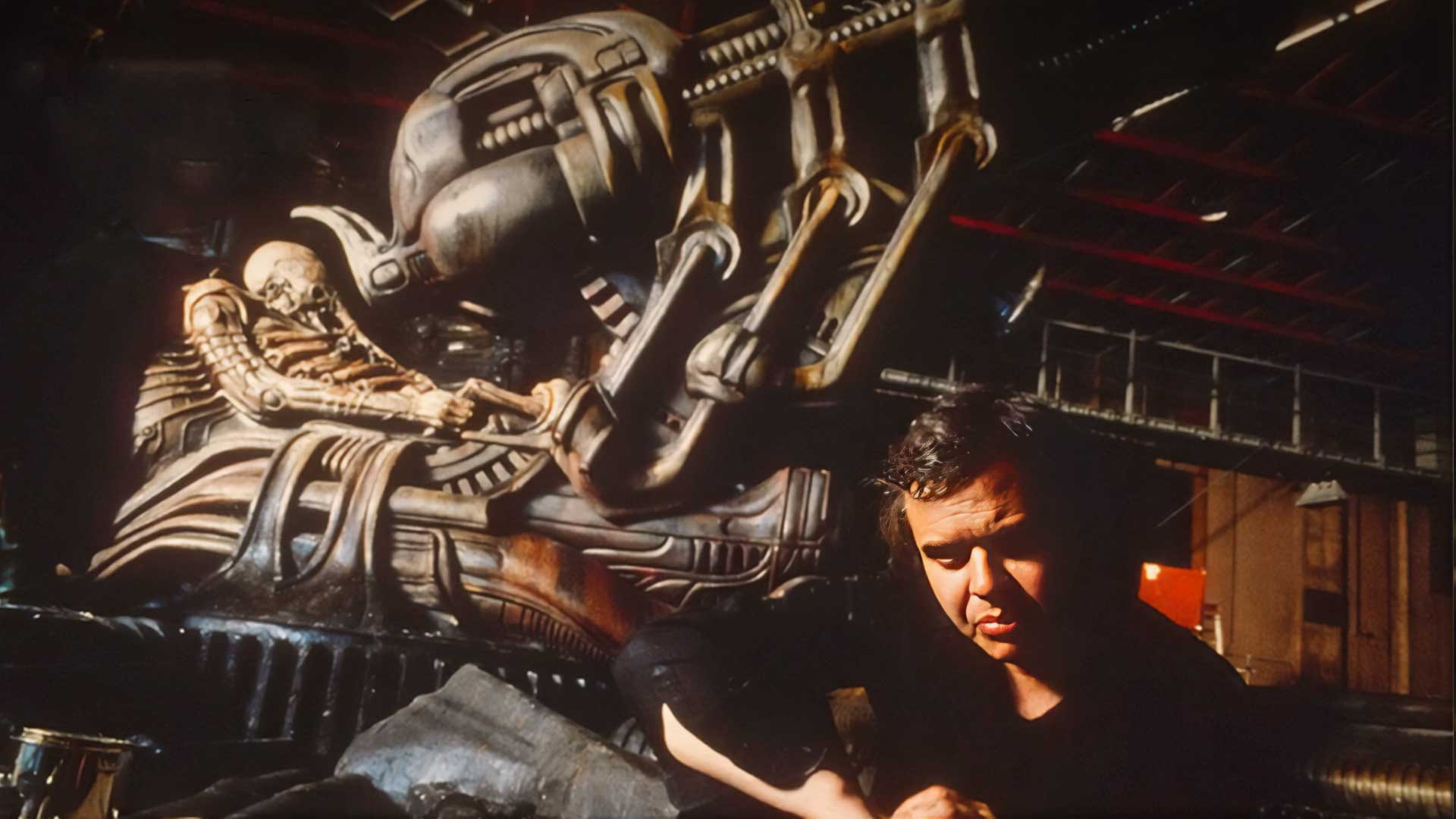
Most famously known for his work on the Alien franchise, Hans Ruedi Giger (H. R. Giger) was a Swiss surrealist painter who became the forefather of modern biomechanical art.
Born on the 5th of February, 1940, in Chur, Switzerland, Giger grew up during World War II. Living near Nazi Germany at the time, Giger shared that his childhood was filled with anxiety. In an interview with Vice in 2011, the Academy Award winner shared that he remembers how his family lived while the threat of atomic warfare loomed over them. “I could feel the atmosphere when my parents were afraid. The lamps were always a bluish dark so the planes wouldn’t bomb us.”
H. R. Giger had always had a fascination for combining horror and the grotesque. His first exhibition was in 1967 and was called Power of Masks. It was held at Galerie Obere Zaune in Switzerland and exhibited his paintings and sculptures. It wasn’t too long before he gained the attention of Salvador Dalí, who showed his work to Chilean director Alejandro Jodorowsky, who enlisted Giger’s help to design the concept art for his ambitious adaptation of Frank Herbert’s classic science fiction novel Dune (1965). Unfortunately, this project never saw fruition.
Sex, Fear and Machines: The Theme He Never Abandoned
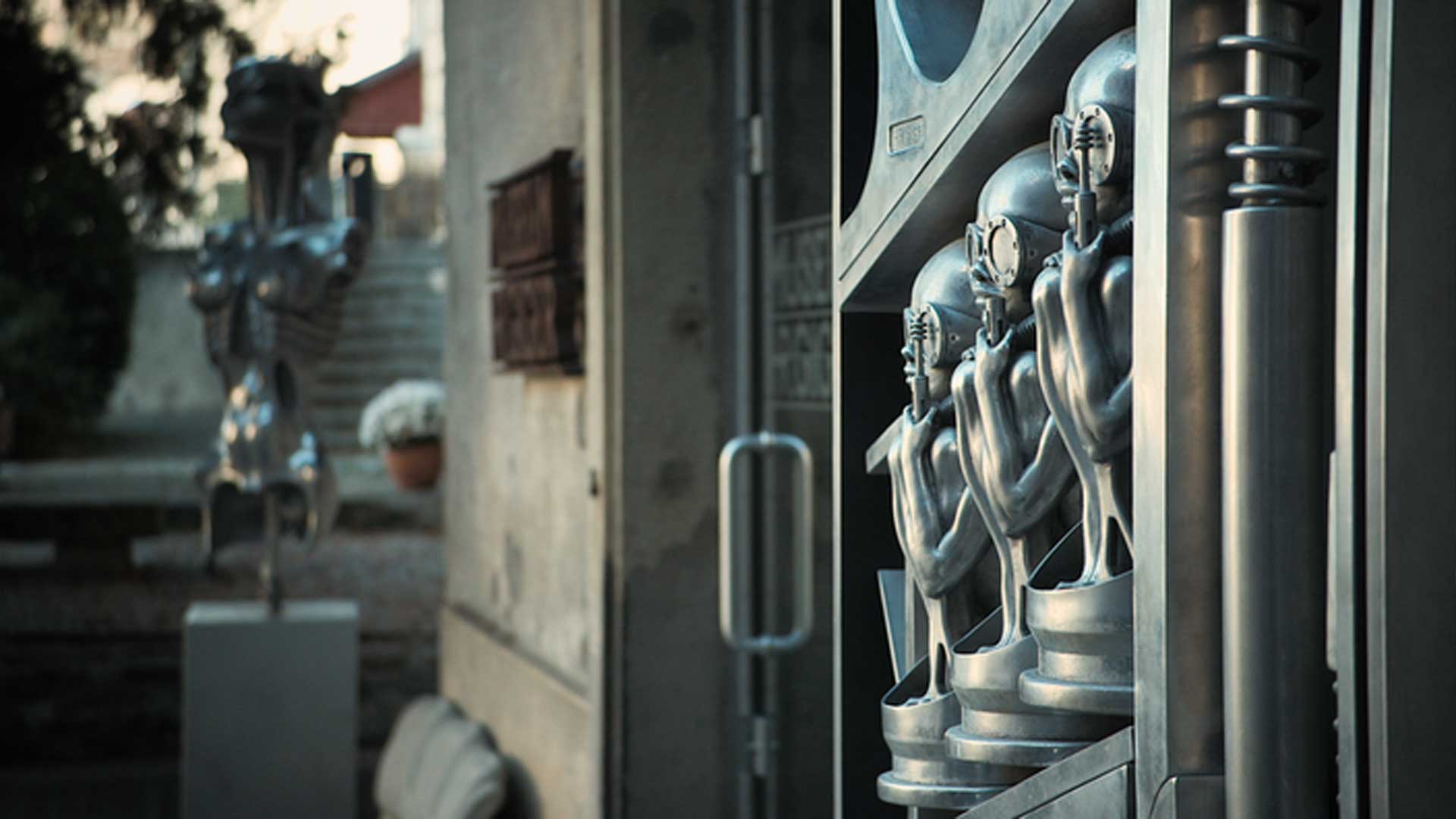
H.R. Giger’s art has always inspired fear and awe, tapping into the unending human fascination with the things that frighten us the most. From his first exhibition, his work had a plethora of quasi-sexual imagery that appalled most audiences in the beginning. Sexuality and fear have always had an intrinsic connection and allure, and this is emphasized by the wild popularity of Giger’s disturbing and twisted sexual imagery where flesh meets machine.
Giger described his work as biomechanical and polarised, and reshaped the biomechanical art aesthetic from then on, having most biomechanical works and tattoos to this day based on his masterpieces.
From wanting to understand his dreams and inspirations, H.R. Giger conducted extensive research into Sigmund Freud’s concept of psychosexual development, as well as Carl Jung’s concepts of the collective unconscious and the individual unconscious mind. These concepts then heavily influenced his further works, and a vaguely sexual theme can be seen throughout his work.
To his detriment, the quasi-sexual nature of much of his work was ridiculed at the start of his career when he first started to display his work. However, it was quickly realised that his art was simply not for mainstream audiences, as those who enjoy his art truly and fully adore it.
The Career His Father Wanted Him to Quit
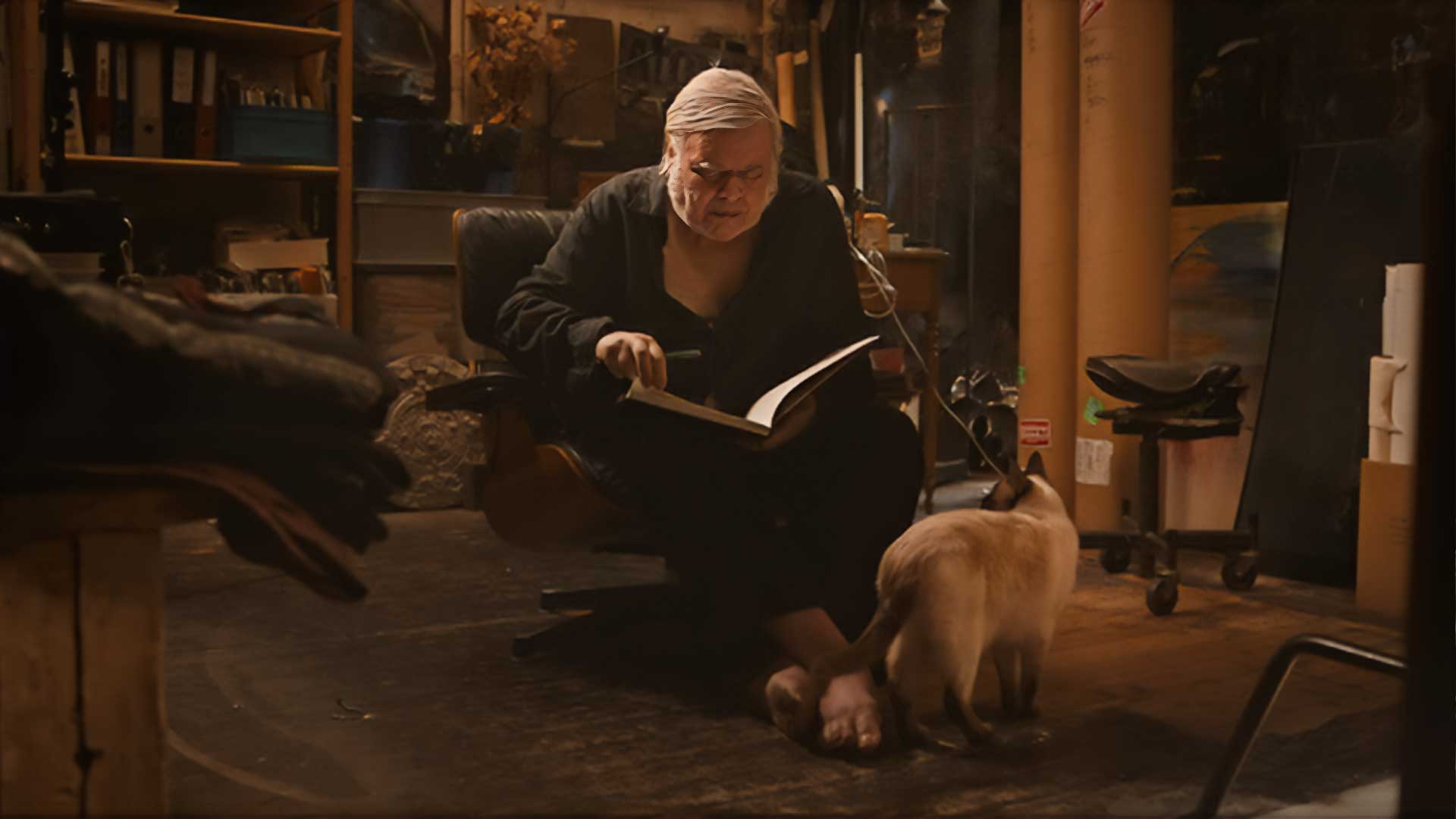
Giger’s father, Hans Richard Giger, wanted his son to follow in his footsteps and become a pharmacist to take over the family business. His mother, Melly Giger-Meier, had always supported his artistic side, buying him clay and modelling tools. Going against his father’s wishes, Giger studied interior design, architecture, and industrial design at the School of Applied Arts in Zurich, where he graduated in the mid-1960s. It was his education and experience in this field that allowed him to later create the interior design marvels that he did.
After graduating, he went to work as an interior designer but soon decided to pursue his passion for art and visual arts full-time. It was during this time of development that H. R. Giger made the move from sketching to ink drawings to oil paintings and then finally to working with an airbrush to create his art.
While the fact that he studied something as mundane as interior design might not be particularly nightmarish, the fact remains that if he had followed his father’s wishes, the world might never have seen the incredible work of H.R. Giger.
The Tragedy That Changed His Art Forever
When Giger first struck out on his own, he moved in with a dear friend and girlfriend. The friend had to go abroad, leaving Giger and the girlfriend to fend for themselves, and their friendship quickly blossomed into a relationship. She became the muse for much of his art. This was the young Swiss actress Li Tobler.
The two were together on and off for about nine years, but the financial difficulties of an upstart actress and a young artist wore on the couple. Tobler struggled with substance use during this period, and toward the end of her life, she died by suicide.
Giger’s art took on a darker tone after her death, and Tobler’s likeness can still be seen in many of his artworks.
A few years later, H. R. Giger married his first wife, Mia Bonzanigo, in 1979 — coincidentally the same year the first Alien movie was released. The marriage lasted a year and a half. It wasn’t until 2006 that Giger fell in love again and married Carmen Maria Scheifele Giger, with whom he worked and lived in Zurich. Carmen Giger is now the director of the H.R. Giger Museum.
His Fascination With the Occult — and the Book It Produced
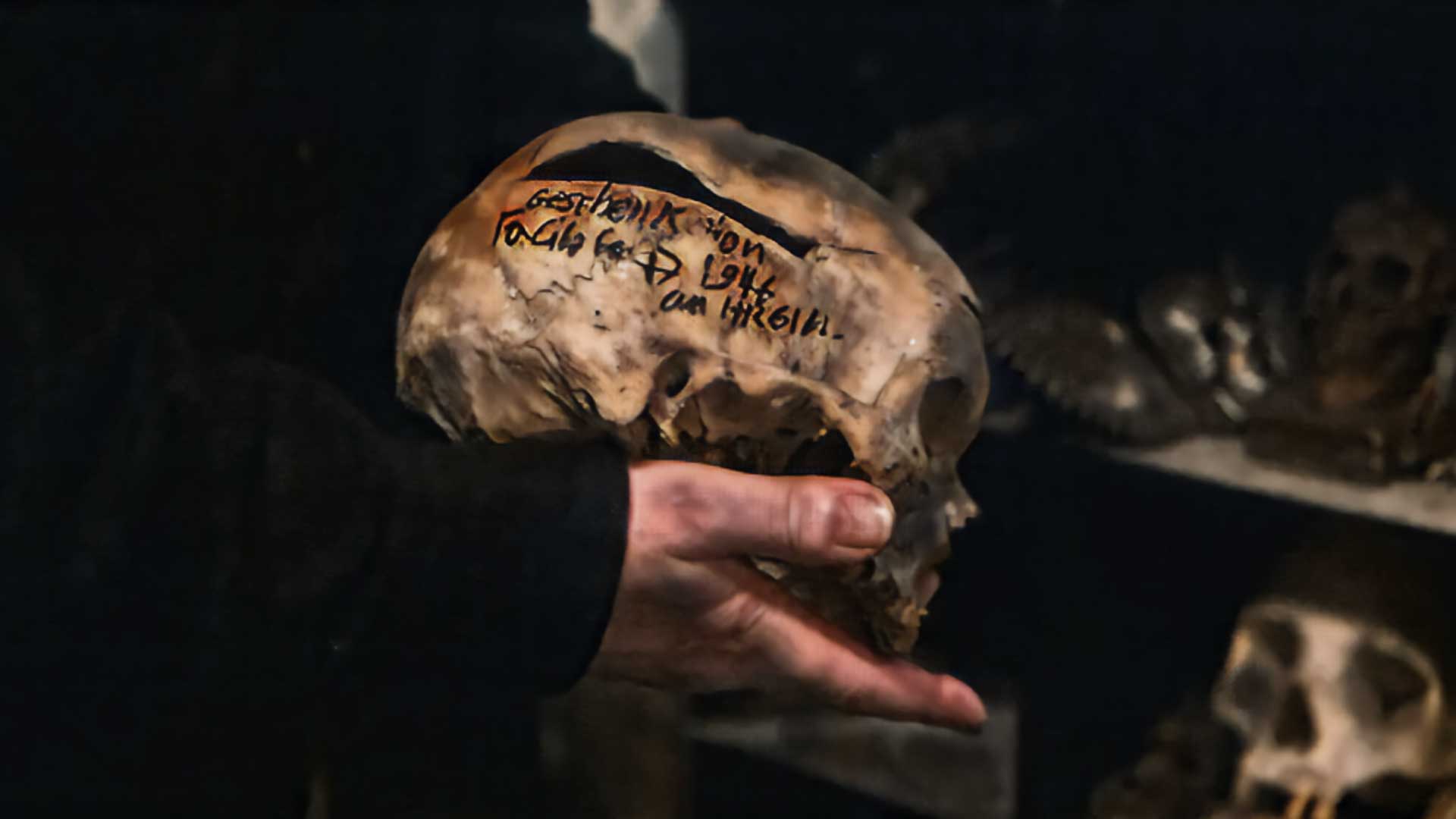
In his young adult years, H. R. Giger found a dear friend in Sergius Golowin, a writer with a deep interest in all things spiritual and occult. It was through him that Giger’s fascination with the occult began. Although Giger was drawn to the subject, he was never part of any cult or spiritual group, despite public assumptions.
Giger’s closeness to controversial figures in occult circles worried the public, but the artist had a strong aversion to real-world morbidity — he reportedly refused to even watch war documentaries containing footage of real corpses.
After being introduced by his friend, H. R. Giger soon became enamoured with the work of H.P. Lovecraft, whose mythos runs through his art. Giger curated and published a book of his art called The Necronomicon, named after the fictional book found throughout Lovecraft’s stories, in 1977.
The book was his first major collection of drawings, featuring strange mechanical gremlins perched on towering lead pillars, a skeletal alien creature looking out on mist-covered wastelands, and mutilated, fleshy bodies hooked up to hulking machinery — all balanced between ghostly white tones meant to emulate moonlight on concrete, and dark hues meant to emulate the abyss. The Necronomicon is thought to be his second most influential artistic achievement.
How He Designed the Most Iconic Monster in Movie History
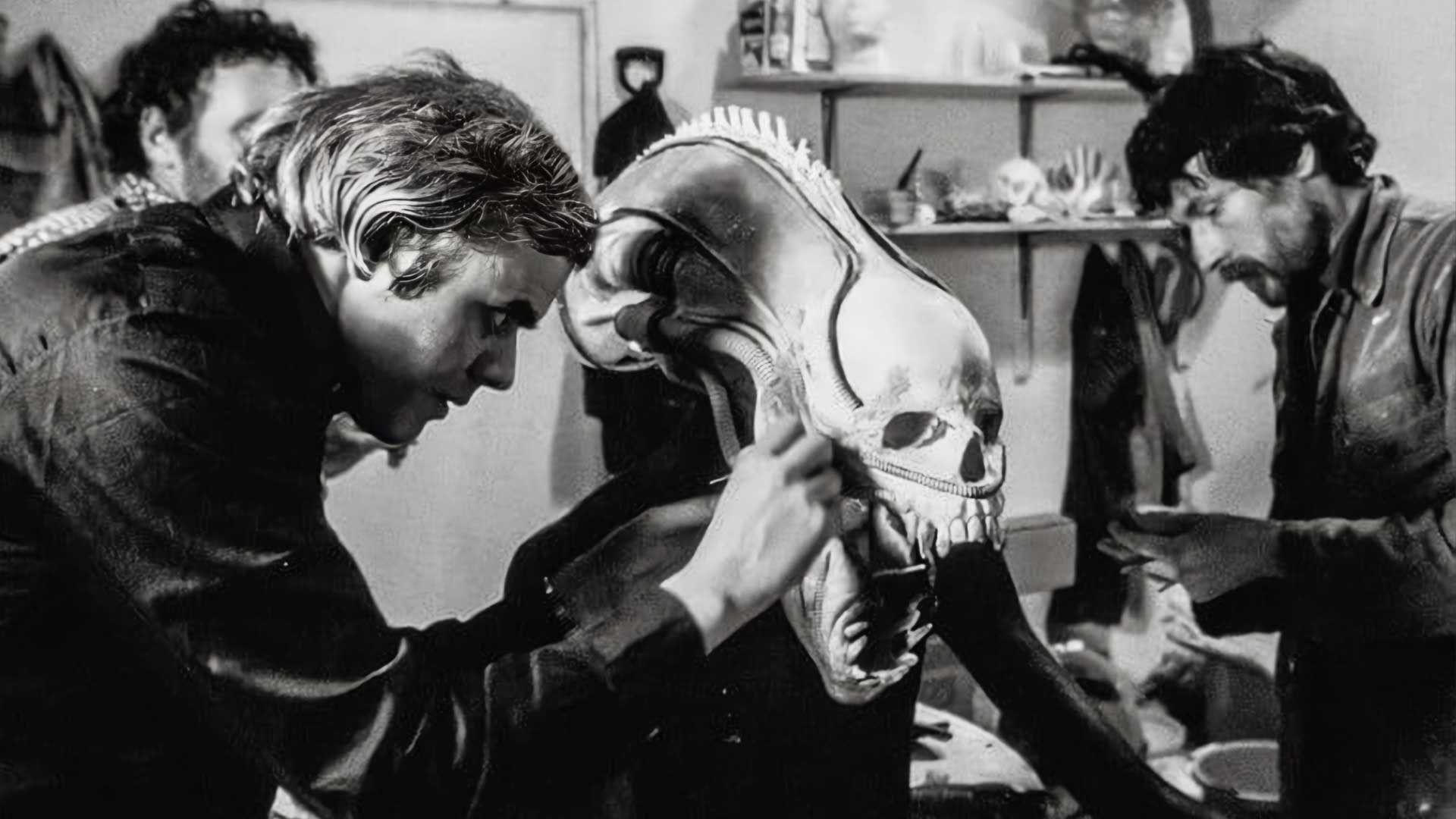
Legendary director Ridley Scott had just signed on to the horror sci-fi film Alien (starring Sigourney Weaver) when he found H.R. Giger’s Necronomicon at the production studio. After looking through the images, he knew he had to have the artist working with him on the movie, which is widely considered his best achievement.
“I took one look at it and I’ve never been so sure of anything in my life. I was convinced I’d have to have him for the film,” Scott told Starlog, a monthly science-fiction magazine, in 1979 — the same year the first Alien movie was unveiled.
The Xenomorph was based on two lithographs from the Necronomicon depicting a dark, metallic-looking being with an oblong head. This gave birth to the black, egg-shaped skull, the dripping stalactite teeth, the sleek, spiky body strangely reminiscent of a human but not quite, and the razor-sharp weaponised tail. The Xenomorph — which could now be considered a Disney princess — instantly became a cultural icon that continues to inspire to this day.
H.R. Giger and his visual effects team won the Academy Award for their work on Alien. The Xenomorph has since appeared in eight films across the core franchise and spin-offs like Alien vs Predator, as well as multiple video games.
Why He Grew to Hate Hollywood
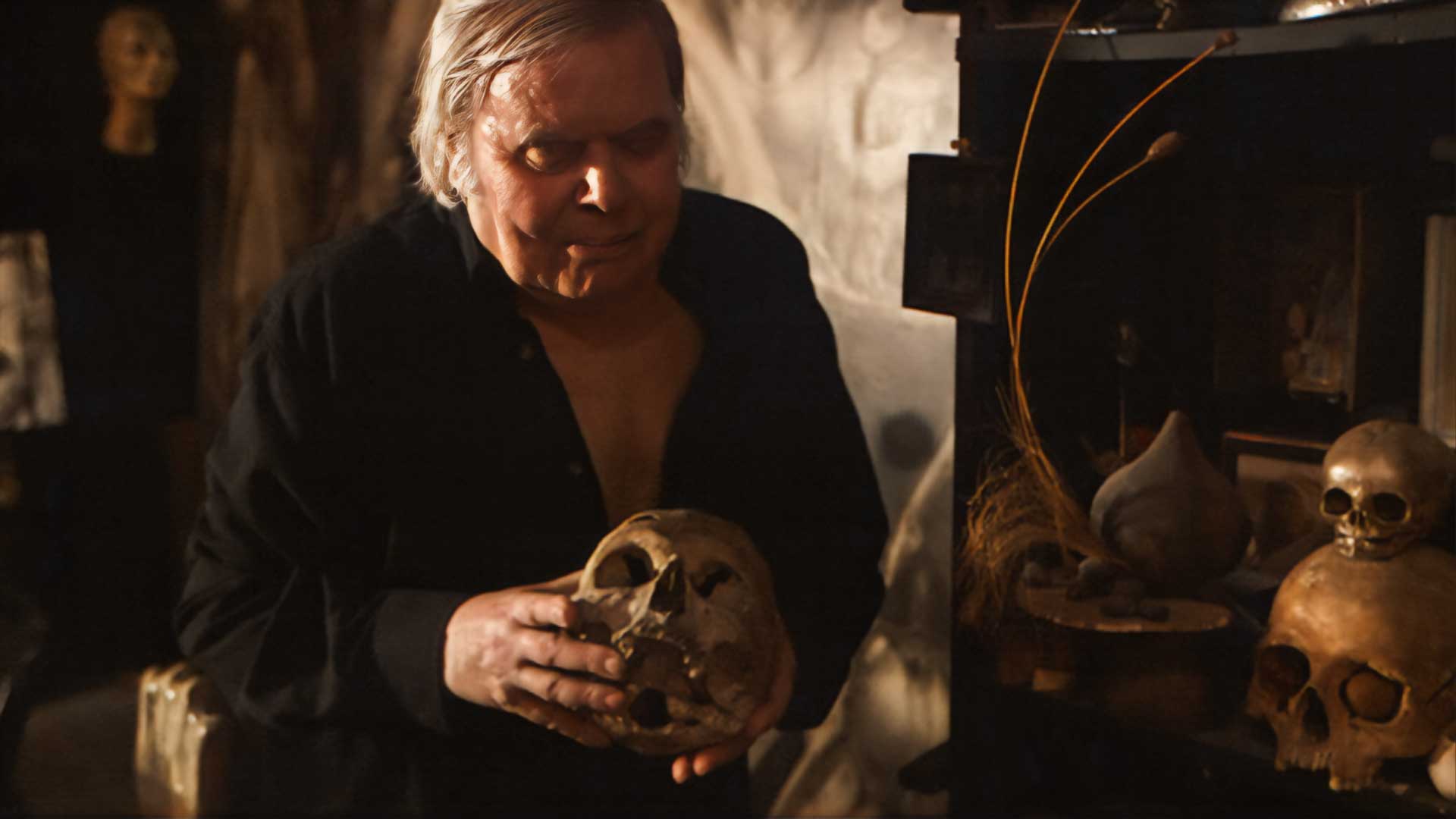
In his young adult years, H. R. Giger found a dear friend in Sergius Golowin, the writer who worked on the Necronomicon book and was an avid student of all things spiritual and occult. It was through him that Giger’s fascination with the occult began. Although Giger was fascinated with the occult and the supernatural, he was never part of any kind of cult or spiritual group, despite people’s fears.
Giger’s closeness to controversial personalities that were involved in the occult had the public concerned that he was wrapped up in darker practices, but the artist had a strong aversion and paranoia when it came to real-world morbidity, refusing to even watch world war documentaries with footage of real corpses.
After being introduced by his occult-loving friend, H. R. Giger soon became enamoured with the work of H.P. Lovecraft, whose inspiration and mythos can be seen in his work. Giger curated and published a book of his art called The Necronomicon, named after the book of the same name found throughout Lovecraft’s stories in 1977.
The book was his first major collection of drawings and featured strange mechanical gremlins perched on towering lead pillars, a skeletal alien creature looking out on mist-covered wastelands, and mutilated, fleshy bodies hooked up to hulking machinery, all of which was a balance between ghostly white tones – meant to emulate moonlight on concrete – and dark hues – meant to emulate the deep shades of the abyss. The Necronomicon is thought to be his second most influential artistic achievement.
Beyond Alien: The Other Movies He Helped Create
H. R. Giger was a prolific creator. Once he skyrocketed to fame, it became difficult for him to decide which projects deserved his time, but the world-renowned artist still contributed to many films in Hollywood and beyond.
He did concept art for Future-Kill (1985), Poltergeist II (1986), Tokyo: The Last Megalopolis (1988), Species (1995), Batman Forever (1995), and Species II (1998). One honourable mention is the Dune remake, which was never fully realised.
It’s worth dwelling on Species specifically — while Alien sanded down the sexuality in Giger’s designs for a wider audience, Species let him go much further, giving the artist far more creative leeway with Sil, the translucent-skinned alien-human hybrid played by Natasha Henstridge. It’s arguably the closest Hollywood ever let Giger’s original vision run unfiltered.
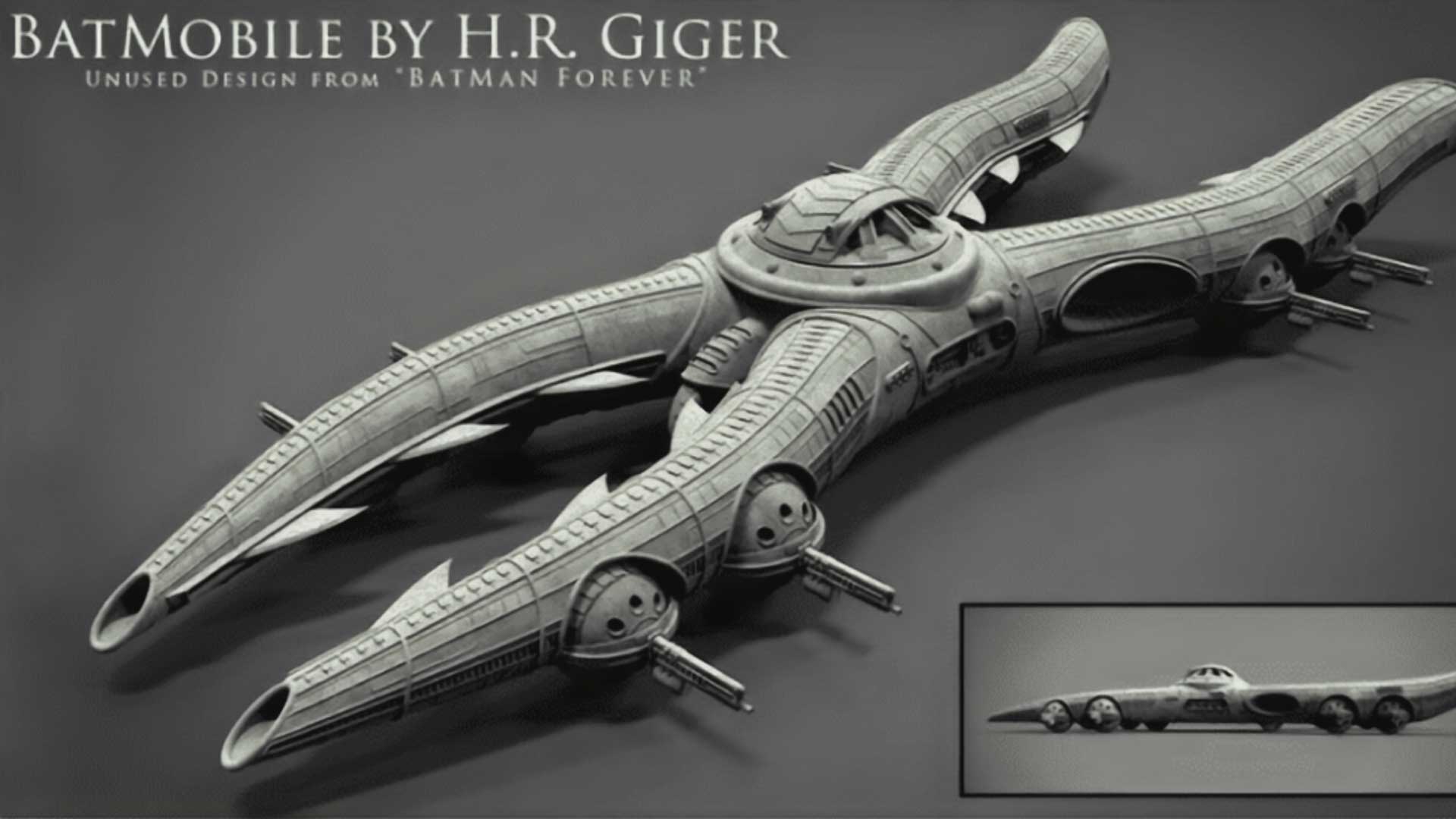
His work on Batman Forever involved designing a Xenomorph-style Batmobile for the film — a scissors-like x-shaped vehicle that could very well have been a spaceship, and one that was years ahead of its time. Unfortunately, the concept was never used.
Much of his work and film designs went unused, relegated to concept art for projects that never got off the ground — so Giger decided to look for alternative ways to showcase his talent and give his art a permanent home.
Inside the Museum and Bars He Built for His Nightmares
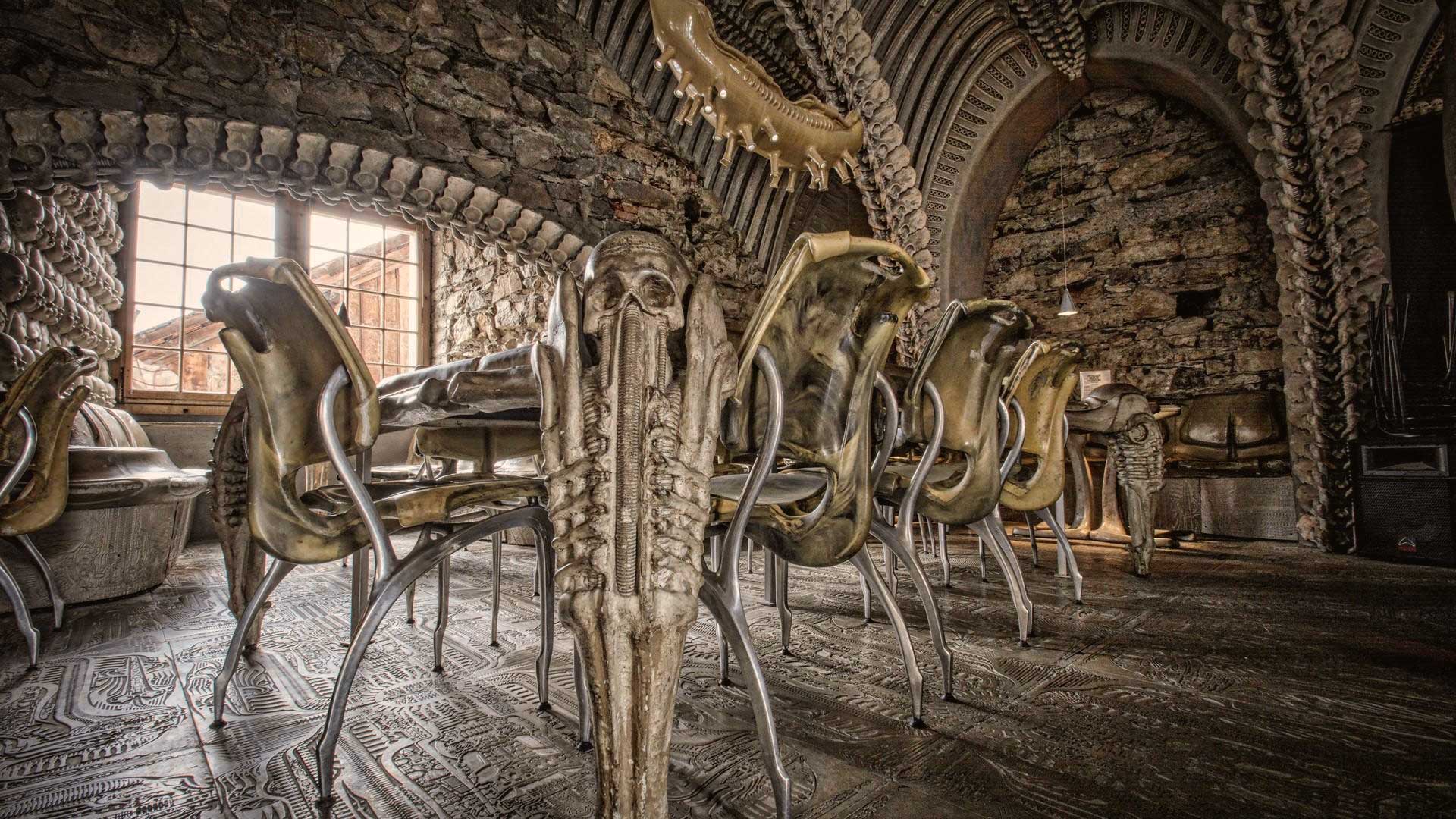
Giger Bars are venues in Switzerland — in the cities of Chur and Gruyère — where Giger fully incorporated his art and design skills into the architecture itself, with spine-like alien skeletons built into the stonework. The tables and counters mimic bone, and the venues house his famous Harkonnen chairs: black, aluminium throne-like seats originally designed for Jodorowsky’s lost Dune film.
Stepping into the bar reportedly feels like stepping directly into the artist’s imagination. A third bar was built in Tokyo, and a “Giger Room” once existed in New York’s now-closed Limelight club. The original two bars in Switzerland have been steadfastly preserved.
Later in life, H. R. Giger relocated from Zurich to a modest castle in Gruyère — St. Germain Castle — where the medieval chateau was partially renovated to house the H.R. Giger Museum. The museum holds the largest collection of his works, including film sets, paintings, sculptures and furnishings. It opened on the 21st of June, 1998, and remains open to this day. Some of his artworks were lost during the relocation from Zurich to Gruyère and are presumed stolen.
A Carnivorous Plant Was Named in His Honor

Matthew Kaelin, a carnivorous plant breeder, renamed one of his pitcher plants after H.R. Giger following the artist’s death in 2014. The plant, Nepenthes ‘H.R. Giger,’ has a peristome and spiked teeth that resemble something straight out of Giger’s Necronomicon.
“When viewed extremely close and at an angle, the intersection of the peristome teeth and the lid spikes of the cultivar create a frightening alien landscape akin to those imagined by the late H.R. Giger,” Kaelin said. “This, and because the plant is darkly coloured and has such a nightmarish appearance, I feel that it would be a fitting tribute to name the cultivar for the late visionary genius Hans Ruedi Giger.”
A Legacy Still Crawling Across Our Screens
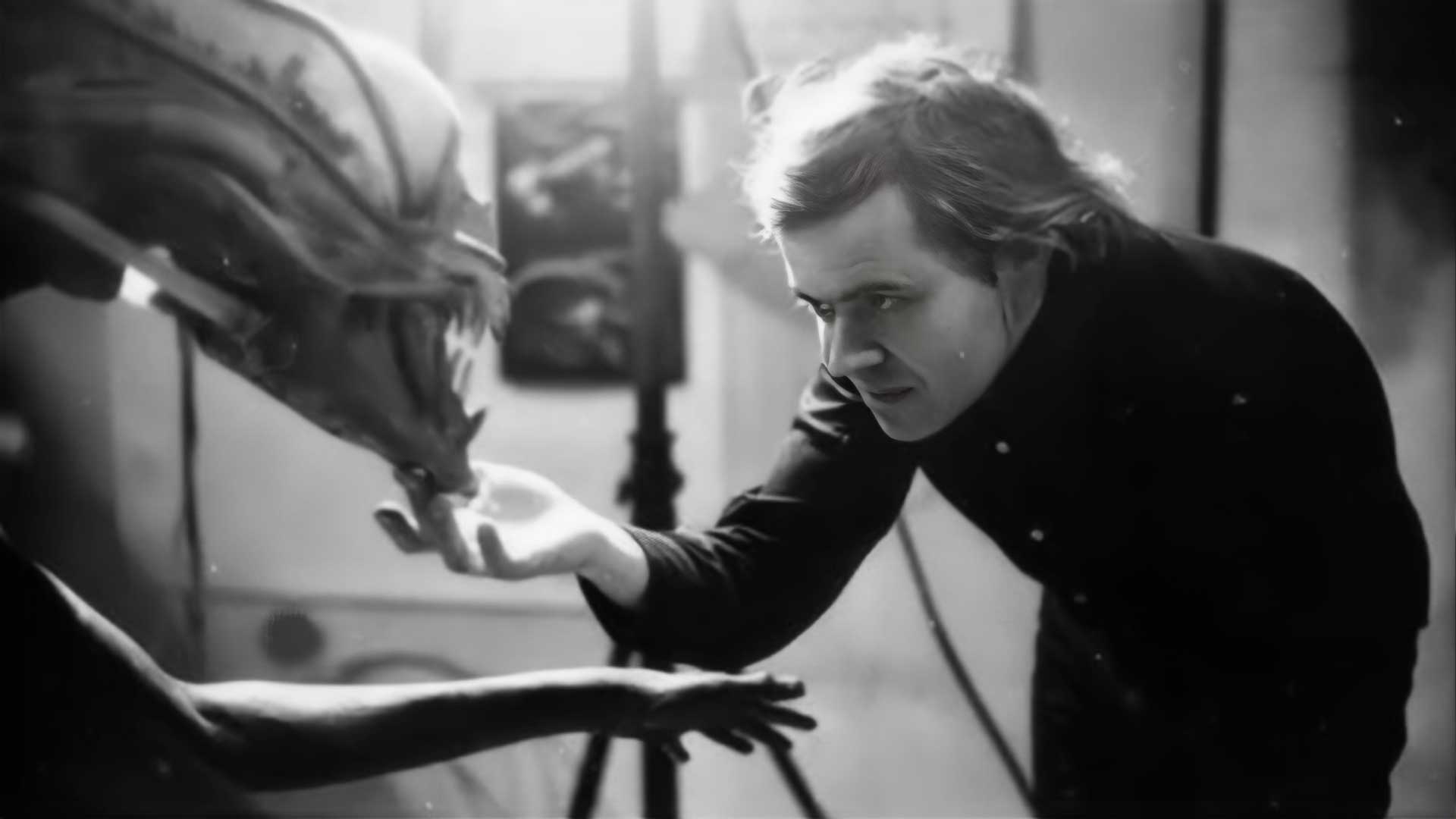
H.R. Giger passed away in 2014, much to the despair of fans and fellow artists alike. He left behind a world forever changed by his genre-defining work. Few artists leave a legacy as enduring as this biomechanical master — and few franchises owe as much to a single person’s psyche as Alien does to Giger’s. As Alien: Earth Season 2 gears up with Sydney Chandler admitting the Xenomorph gave her real nightmares growing up, it’s worth remembering that the creature earned that reputation honestly — it was born from someone else’s nightmares first.
What are your thoughts on H.R. Giger’s works and influence on film? Also, read our articles on the 28 best Lovecraftian movies of all time.