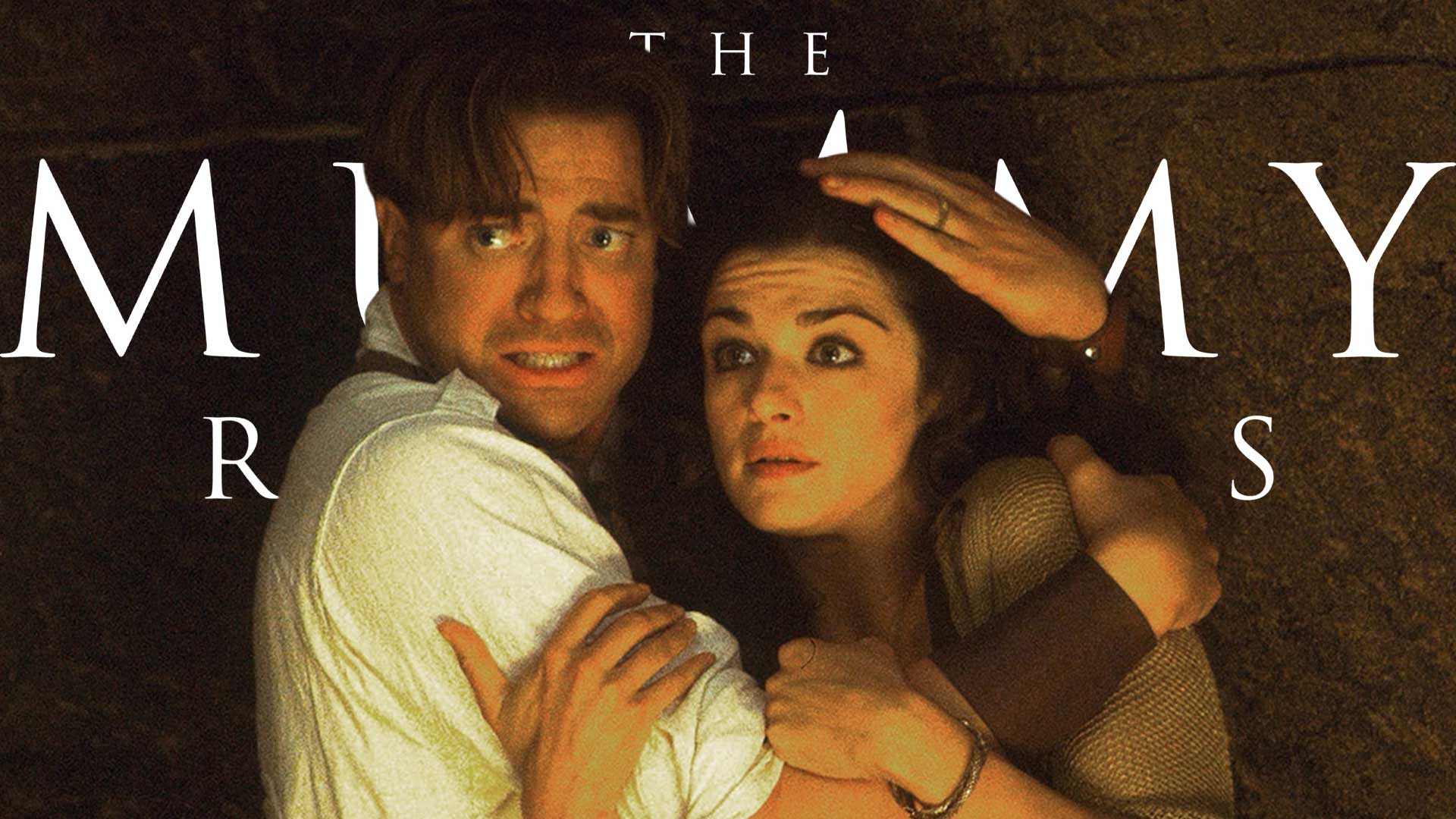


With the long-awaited sequel currently set in stone on October 15, 2027, it’s time to look back at The Mummy Returns, the second Brendan Fraser-Rachel Weisz action-adventure fantasy, which marks its 25th anniversary. First released on May 4, 2001, The Mummy Returns benefits from the success of the 1999 reboot by expanding its mythology with a mix of lighthearted charm and humor while elevating the action-adventure/horror fantasy tropes equivalent to a fun, rollercoaster ride.
The strategy worked, resulting in a successful second Mummy movie that brought in $436 million worldwide on a $98 million budget, despite receiving mixed critical receptions. The box-office hit paved the way for the spin-off prequel, The Scorpion King, in 2002, and a commercially successful but critically derided The Mummy: Tomb of the Dragon Emperor in 2008.
Going back to The Mummy Returns, I had a love-hate relationship with this sequel when I first watched it back in the day. I enjoyed watching the sizzling yet delightful on-screen chemistry between Brendan Fraser’s Rick O’Connell, whose roguish charm matches well with Rachel Weisz’s feisty Evelyn Carnahan. Their dynamic is what made the first two Mummy movies such an entertaining flick, where it’s hard not to root for this couple’s journey throughout their adventure.
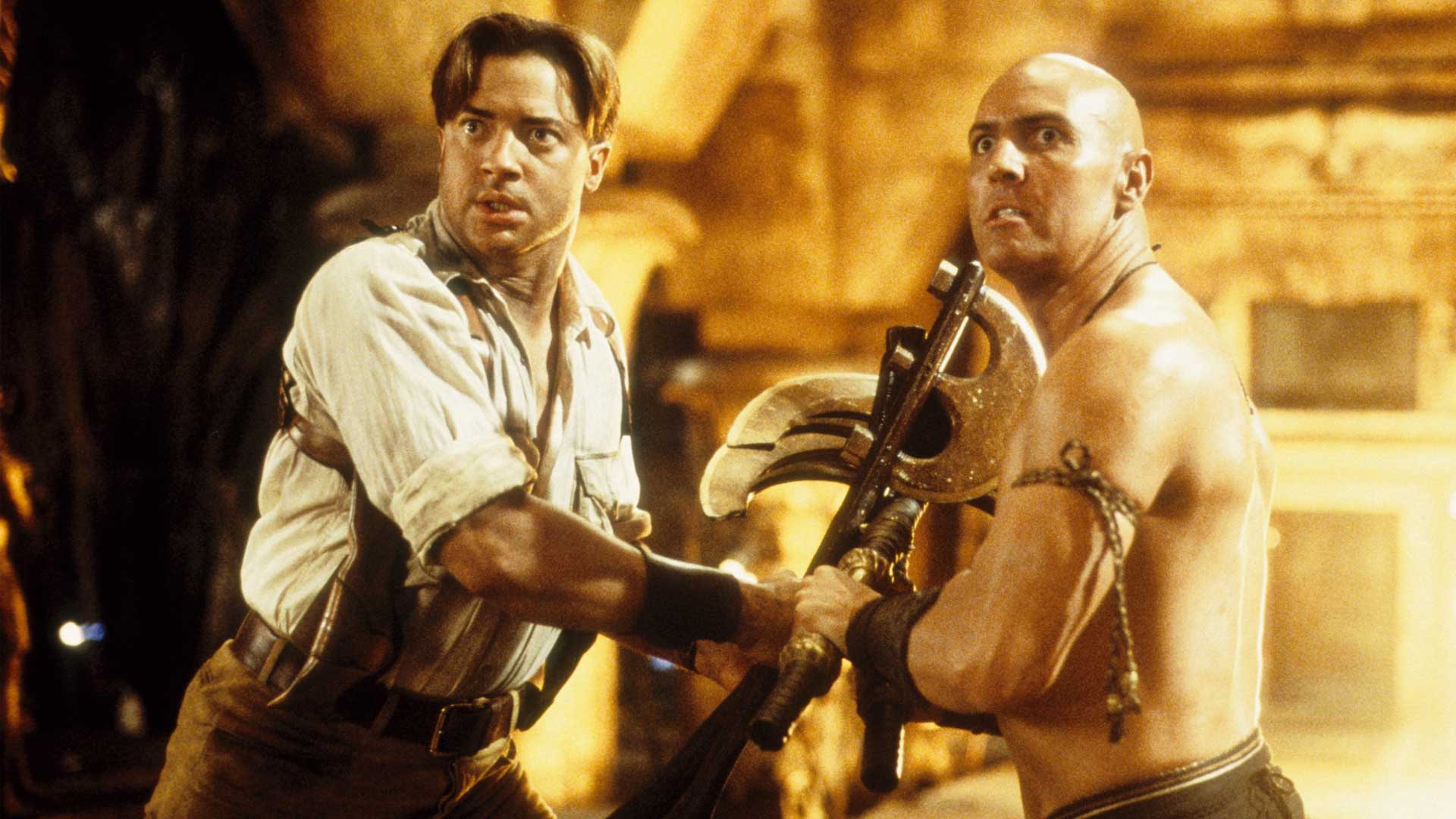
So, to recap what’s going on in The Mummy Returns, the story takes place seven years after the events of the first movie, with Rick and Evelyn remaining committed to exploring Egyptian tombs. They even have a kid named Alex (Freddie Boath), who prefers getting into trouble rather than behaving like an obedient child as he should be.
One thing I like about this sequel is that returning writer-director Stephen Sommers wastes little time in getting down to business, beginning with an intriguing 3067 B.C.-set prologue of Dwayne “The Rock” Johnson’s Scorpion King warrior from his initial defeat to surrendering his soul to Anubis for the immense power to take down his enemy.
It gets interesting with Rick and Evelyn’s latest quest to locate the Bracelet of Anubis, which triggers a chain of events that end up with her getting abducted by a cult (among them played by Alun Armstrong as the leader Baltus Hafez, and Patricia Velásquez as Meela Nais, who bears the physical resemblance of the reincarnated Anck-su-namun). The sequel also brings back Imhotep (Arnold Vosloo), the main antagonist from the first movie, with the help of the Book of the Dead, and this time around, his resurrection is not only about reuniting with Meela Nais/Anck-su-namun but also about defeating the Scorpion King, which in turn will grant him the power to command Anubis’s army.
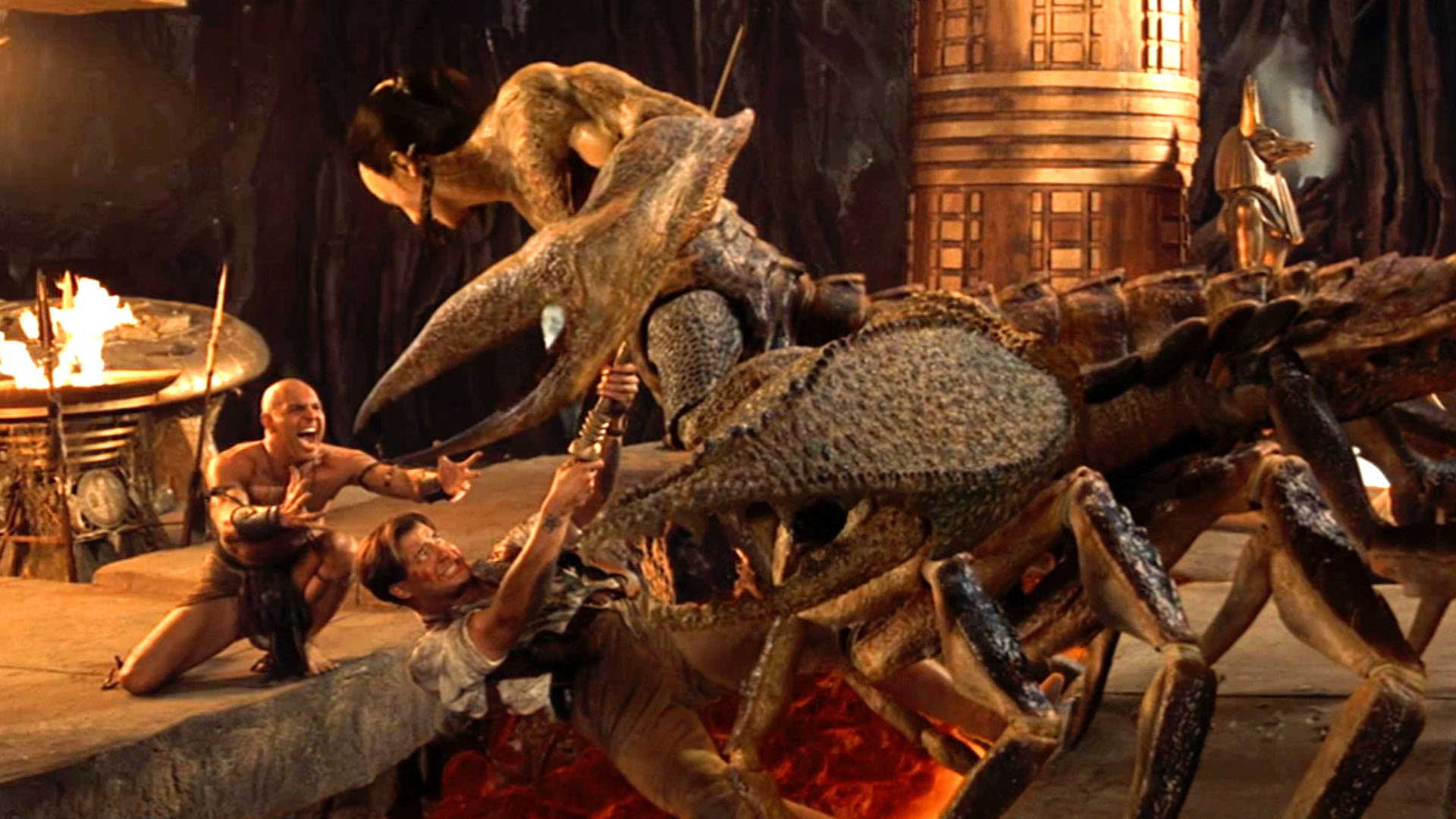
Clocking in at 129 minutes, Sommers keeps the pace brisk with one thrilling set-piece after another, while piling up his movie with plenty of action, comedy, and special effects galore. Now, the latter is where I still find The Mummy Returns lacking in this department, despite being handled by Industrial Light & Magic. No doubt that Sommers has a lot of ambition in his go-big-or-go-home approach, where some CGI-heavy scenes, such as the nighttime double-decker bus chase through the London streets as Imhotep’s relentless army of mummies are hunting Rick and co., showcasing Sommers’ flair for blending exhilarating pursuit with the intensity of characters-in-peril moments.
At one point, there’s a big, memorable scene where Imhotep fully uses his powers to manipulate the water and turns it into a roaring tidal wave during an aerial chase against Izzy Buttons’ (Shaun Parkes) dirigible transporting Rick and co. Otherwise, the special effects look inconsistent, regardless of watching the sequel back then and again recently. The CGI technology may have been in its evolving stage at the time, but the overreliance on digital effects tends to take away the crucial sense of verisimilitude needed to suspend disbelief.
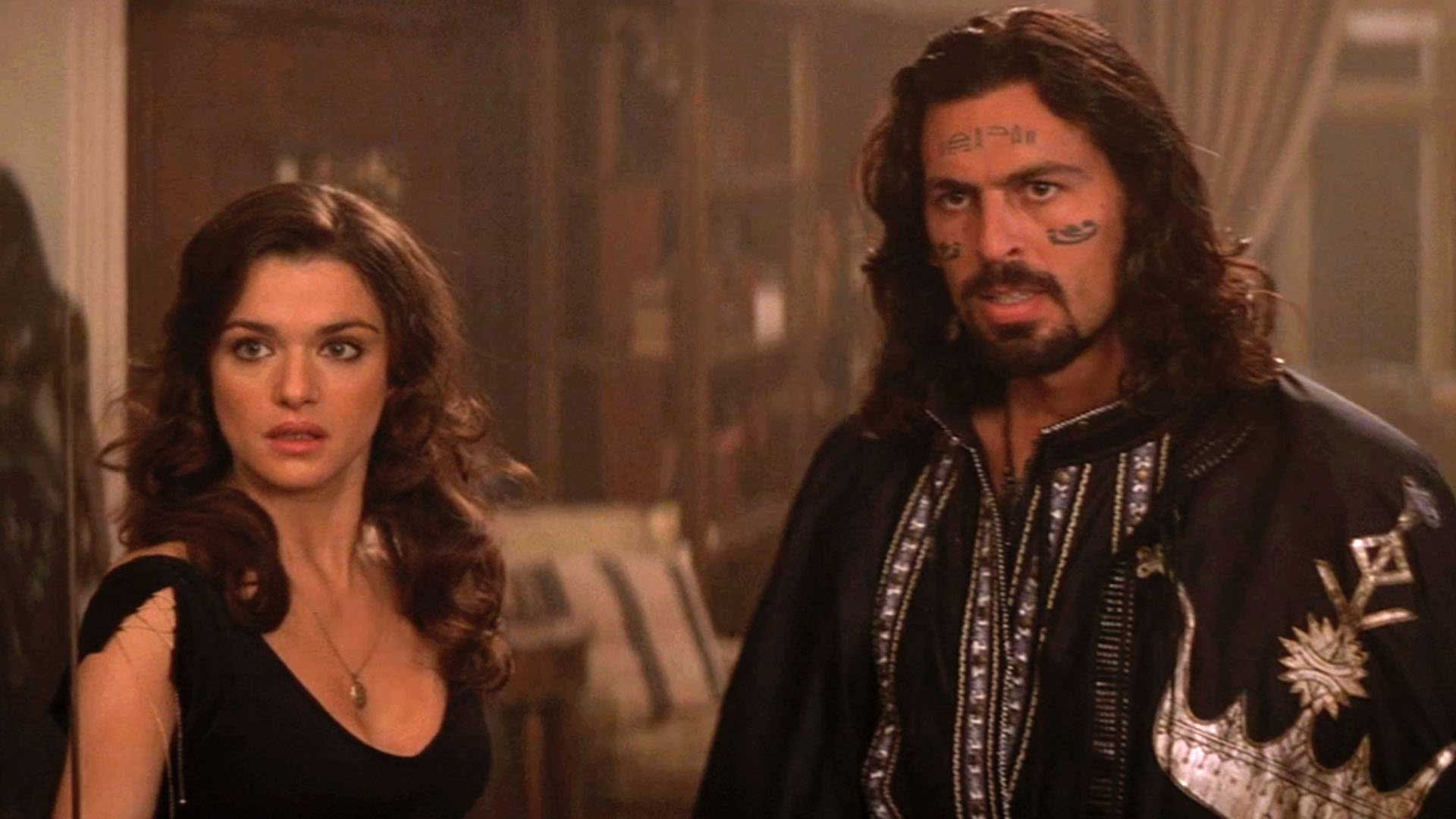
This is especially true with the glaringly obvious digital fakery of Johnson’s The Scorpion King appearance in the third act, looking unrefined, one of which has to do with the rushed post-production schedule to meet the summer 2001 deadline at the time. To capitalize on the success of the 1999 reboot, Universal quickly ordered an immediate sequel to be filmed the following year, and given its larger scope and ambition, from multiple location shoots to pushing the boundaries of special effects, the shorter turnaround time wasn’t enough to accommodate the entire process to make everything better.
Even with the shortcomings, The Mummy Returns remains a prime example of how to make a fun-filled escapist entertainment in the form of a big-budget spectacle. It’s a pity that the third Mummy movie failed to live up to the expectations of the first two installments, with some of the problems stemming from the ill-advised change of location and tone from the ancient Egyptian mythology to the Chinese lore, and of course, the notable absence of Weisz’s Evelyn Carnahan.
Here’s hoping the upcoming Mummy sequel next year will course-correct the franchise back to life under the co-direction of Matt Bettinelli-Olpin and Tyler Gillett, collectively known as Radio Silence, who are no strangers to rebooting a legacy franchise, seen in their first two (fifth and sixth) Scream movies.