
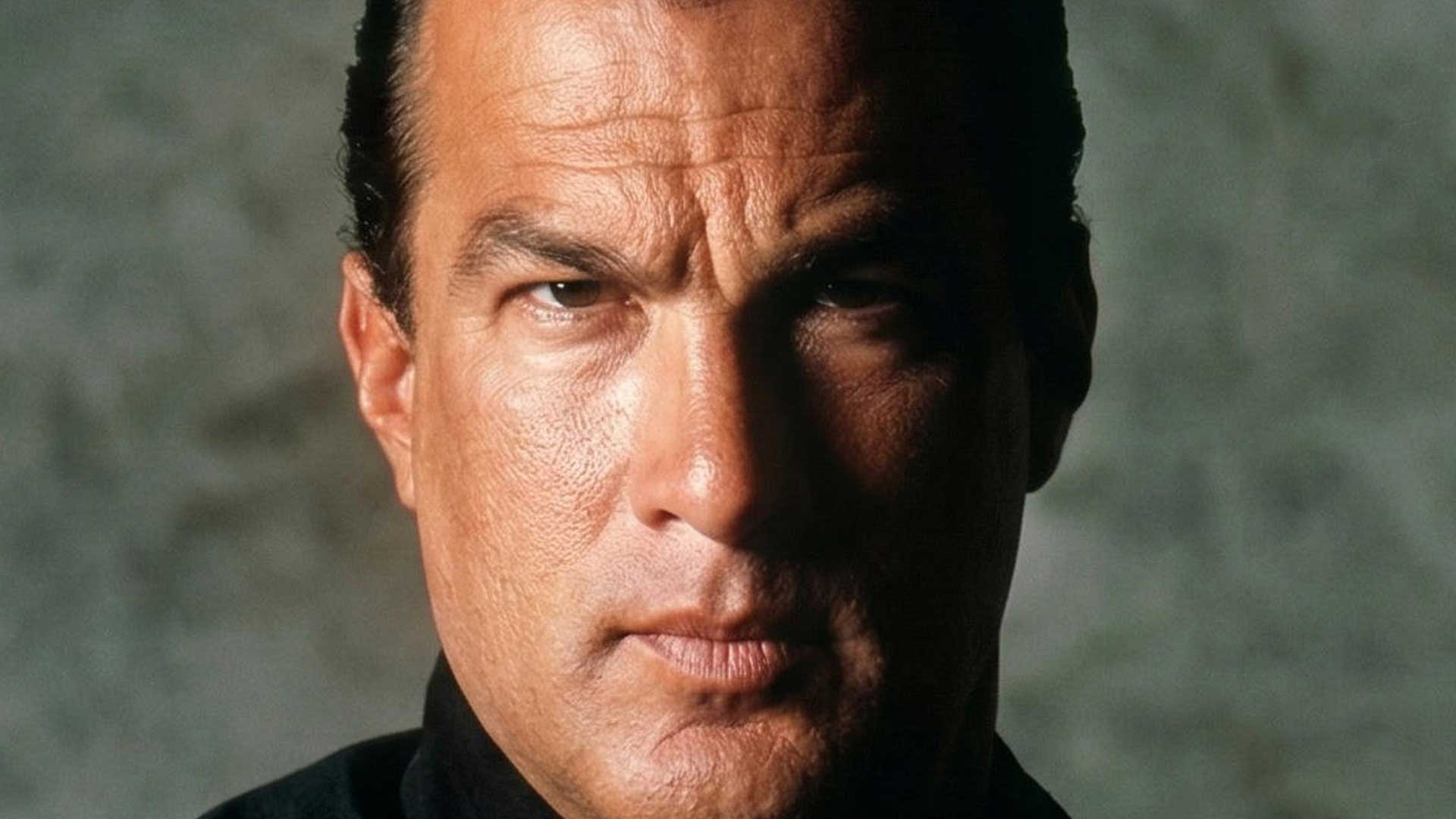


Steven Seagal’s post-Under Siege era wasn’t kind to the aikido star, who had delivered consistent box-office hits between the late ‘80s and early ‘90s. His next two movies, On Deadly Ground and Under Siege 2: Dark Territory, failed to capture the same momentum that made his earlier movies entertaining and highly watchable. His appearance in the otherwise engrossing Die Hard-on-a-plane action thriller Executive Decision barely made an impact.
Then came The Glimmer Man, released thirty years ago on October 4, 1996, boasting a genre hybrid best described as Lethal Weapon meets Se7en. Directed by John Gray, whose credits include Billy Galvin and Born to Be Wild, the movie pairs Seagal and Keenen Ivory Wayans as two mismatched cops – one’s a newly transferred, stoic detective with a murky past joining the LAPD who wears prayer beads and practices Buddhism, and the other’s a cynical and by-the-book partner who particularly loves to watch Casablanca.
Their contrasting on-screen dynamic is a classic buddy-cop formula populated by the likes of 48 Hrs. and Lethal Weapon, and it’s fun to watch them trade quips and disagree with each other about the way they do things.
RELATED: “He’s a Good Martial Artist”: Why Chuck Norris Backed Jean-Claude Van Damme Over Steven Seagal
The Glimmer Man Behind the Scenes: Steven Seagal’s On-Set Behavior and Spiritual Crisis
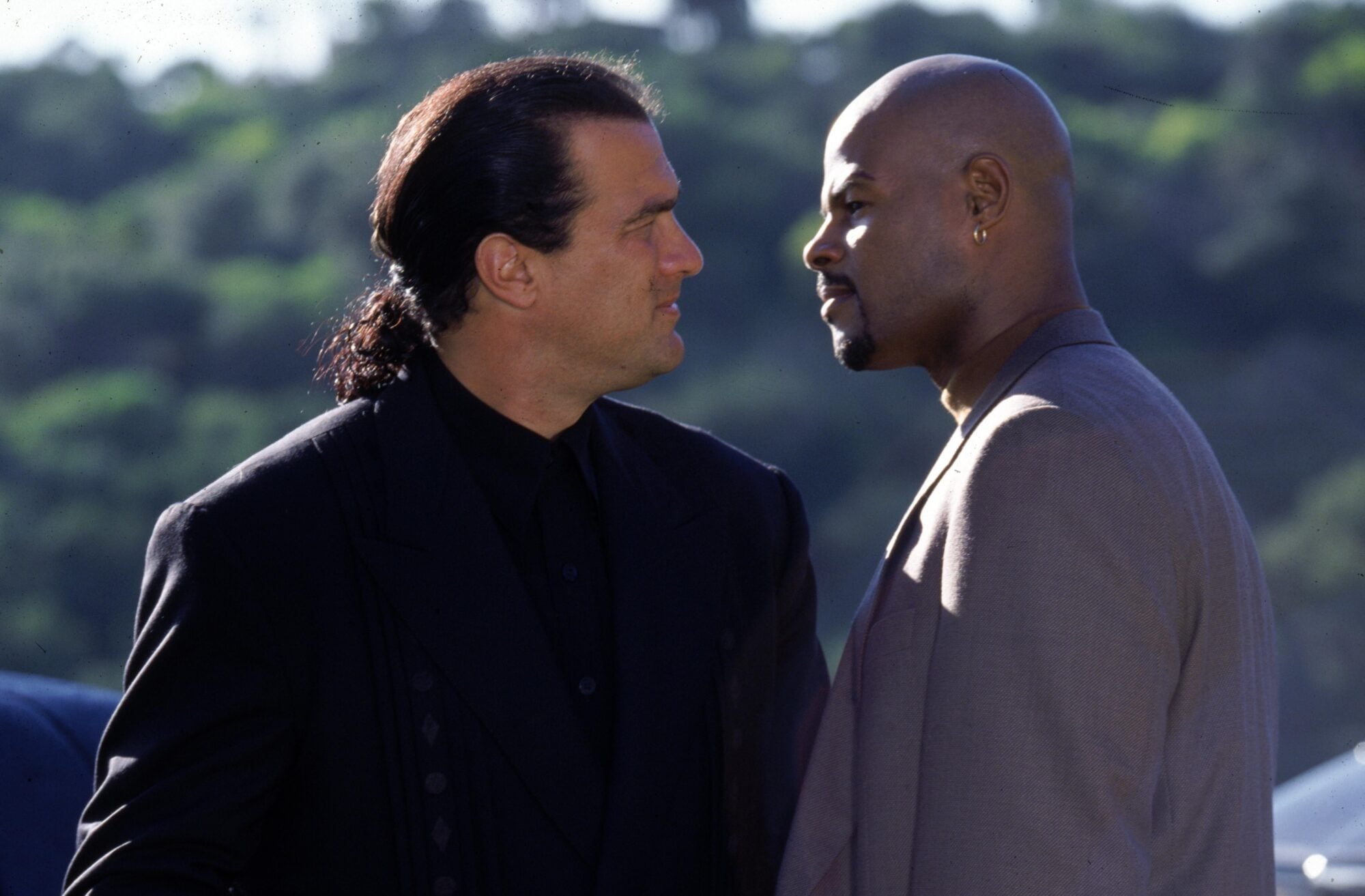
But behind the scenes told a different story, as the two stars reportedly weren’t always on the same page on set. Wayans reportedly had to put up with Seagal’s unprofessional work ethic, including often arriving significantly late to set. Seagal was also notoriously demanding about other things, from insisting on letting him wear his odd wardrobe choices (one of which is a flashy, patterned Nehru-like jacket earlier in the movie that looks strangely out of place for a character supposedly a former covert operative-turned-police detective) to trying to force a script change.
The latter was especially true after Stephen Tobolowsky, who played the ritualistic serial killer Christopher Maynard, revealed in an interview that Seagal had “a spiritual sort of crisis” and decided he no longer wanted to kill people in movies. But Tobolowsky found Seagal’s demand didn’t align with the script, especially Tobolowsky’s character as a serial killer, and the scene between these two characters was supposed to end with a death scene.
Fortunately, Tobolowsky managed to use a reincarnation argument to convince Seagal to film the death scene as originally intended by presenting the killing as a favor to free him from being trapped living as a serial killer. Seagal reportedly had second thoughts months later and began ad-libbing lines suggesting Maynard survived, though that version was not used in the final cut.
The Glimmer Man Box Office and Reviews: A Recut Movie and a Disappointing Result
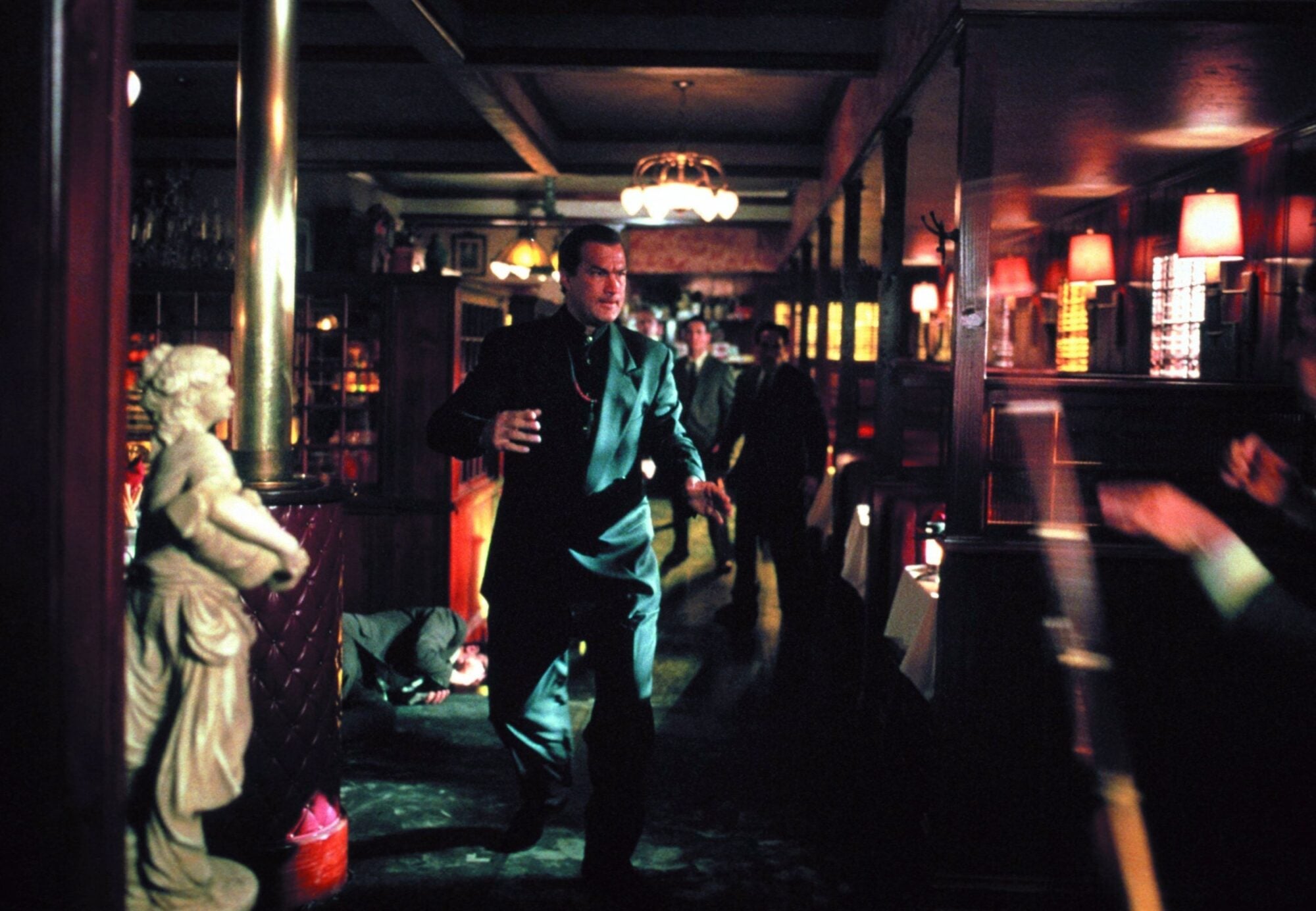
The Glimmer Man has a few thrilling moments, including well-choreographed aikido fights and action set pieces that lean hard on the essential Seagal moments. The Se7en-like template benefits from Rick Bota’s atmospheric cinematography, capturing the bleak neo-noir look and dread-inducing Los Angeles, along with grisly aftermath (the dead victims being crucified against the wall comes to mind).
And yet, the movie remains a mess after Warner Bros. heavily butchered it to a faster-paced 91-minute runtime, resulting in a disjointed narrative, and some scenes, such as Michelle Johnson’s supporting turn as Cole’s wife, were reduced. The Glimmer Man, referring to Seagal’s Jack Cole’s nickname for his stealthy and lethal move against the enemy targets during his time on a black-ops mission in the jungle, as described by Cole’s former superior Smith (Brian Cox) at one point, failed to ignite the box office.
Domestically, the movie could only muster $7.6 million at No. 2 in its opening, with The First Wives Club still dominating the box office for the third consecutive weekend. It barely sustained its momentum as it eventually dropped like Seagal toppled over his enemy in a swift move to No. 7 and 9 the following two weekends before it fell out of the top 10 and subsequently ended its theatrical run with a disappointing worldwide total of nearly $42 million on an estimated $45 million budget. (Critics weren’t kind either: The Glimmer Man holds an 11% score on Rotten Tomatoes.)
What The Glimmer Man Could Have Been: The Cut Houseboat Bombing and Museum Shootout
Interestingly, The Glimmer Man wasn’t originally intended to be moderately scaled as seen in its final product, but rather reportedly planned as a bigger Warner Bros. project, complete with major action set pieces. In a perfect world, we would have gotten scenes like the reported houseboat bombing where Wayans’s Jim Campbell lives instead of the apartment building, and a climactic third act would reportedly take place in a Los Angeles museum with a large-scale gunfight.
The plan eventually didn’t materialize after The Glimmer Man was forced to scale down over production woes, Seagal’s erratic on-set behavior, and the last-minute replacement of Brian Cox stepping in for Under Siege co-star Tommy Lee Jones, who was initially cast but abruptly pulled out of the movie.
Is The Glimmer Man worth watching in 2026? If you’re looking for a Se7en-style ’90s buddy-cop film, with Seagal’s Buddhist cop and Wayans’s wisecracks, it’s worth a watch. But just don’t expect the tight thriller it might have been.
Where to Watch The Glimmer Man
The Glimmer Man is available for rent or purchase via Apple TV, Fandango at Home and, depending on your region, Prime Video.
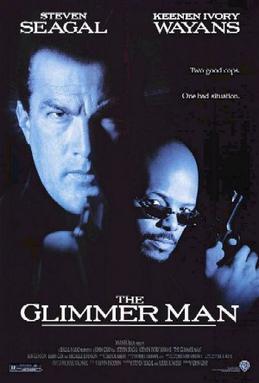
The Glimmer Man |
|---|
Two cops are forced to work together to solve a chain of mysterious killings by a killer nicknamed "The Family Man". |
 |
|---|
| Studio: Seagal/Nasso Productions, Warner Bros. |
| Running Time: 91 minutes |
| Release Date: October 4, 1996 |
| Cast: Steven Seagal, Keenen Ivory Wayans, Bob Gunton, Brian Cox, Michelle Johnson |
| Director: John Gray |
| Writers: Kevin Brodbin |
| Genre: Action, Crime, Thriller, Martial Arts |
| Box Office: $41.8 million |