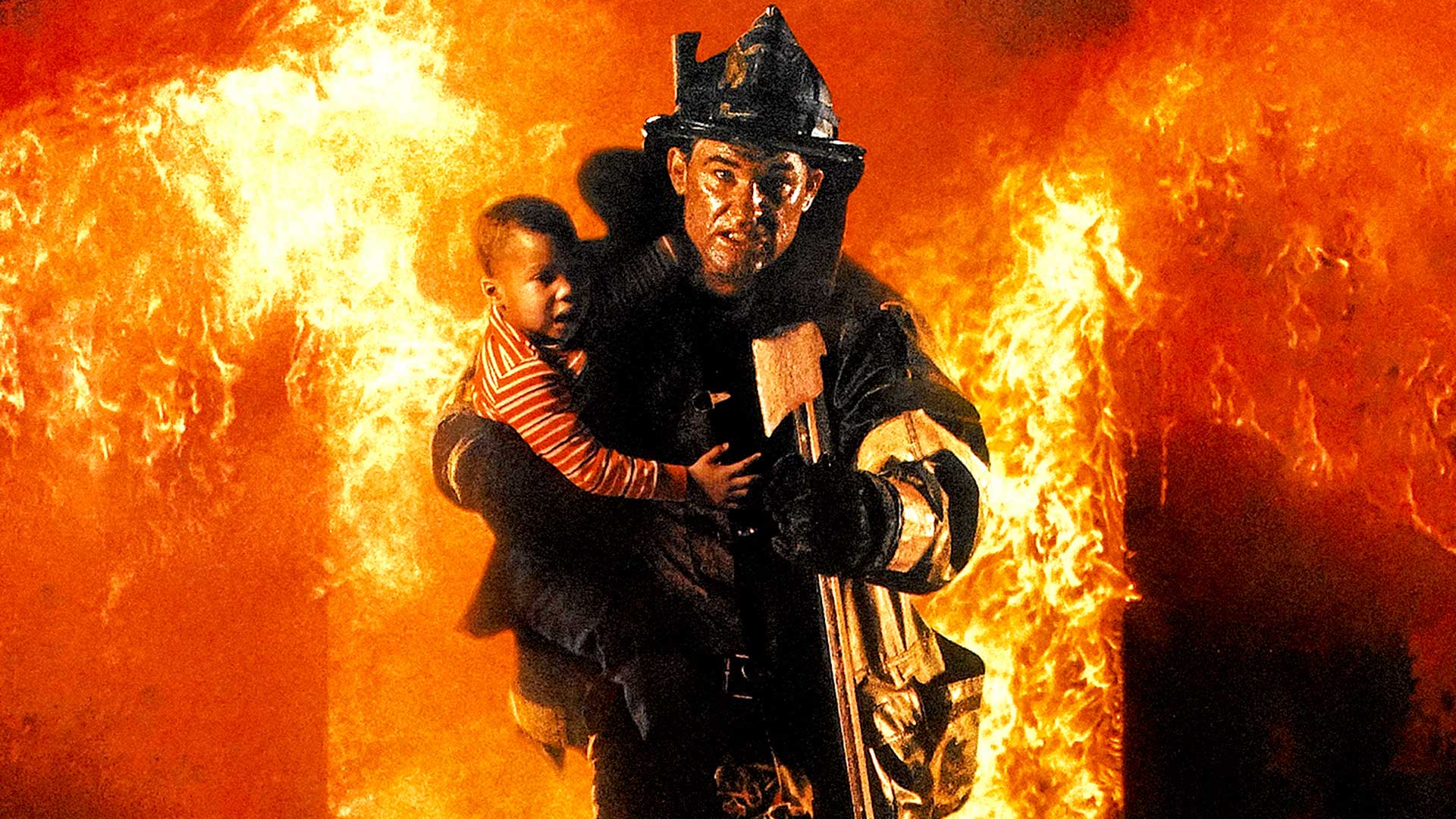


“It breathes, it eats, and it hates,” Robert De Niro, who plays arson investigator Donald Rimgale, says in Backdraft. He wasn’t describing a large sci-fi monster like Alien‘s Xenomorph. He was describing fire. In 1991, Ron Howard’s action thriller drama put that monster on screen without a single digital frame. Nobody in Hollywood has done that since.
If there’s one primary reason Backdraft is such a great firefighter movie, it’s Ron Howard’s commitment to heightened realism in the fire effects. Universal poured in $40 million, which was considered a huge gamble at the time for a movie focusing on the dramatic lives of the firefighters, specifically the Engine 17 of the Chicago Fire Department. Fortunately, it was a budget well-spent. The studio dated Backdraft on a prime May 24, 1991, summer-movie blockbuster slot, taking in $15.7 million during the Memorial Day weekend, and even held the No. 1 spot at the domestic box office for two consecutive weekends before raking in over $150 million worldwide.
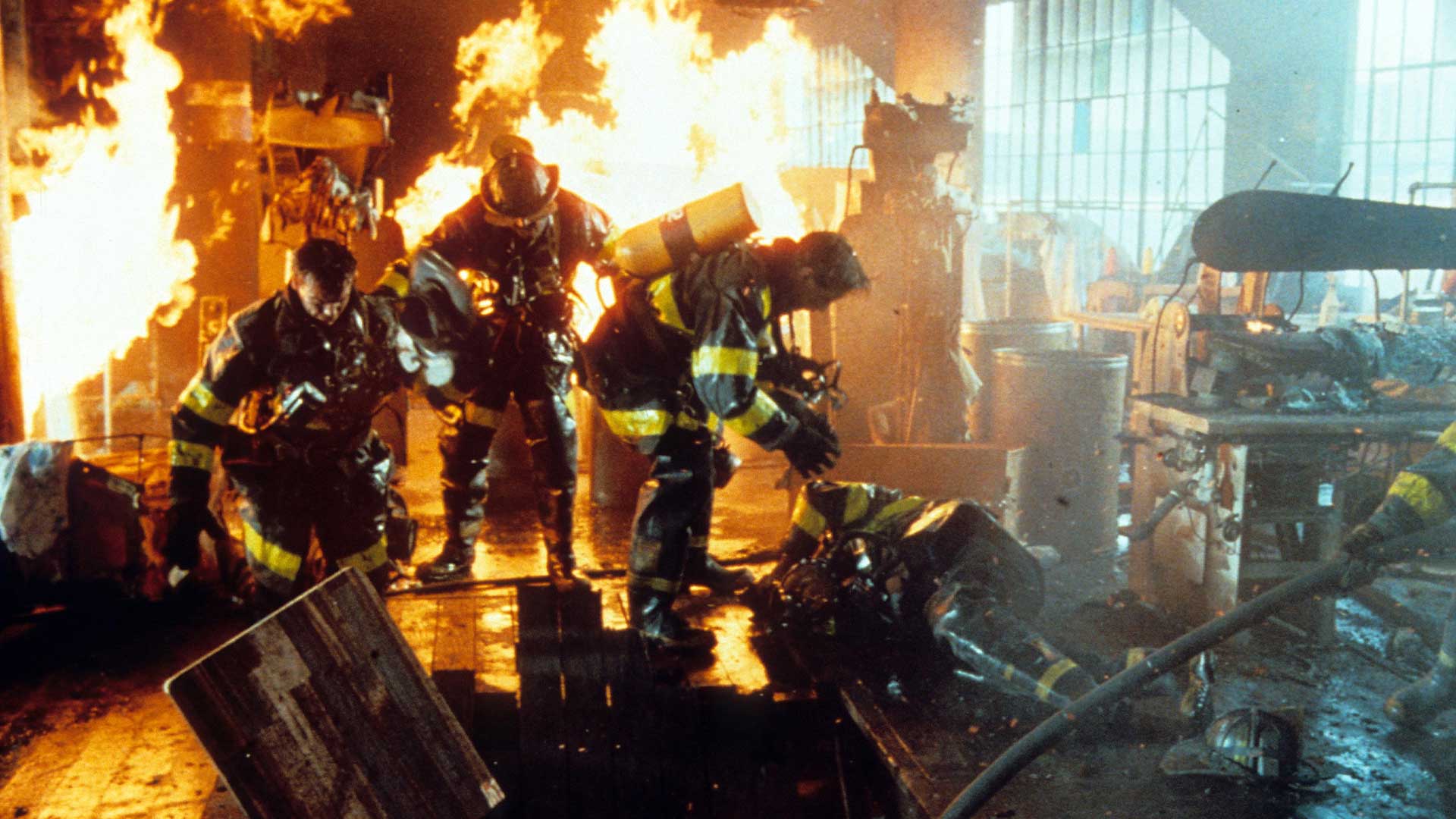
Credits went to Howard and his special effects team, Allen Hall and Clay Pinney, for not only showing us the flame predominantly in-camera, but also making it terrifying like a malevolent living thing. They went the extra mile to determine how fire can be practically manipulated, which allows Howard to shoot the scenes cinematically.
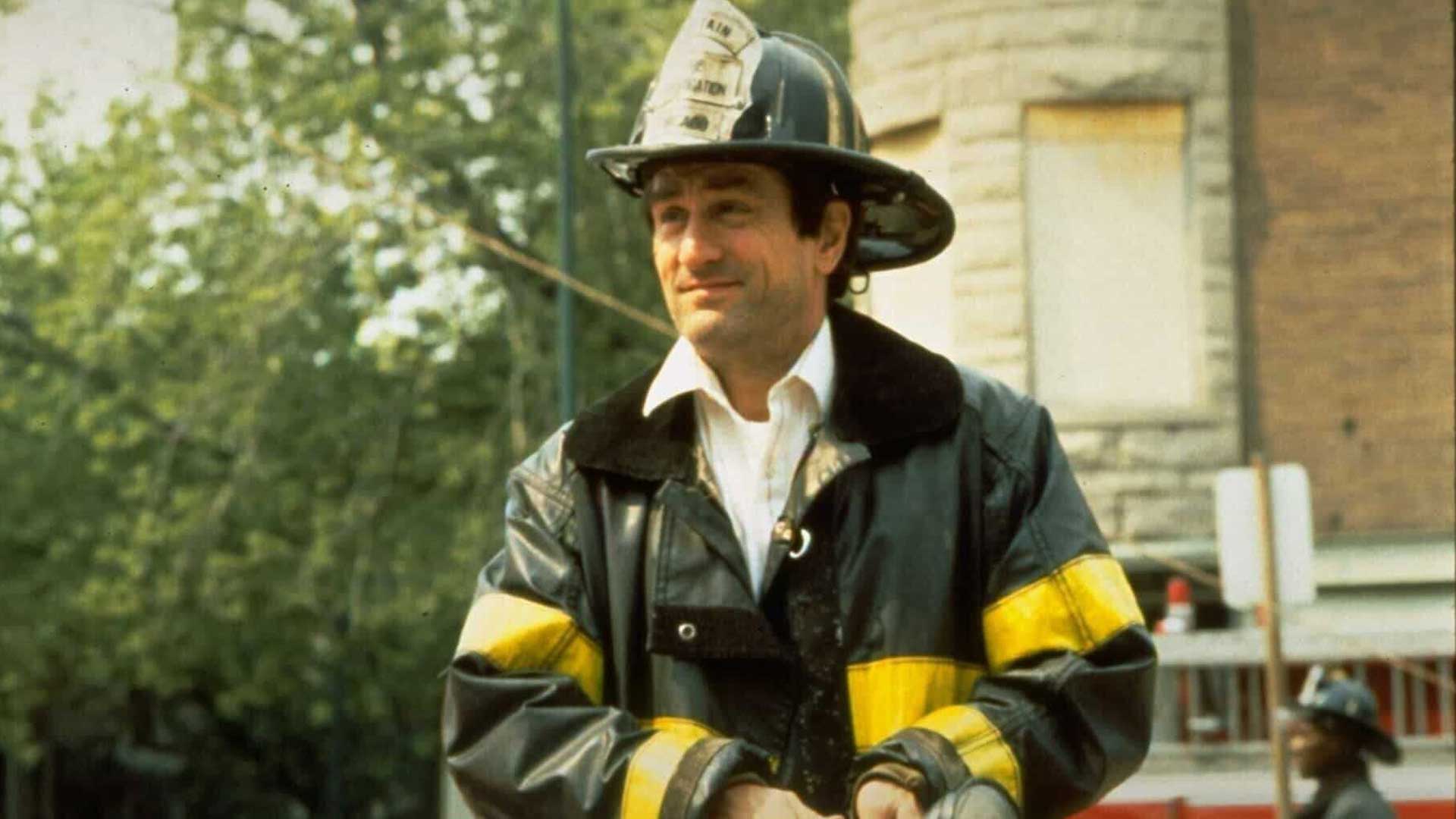
For instance, to make the fire look dirtier than the standard, brightly lit flames typically seen in films, the crew reportedly built a large steel tank dubbed “Big Bertha” capable of ejecting flame at a whopping 1,200 square feet. Another specialized mechanical prop, nicknamed “Ash-o-Matic,” was also used to ensure the air on the movie set looked realistically heavy and toxic, which added to the verisimilitude of watching the actors in firefighting action within the chaotic environment.
But as much as Howard wanted the fire to be real, not every special effect seen in Backdraft was practical. Some scenes, such as the climactic chemical warehouse scene revolving around a collapsing roof, had to rely on the magic of visual effects from Industrial Light & Magic (ILM) using a combination of a large-scale miniature model, optical compositing, and William Baldwin’s (who plays probationary firefighter-turned-Rimgale’s assistant, Brian McCaffrey) stunt footage of him running with Johnny Hock served as his stunt double.
ILM was also responsible for creating the immersive illusion of the famous “backdraft” scene using optical splicing and reverse-motion camera tricks, showcasing how fire and smoke can physically retract before it explodes violently. The actors who played the firefighters may have been put through the wringer during the firefighting scenes. Still, Howard and his special effects team were fortunate not to have everyone seriously injured during the reportedly gruelling five-month shoot, which took place in Chicago from July to December 1990. Again, thanks to ILM, scenes that were deemed too dangerous would result in filming the actors safely in a controlled soundstage environment, while another filming was done on empty movie sets to capture the roaring, out-of-control blaze. The ILM would then optically combine this footage by superimposing the actors seamlessly into a fire.
No doubt that Backdraft deserved the technical Oscar nominations, including Best Sound, Best Sound Effects Editing, and Best Visual Effects, despite losing all three awards to James Cameron’s then-groundbreaking Terminator 2: Judgment Day. The special effects may have been the chief factor that made the movie such a blast. But the committed all-star cast and Gregory Widen’s screenplay are equally worth mentioning here.
It helps that Widen himself used to work as a full-time firefighter for three years, and had firsthand experience witnessing the deadly backdraft that tragically killed his fellow firefighter and friend while on duty. The real-life tragedy would become a jumping-off point to include it in his script, allowing him to delve into the psychological trauma and danger of how a devastating moment like this can affect a person. This can be seen during the movie’s 1970s prologue, where the young Brian McCaffrey (Ryan Todd) witnesses his firefighting captain-father (Kurt Russell, who plays dual roles as Captain Dennis McCaffrey and Brian’s older brother, Stephen) die in a sudden room explosion.
Widen’s in-depth experience proves to be a valuable asset in depicting how fire tends to behave unpredictably, making the jobs of the firefighters constantly high-stakes and near-death scenarios. Backdraft is heavy-handed in places, especially given the attempt to string multiple plot threads together. The movie wants to be everything at once, beginning with the sibling rivalry between the two estranged brothers, Stephen and Brian, even though Russell and Baldwin’s conflicted on-screen dynamic is pivotal in giving the story a necessary dramatic weight.
Then, there are more subplots from De Niro’s Rimgale’s investigation trying to find out the arsonist who causes the fire-related murders, to a broken romantic relationship (Stephen and his separated wife Helen, played by Rebecca De Mornay), and even a political corruption angle revolving around Chicago City Council Swayzak’s (J.T. Walsh) cover-up.
Episodic stories like this would have fit better in an entire season of a TV series, but even with its shortcomings, Howard’s overall assured direction still manages to put everything together into a visceral cinematic experience. The success of Backdraft inspired Universal Studios Hollywood and Japan to open their special effects attractions in 1992 and 2001, respectively, before they eventually closed in 2010 and 2020. Widen would return to write a direct-to-video sequel to Backdraft twenty-eight years later, which also featured original stars William Baldwin and Donald Sutherland.
RELATED: Twister Turns 30 — and Its Famous Flying Cow Was Actually a Zebra From Jumanji