

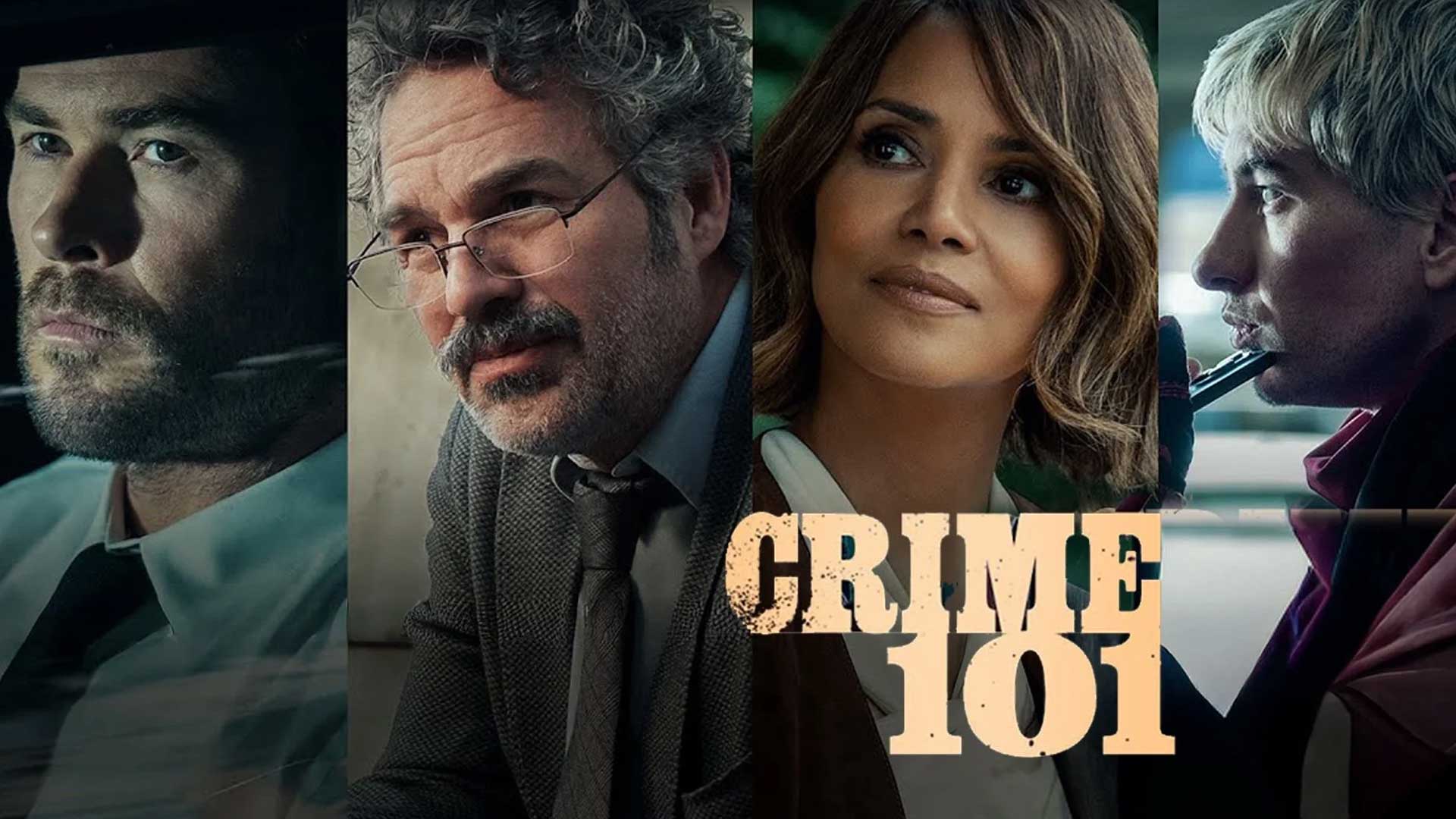


Crime 101 hooks me right from the start, beginning with the mesmerizing establishing shot of an inverted Los Angeles skyline, as the camera slowly tilts the scene back to level, while the soothing yet meditative female voiceover fills in the background. Director Bart Layton uses the cross-cutting technique to his advantage to set up not one but three brief introductions of the main characters, each of which in a contrasting way of them getting ready that reflects their habits and personalities: Davis (Chris Hemsworth) is seen as a methodical jewel thief who’s careful enough not to make even the tiniest mess while grooming himself in the bedroom bathed in blue light.
There’s Sharon (Halle Berry), a fifty-something insurance broker who’s hardly having a good night’s sleep but still trying to look her best with her skincare routine. Finally, there’s Lou (Mark Ruffalo), a police detective going through his morning ritual at home, looking all dishevelled. The opening stretch then primarily focuses on Davis’ seemingly well-planned heist of targeting a courier transporting diamonds. The heist is shot with clinical precision, as if Michael Mann were ghost-directing the scene, before it culminates in a high-speed pursuit as Davis’ car weaves in and out of Los Angeles traffic while trying to make an escape.
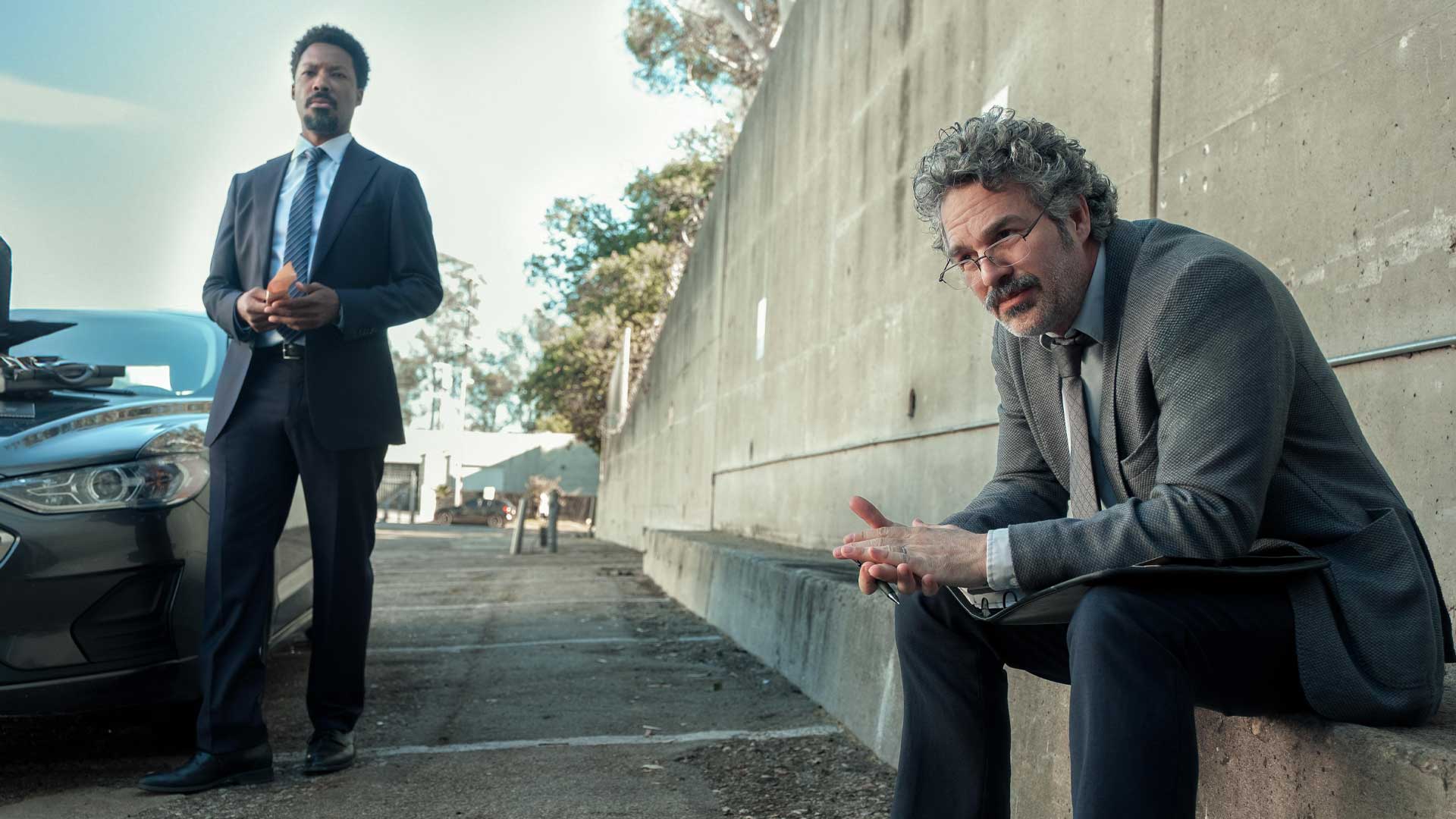
For the first 15 minutes or so, Layton does a great job setting up everything in motion, almost convinces me that Crime 101 is going to be on my list as one of the best crime thrillers of 2026. And a bonus, which at one point during a heist reminding me of a scene of Samuel L. Jackon’s Jules Winnfield’s “divine intervention” moment from Pulp Fiction, mirroring to what happens to Davis in his near-death experience. Like Jules, he somehow got lucky, but it also serves as a catalyst that he must do something about his life as a criminal. He has been exercising caution all the time and even barely uses violence.
And yet, that close call alters his perspective to the point he chooses to step back. This doesn’t sit well with his grizzled boss and contact (Nick Nolte, sounding raspier than ever), especially after discovering Davis is no longer the reliable man he used to be. He ends up bringing in Ormon (Barry Keoghan), a younger thief who’s the complete opposite of Davis’ strictly non-violent, systematic approach. When one casts someone like Barry Keoghan, you basically know what to expect: a volatile and reckless individual who treats violence as a necessity for both threat and survival. And unlike the sharply dressed Davis, he’s all flashy, who rides a motorcycle and even sports a bleached-blond hairstyle. It goes without saying that such a role is what Keoghan is born to play, and he’s very good at it. He doesn’t see eye to eye with Davis, leading to their eventual confrontations, one of which involves a nighttime chase.
Except that their contrasting dynamic is just bits and pieces of the movie’s epic 140-minute length. The longer runtime would have worked better if Layton, who also adapted Don Winslow’s 2020 novella of the same name, had managed to sustain a consistent momentum in his movie. The second act is especially a hit-and-miss affair, even sluggish and meandering at some point. Some of the subplots left me hanging, like the one revolved around Lou’s wife, played by Jennifer Jason Leigh in a barely-there moment that doesn’t justify much of her appearance, making me wonder if her relationship with Lou is heavily omitted from the final cut.

Layton also attempts to inject a personal connection similar to Mann’s Heat, where Robert De Niro’s Neil McCauley ends up falling in love with a beautiful stranger (Amy Brenneman). Here, Davis’ otherwise mundane life changes when he meets the gorgeous Maya (Monica Barbaro, looking alluring as always). They are easy on the eyes, but their on-screen romance is somewhat muted, where it’s hard for me to care about the outcome of their relationship.
The movie equally shifted its focus to Sharon and Lou, where the former has been putting up with the higher-ups and her longtime commitment to the firm is undervalued. Her character, which eventually crosses paths with Davis, has her moments about how she’s been unfairly treated as an object of beauty rather than a valuable company asset that should be benefiting her career. Lou, in the meantime, has been obsessed with catching the elusive criminal who’s been using the Los Angeles 101 freeway as his MO. Frankly, I was expecting Lou to pull off Al Pacino’s Vincent Hanna here, and although Ruffalo is ideally cast for such a role, it’s a pity that his character arc is rather perfunctory.

Crime 101 isn’t as great as I’ve been anticipating all this time, but it remains a competently made crime thriller. Besides, it’s hard to ignore that Layton has an eye for the slick Michael Mann-style visual palette. He knows how to stage a propulsive action set-piece, notably the opening chase scene that is thrillingly captured with his dynamic camerawork. Credits also go to Erik Wilson for his crisp cinematography in immersing me in the night and day of the Los Angeles cityscape, while Blanck Mass’ score echoes the throbbing Hans Zimmer-style soundscape.
RELATED: Mark Ruffalo Admits Forgetting Lines Around Halle Berry on Crime 101: “She’s a Goddess”
The Review
Crime 101
Writer-director Bart Layton emulates the peak Michael Mann’s atmospheric filmmaking style to stunning effect, but doesn’t quite reach the heights of how an all-encompassing, great crime thriller should be.
Review Breakdown
-
Verdict