


A phone may have been a simple communication device. However, in the world of movies, it serves as an essential tool to evoke a sense of suspense, drama and even a turning point in a storyline. The calls can be versatile across different genres regardless of whether the character is using a landline or a mobile device seen in the likes of horror, action, thriller and comedy. With plenty of the best phone call scenes out there, we have narrowed down to our Top 10 pick, and here goes…
10. “Seven Days” – THE RING (2002)
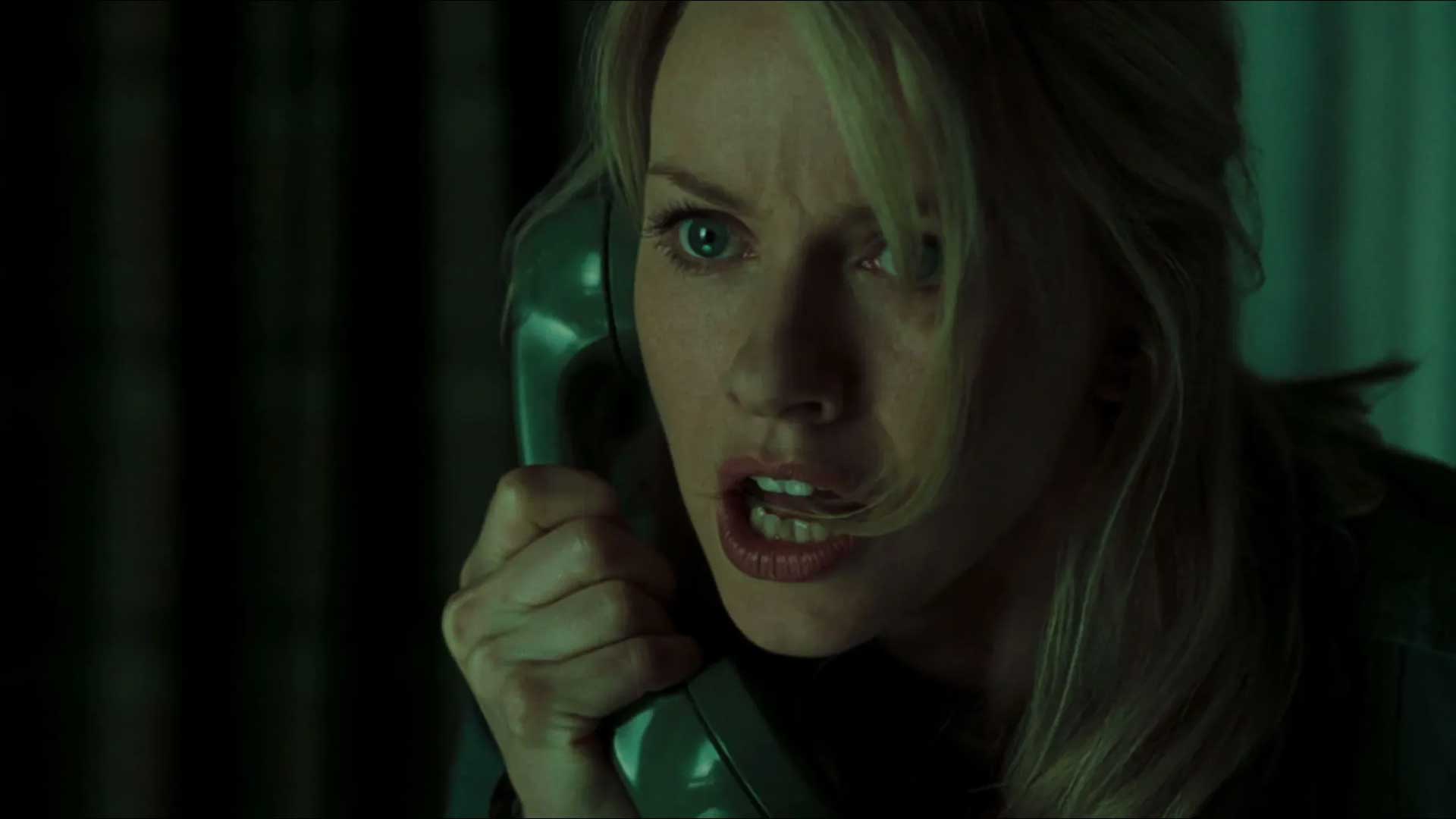
Rachel Keller (Naomi Watts), who works as a journalist, investigates the mysterious death of her niece (Amber Tamblyn’s Katie Embry), leading her to an inn in the woods. From the moment she finds a tape and decides to play it on a VCR, director Gore Verbinski doesn’t waste time getting down to the ominous tone. What follows is a series of seemingly odd but surrealistic imagery as we see Rachel remains fixated in front of the TV.
Then comes the telephone ring, prompting her to pick up the call. The whispery voice from the other end of the line said in a hushed, yet eerie tone: “Seven days”. The two words alone are enough to send a chill down your spine before the movie begins its seven-day countdown to her imminent death.
An American remake of Hideo Nakata’s groundbreaking Ring, this is a rare instance where Hollywood does the right thing for not bastardizing an acclaimed foreign movie, thanks to Verbinski’s genre know-how direction and Watts’ engaging lead performance.
9. “The Max/Wolfie Test” – TERMINATOR 2: JUDGMENT DAY (1991)
James Cameron’s most popular sequel, Terminator 2: Judgment Day, has everything that a blockbuster follow-up should be: a second movie that expands its existing storyline instead of rehashing the same formula with a bigger budget. Cameron even goes as far as flipping the script by rewriting Schwarzenegger’s T-800 role from an unstoppable killing-machine antagonist in the gritty 1984 original to a protector for the safety of the future revolutionary leader, John Connor (Edward Furlong), against the shape-shifting T-1000 (Robert Patrick).
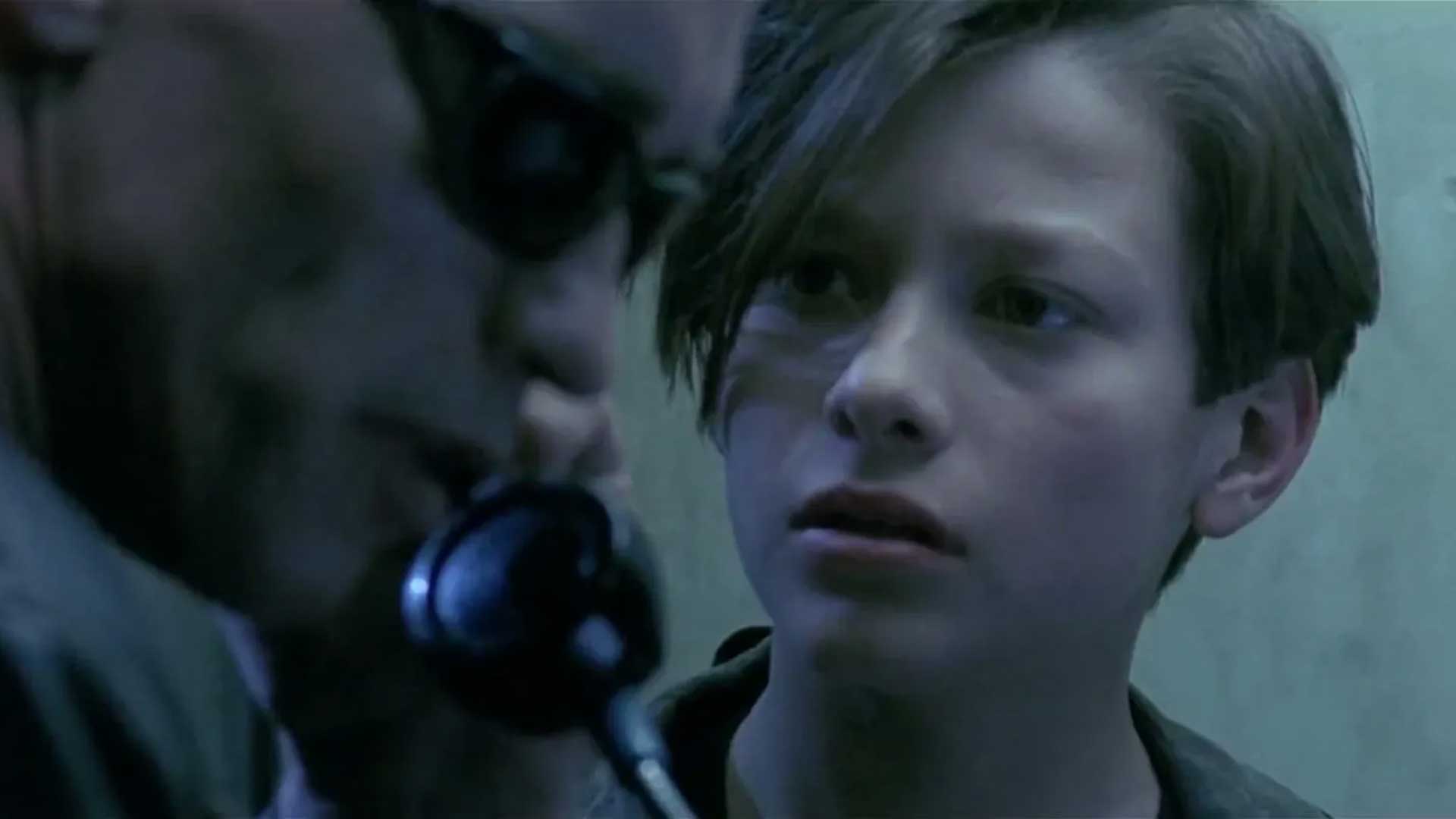
Although the general praises focus on the likes of the thrilling chase scenes and T-1000’s liquid-metal special effects, a deceptively simple but effective moment is worth mentioning here. Not an action set-piece, but rather a phone scene where John calls home to warn his foster parents (Jenette Goldstein’s Janelle and Xander Berkeley’s Todd) about the danger, only to be surprised by his foster mom’s unusually nice behavior.
This is where T-800 tests to determine whether Janelle is still alive by taking over the phone and imitating John’s voice, asking about “Wolfie” the dog. T-100, who is already mimicking Janelle, inadvertently falls for the trap, not realizing the dog’s actual name is Max. This ultimately confirms the fate of John’s foster parents, showcasing Cameron’s directorial prowess in evoking a chilling moment straight out of a horror-film trope.
8. “Close Call” – THE MATRIX (1999)
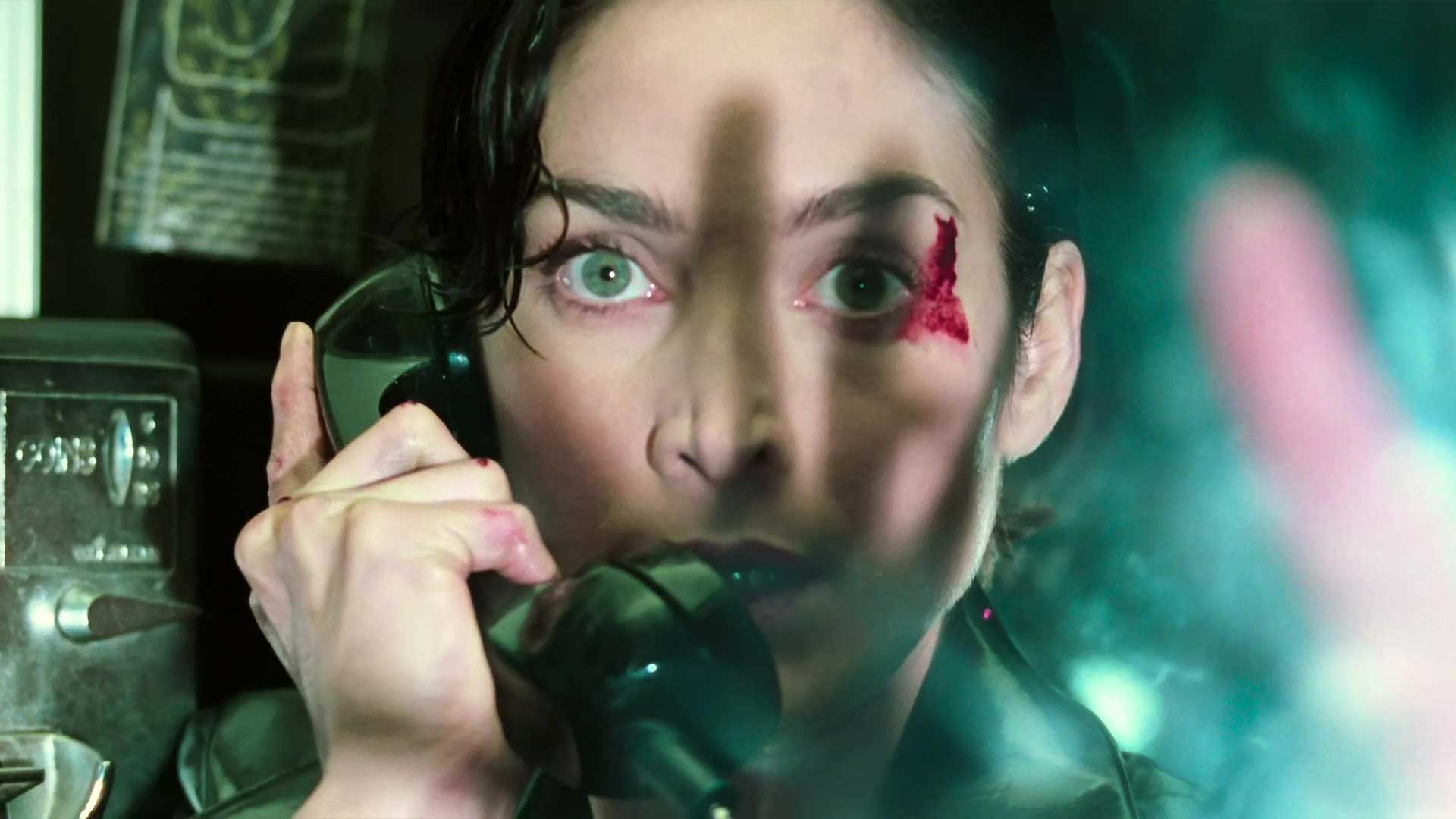
The fact that the Wachowskis went from a neo-noir in Bound to directing a sci-fi action blockbuster in The Matrix felt like they were travelling deep down the rabbit hole and into the unknown. A groundbreaking cinema that reshaped the sci-fi/action cinema at the time, notably on the suspended bullet-time effects, the characters – Neo (Keanu Reeves), Morpheus (Laurence Fishburne), and Trinity (Carrie-Anne Moss) – rely on the ringing of a telephone to get them in and out between the real world and the simulated reality.
A particular scene that resonates the most comes from the earlier part of the movie: After Trinity single-handedly takes down the uniformed cops with her nifty kung fu moves, her only chance for escaping the simulation is to get to the designated phone location. This leads to a rooftop chase as the Agents pursue her from behind before she manages to end up leaping across the building. That subsequent split-second moment where Trinity hurries down and out of the building to get to the ringing phone in the booth before the incoming truck is approaching is a masterclass of suspense and anticipation.
7. “Hello? Hello? Hello?” – DIAL M FOR MURDER (1954)
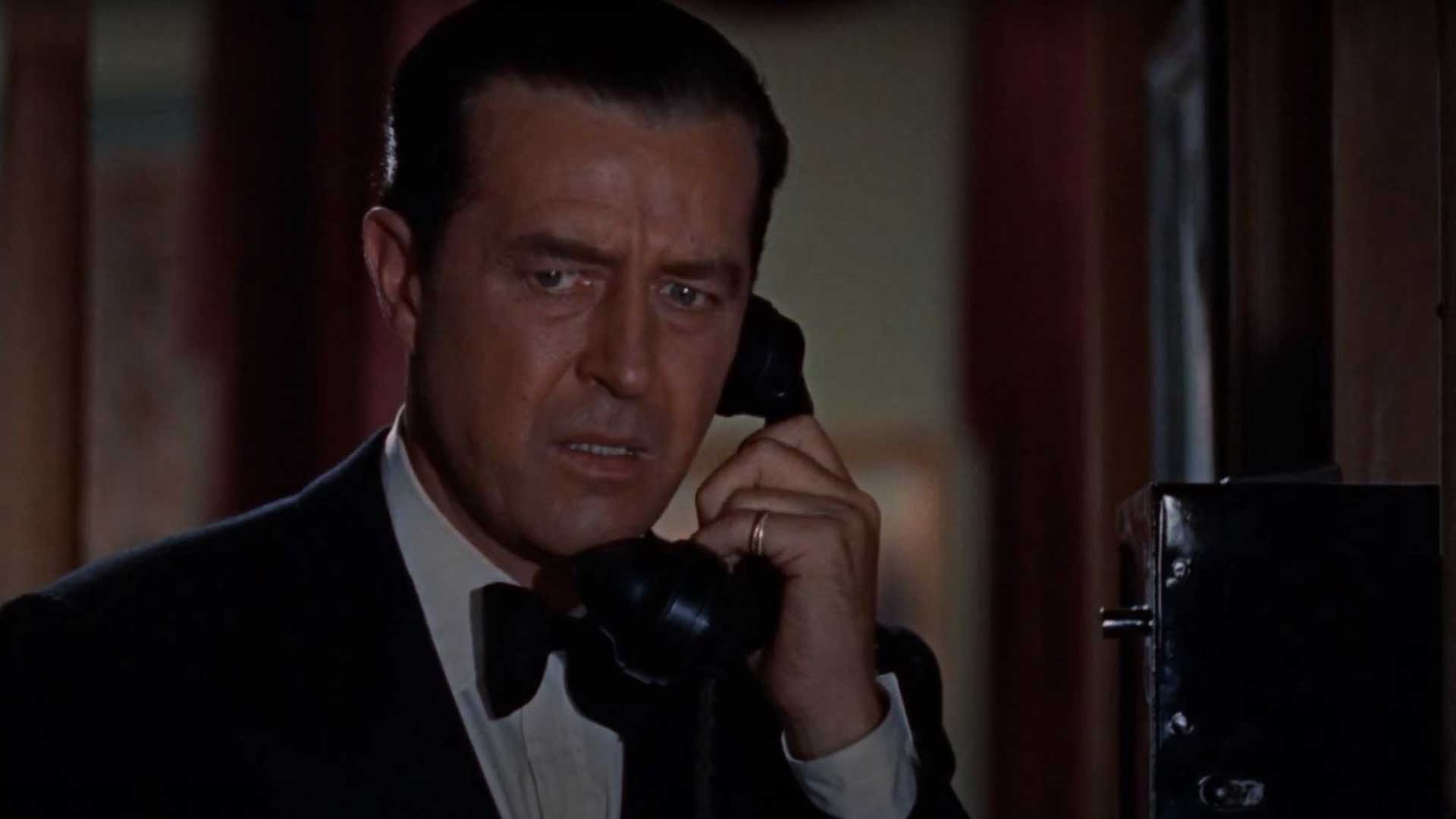
Based on Frederick Knott’s 1952 play of the same name, Alfred Hitchcock manages to make good use of the predominantly single location – a flat, to be exact – into a suspenseful visual and narrative playground. It all begins with Tony Wendice (Ray Milland), who is already aware of his wealthy socialite wife’s (Grace Kelly’s Margot) affair with another man (Robert Cummings), leading him to plot a perfect murder against her by paying his former classmate and con man Charles Swann (Anthony Dawson) to do it. His motive? Inherit her fortune, except that the plan doesn’t go smoothly as expected.
The later scene where Tony calls his wife at home from the club, which also serves as a cue for the hired killer to strangle her, is deliberately staged with expertly timed suspense. Hitchcock equally deserves praise for balancing the mundane (Margot gets off from her bed to pick up the phone) and the dread-inducing tension (Margot keeps repeating “Hello” before she finds herself being strangled by a scarf from behind).
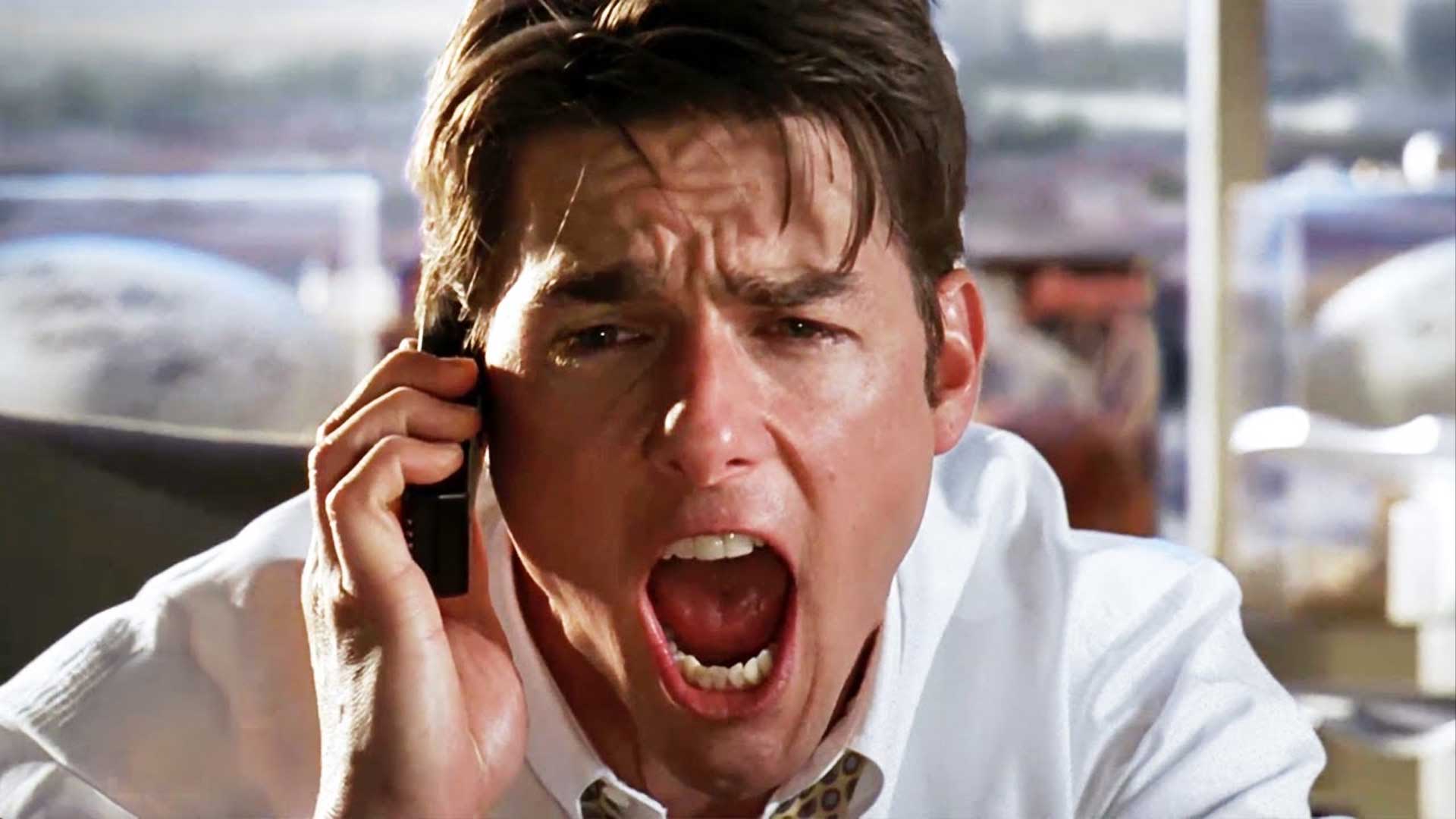
6. “Show Me the Money!” – JERRY MAGUIRE (1996)
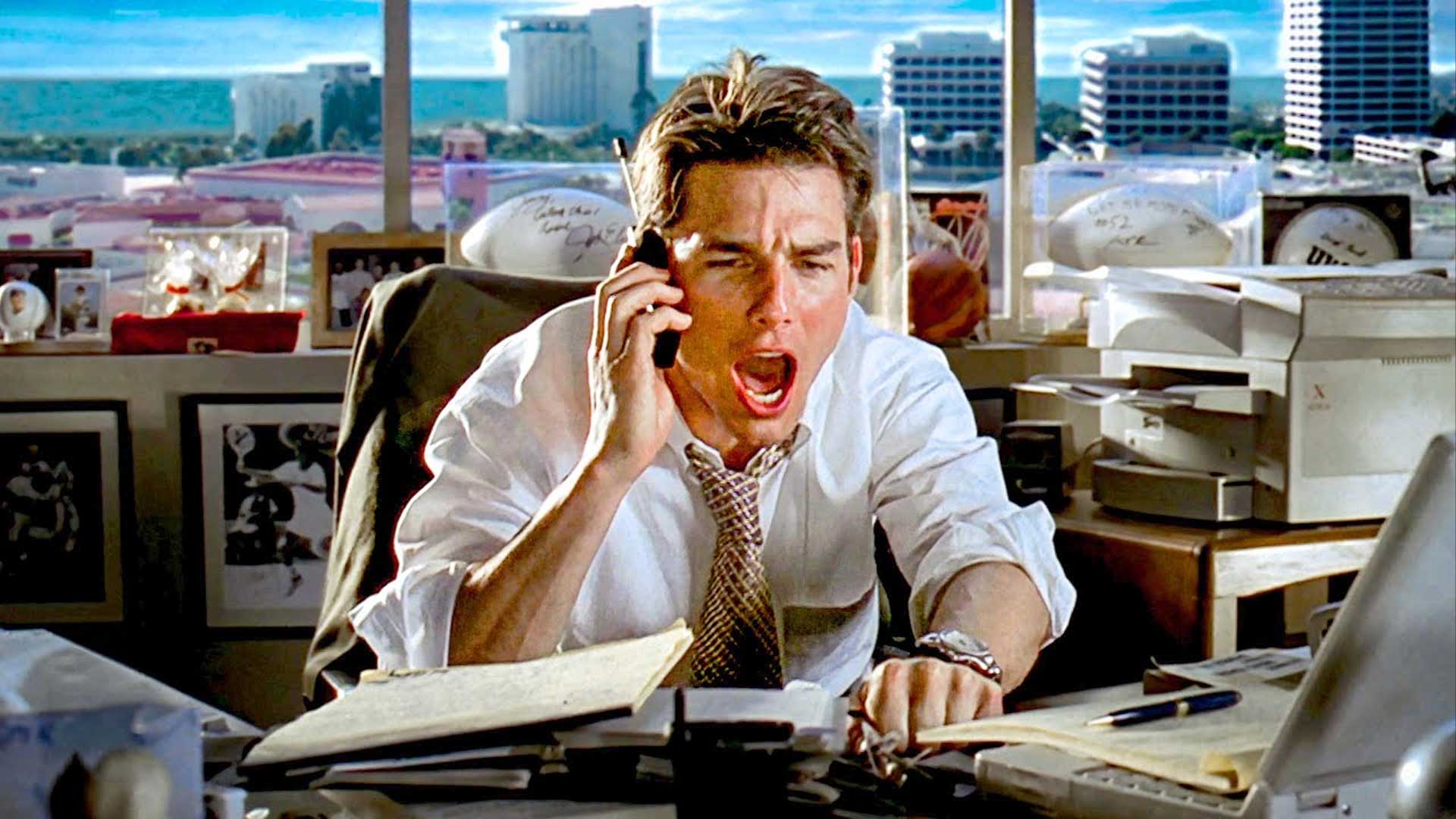
While Tom Cruise of recent memory seems to be enjoying sticking to action films (Top Gun: Maverick and the last two Mission: Impossible movies), there was a time when he flexed his acting muscles across different genres. One of them is a romantic comedy seen in Jerry Maguire, referring to Cruise’s titular sports agent who is desperately wanted to retain his important client, Rod Tidwell (a showy Cuba Gooding Jr., who won an Oscar for Best Supporting Actor).
Writer-director Cameron Crowe pushes that “desperation” into the movie’s most iconic moment: Jerry must prove his sincerity and commitment towards Rod by ensuring that he will make him more money, leading to the former screaming “Show me the money!” like he truly meant it during the crucial phone call scene.
Cruise’s versatility in showcasing his comedic chops earns him a Best Actor nomination, even though the Oscar went to Geoffrey Rush for Shine instead. Jerry Maguire also proved to be one of the biggest box-office hits that year, raking in over $270 million on a $50 million budget.
5. “It’s Coming From Inside the House!” – WHEN A STRANGER CALLS (1979)
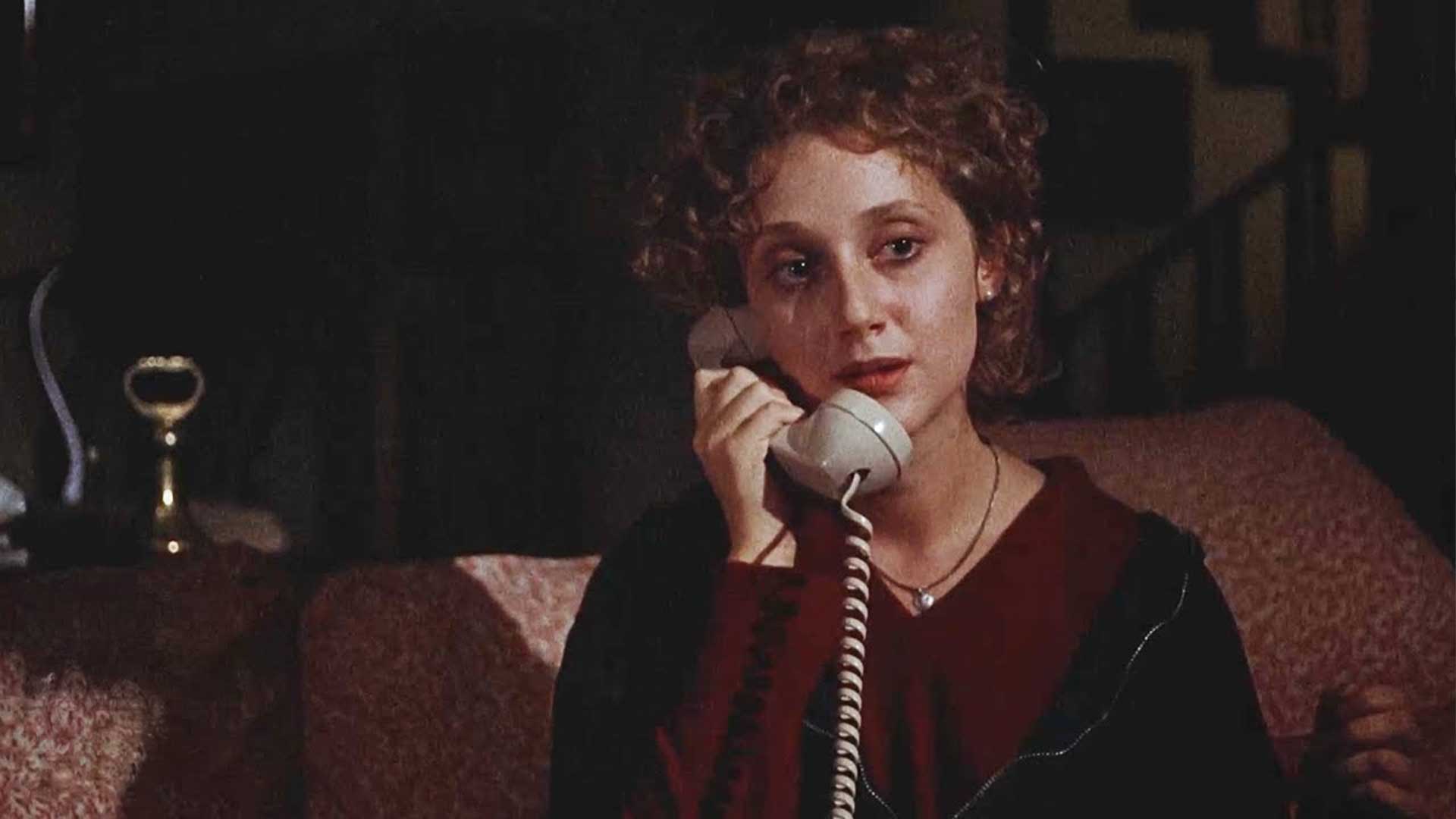
The first 20 minutes of Fred Walton’s When a Stranger Calls is a classic example of how to build up a deliberate stretch before culminating in a shocking payoff. For Jill Johnson (Carol Kane), she is just an ordinary babysitter dropping by to look after Dr. Mandrakis (Carmen Argenziano) and his wife’s (Rutanya Alda) children at home while they are heading out. According to them, the children are already asleep upstairs.
But that night gradually turns into a nightmare when Jill receives an anonymous telephone call from a man asking, “Have you checked the children?”. At first, it comes across as a prank, but the situation grows sinister when the same man keeps calling and asking the same question.
Credit goes to Walton for tapping the universal fear of dealing with a stranger and being alone, encapsulating Jill in an increasingly dread-inducing scenario. What makes this unforgettable opening stretch even scarier is the caller’s actual whereabouts. Save for the chilling finale, the middle stretch loses its momentum with the hit-and-miss story of a determined private detective (Charles Durning) looking to track down the escaped psychotic killer (Tony Beckley).
4. “He’s Gone” – GOODFELLAS (1990)
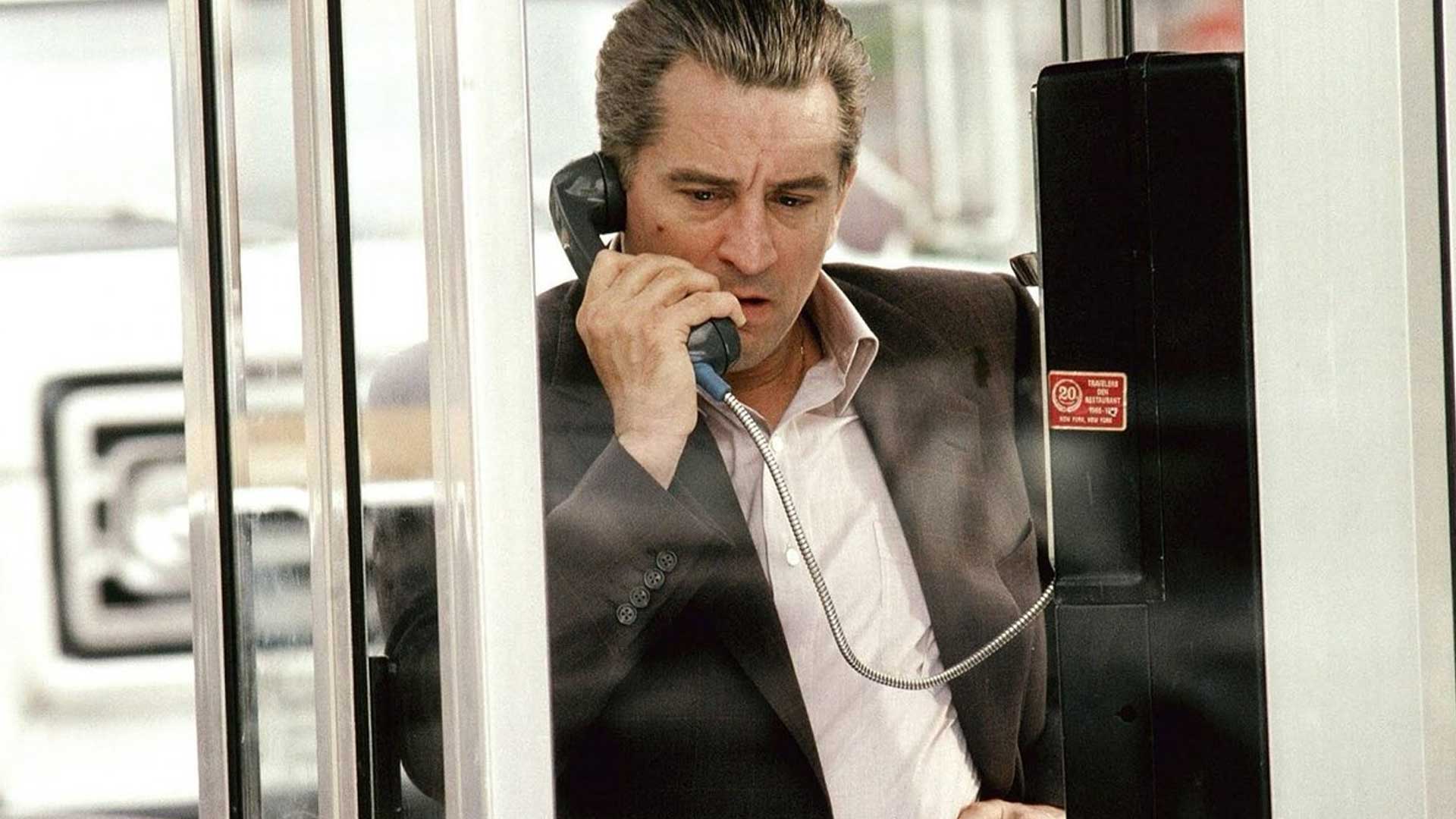
The fate of Tommy DeVito (Joe Pesci) is sealed in Goodfellas after he killed Billy Batts (Frank Vincent), a “made man” who is supposed to be untouchable. In this Martin Scorsese’s mob classic, which famously got robbed of the Best Picture Oscar by the bloated Dances with Wolves, one of the movie’s most memorable moments involve a phone call scene. Tommy is already gunned down by the time Jimmy (Robert De Niro) is calling from a phone booth outside the diner, only to find out from the mobster that “he’s gone, and [they] couldn’t do nothing about it”.
Scorsese perfectly captures the scene with a dolly zoom after the camera closes in towards the phone booth to capture Jimmy’s mixed reaction between feeling surprised and disappointed. His repeated “what do you mean?” over the phone as if he couldn’t believe what he heard from the mobster telling him that Tommy is whacked.
From there, he starts slamming the receiver before kicking the phone booth onto the ground and bursting into tears. It was the single best acting moment from De Niro in Goodfellas, nailing every varied emotion within that brief moment while showcasing the vulnerable side of his otherwise tough-guy character.
3. “Sorry, Wrong Number” – SORRY, WRONG NUMBER (1948)
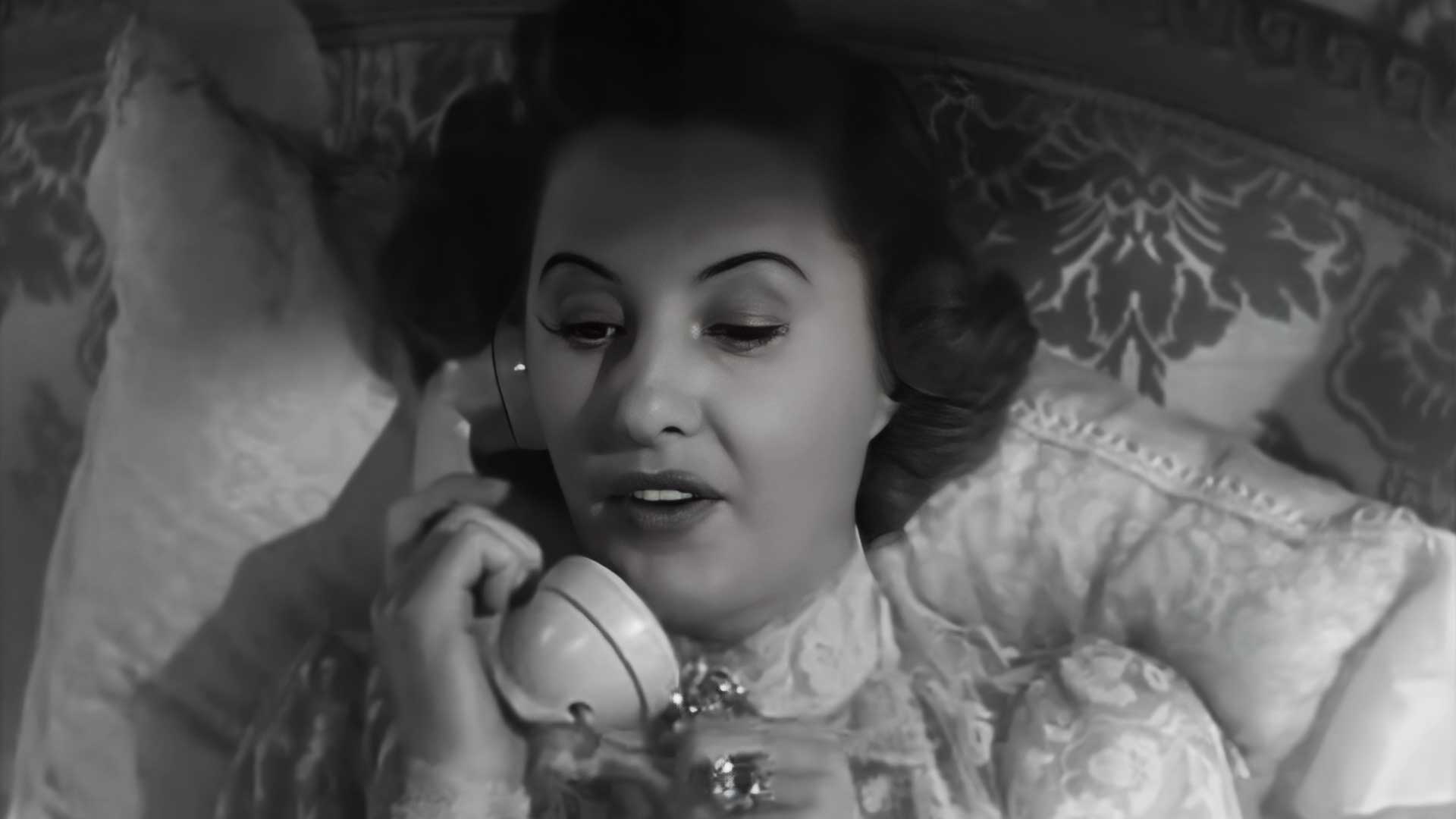
One of the earliest examples of a movie that utilizes a phone call to engrossing results, Anatole Litvak’s Sorry, Wrong Number may have been convoluted in its flashback-heavy moments. But the scenes within the confines of a large apartment, where the bedridden Leona Stevenson (Barbara Stanwyck, whose hysterical performance earned her an Oscar nomination for Best Actress, even though the award went to Jane Wyman for Johnny Belinda) grows increasingly panicked over a series of phone calls
It all started with her overhearing two men plotting a murder after her line was unexpectedly crossed. While the opening scene sets the ominous tone perfectly before this film noir takes a few detours with one flashback after another, Litvak’s direction culminates in a pessimistic third act before it coldly ends the movie with the line, “Sorry, wrong number” on the phone.
2. “What’s Your Favorite Scary Movie?” – SCREAM (1996)
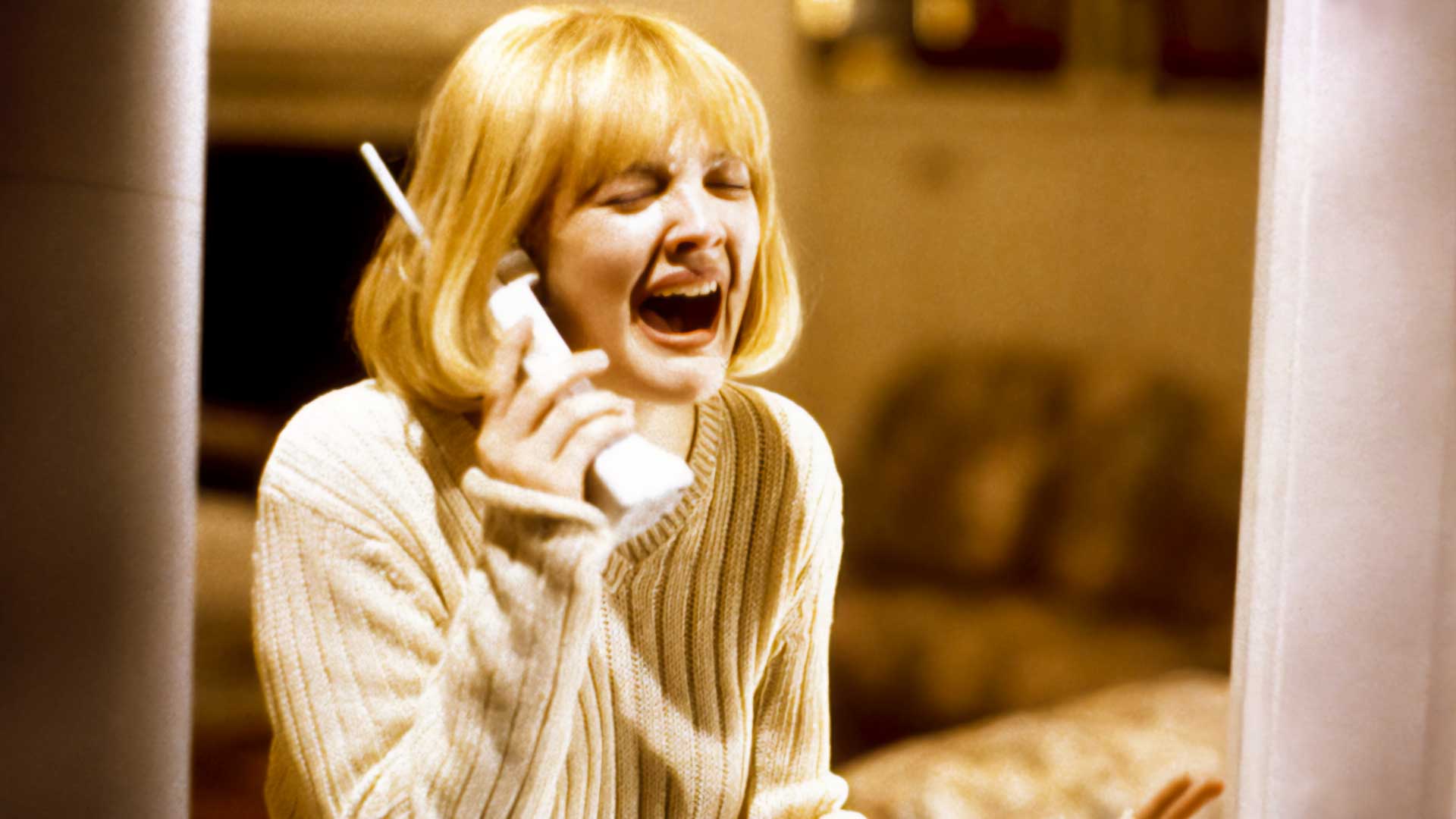
Director Wes Craven and screenwriter Kevin Williamson famously revitalizes the done-to-death slasher genre in Scream by subverting the familiar tropes with meta-heavy references. The movie gets off to an intriguing start with a high school student (Drew Barrymore), who is home alone when she receives a phone call from an anonymous person.
Craven deliberately takes his time to navigate the opening stretch with an initial flirtation, before the call turns into a trivia game of horror films that grows increasingly sinister. After she eventually gives a wrong answer, her fate is sealed and her subsequent brutal death at the hands of an ominous Ghostface in a white Fantastic Faces mask and a hooded black robe.
When Scream was first shown in 1996, Craven pulled a surprise by shocking the audiences for killing off the most recognizable and famous star among all others in the movie within the first 15 minutes. Barrymore’s cameo became one of her most iconic appearances, and the subsequent Scream sequels have since tried to top the first one with an opening killing scene.
1. “I Will Look For You. I Will Find You. And I Will Kill You” – TAKEN (2008)
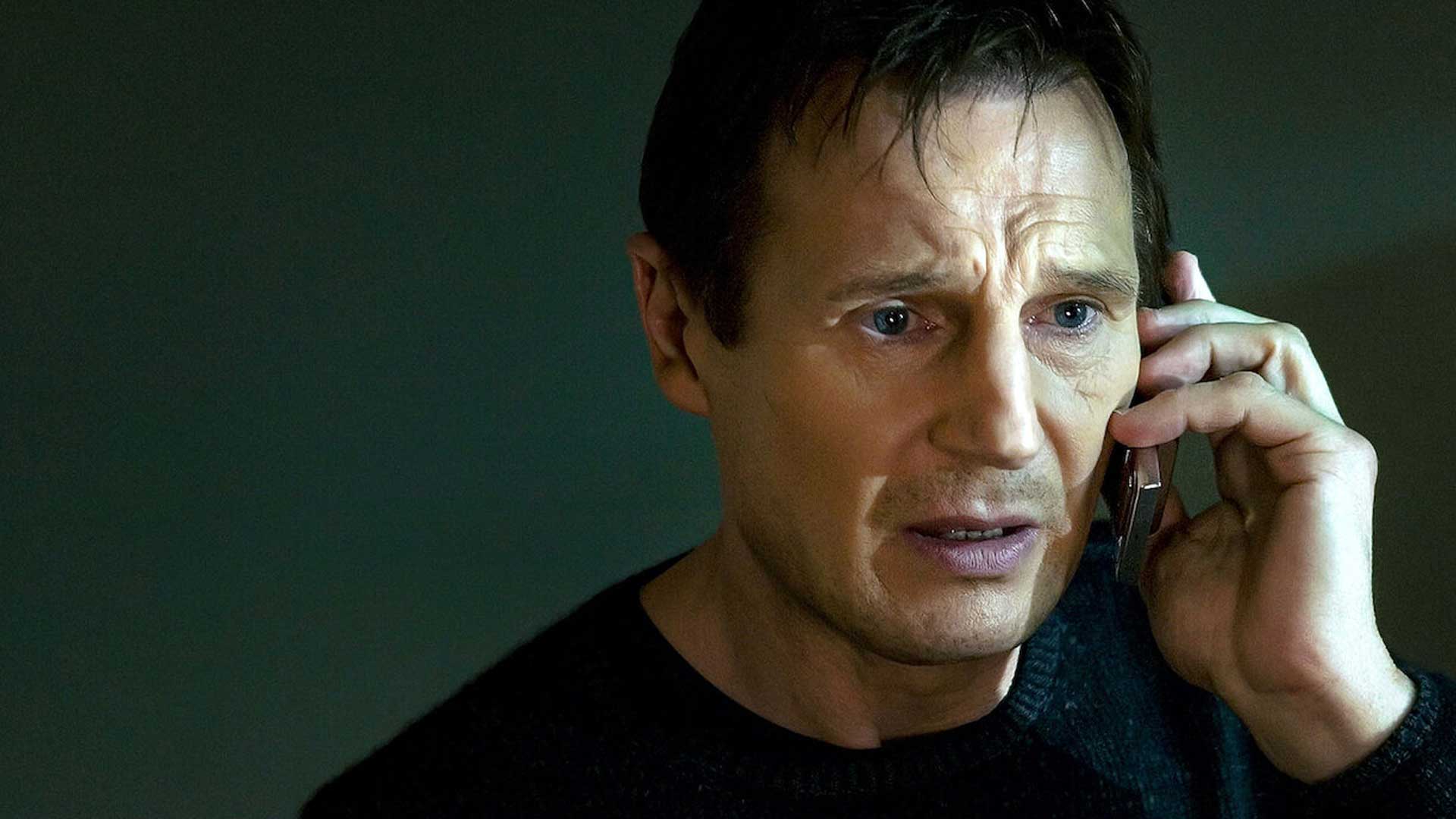
When Taken was first shown in 2008, nobody would have predicted a dramatic actor like Liam Neeson, who was in his mid-fifty, became an unlikely action hero. But his character as a retired CIA officer Bryan Mills is the kind of man you don’t want to mess with. Then, the Albanian kidnappers responsible for the human trafficking made a mistake for abducting his beloved daughter (Maggie Grace), forcing him to revert to his old ways.
Neeson is surprisingly convincing in an action role, and it helps that Pierre Morel’s engaging direction stages a few riveting action set pieces, from the use of weaponry to hand-to-hand combat. Then, there’s the iconic phone call: Bryan maintains his composure while subtly giving the kidnapper at the other end of the line a warning that he has a “very particular set of skills” to deal with people like them. The kidnapper barely feels threatened, even ending the call with a plain “good luck”, not knowing his days are numbered.
RELATED: The 10 Best Medical Comedy Movies That’ll Have You Laughing Through the Pain