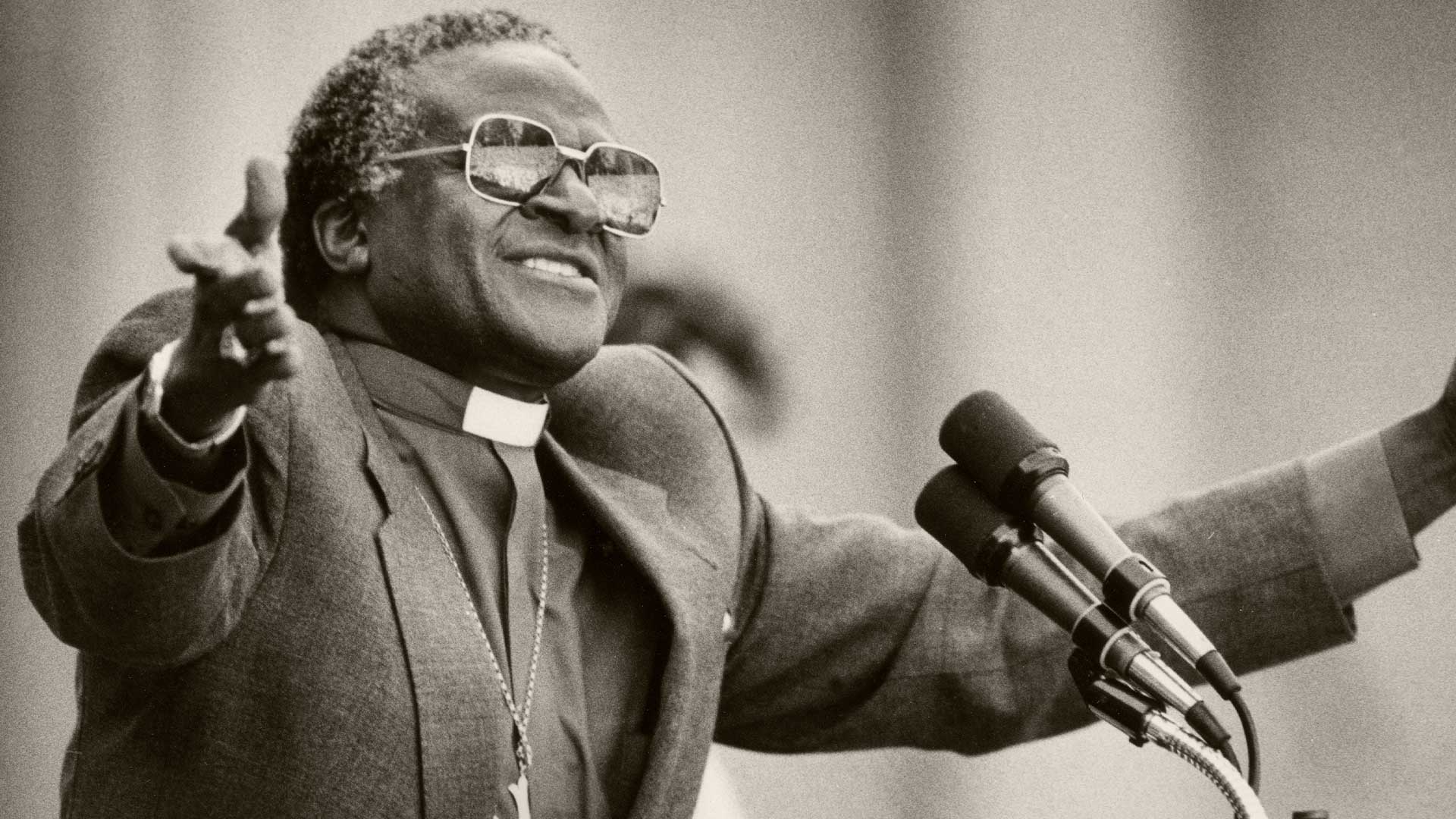


Tutu, a new documentary about South African Anglican bishop and theologian Desmond Tutu, from Oscar-nominated director Sam Pollard, has already sparked Oscar talk as Virgin’s Richard Branson praises the film as “the most powerful film I’ve seen in a long time”. And he isn’t alone. Variety’s Clayton Davis has listed the film in his early predictions for the Oscars 2027.
Tutu is an unfiltered look at the last twenty years of the apartheid activist’s life, sharing who he was in his own home and outside the public eye. It’s not shaped with any political agenda or narrative. Instead, it just shows the bishop’s real-time reaction as South Africa reshaped itself after 1994.
At the Berlin International Film Festival, the film began its screening journey by winning the Peace Film Prize, ahead of its African premiere at the Encounters South African International Documentary Festival this June. And everyone who has seen it seems deeply moved by Tutu’s faith and real conviction for change.
It’s not a highlight reel like the Michael Jackson movie currently in movie theaters, but footage captured by journalist Roger Friedman and photographer Benny Gool stitched together to tell the bishop’s powerful story. We’ll get to see Tutu stop a mob from killing a suspected informant. We’ll get to see when he snaps back at US President Ronald Reagan’s stance on sanctions, bluntly telling the West it “can go to hell.” And we’ll get to see when he breaks down in tears during the Truth and Reconciliation Commission hearings.
But this isn’t a film about his sorrows. If anyone knows a little of his history, Archbishop Desmond Tutu was a man full of smiles and laughs. The doccie shows him renewing his wedding vows, and enjoying time with his family and friends at home.
Pollard, known for his work on MLK/FBI, didn’t want to get in the way either. “I wanted Tutu’s voice to be the heartbeat of the story,” he explains. And Tutu is not a bunch of interviews putting the bishop on a pedestal. It lets him speak, argue, laugh and cry freely.
Even if you experienced South Africa’s transition from apartheid firsthand, there’s something special about seeing it through Tutu’s eyes – without all the political commentary. “I am a man of peace but not a pacifist,” he says at one point in the film. And that’s exactly how he is remembered today.
“As I watched, smiling through the tears, I felt immensely proud of everyone who worked on the film and told Arch’s story so faithfully. It is a story we should all know, and pass on for many generations to come,” Branson wrote on his own personal blog. “With a message of hope and love, he showed South Africa and the world how to set aside what divides them and work together to build a better future.”
The idea behind Tutu is that you get to spend time with him. And judging by early reactions, that might change the way you view faith, justice and the world as a whole.